IAF Helicopters Airdrop Relief to Flood-Hit Sivasagar
Synopsis
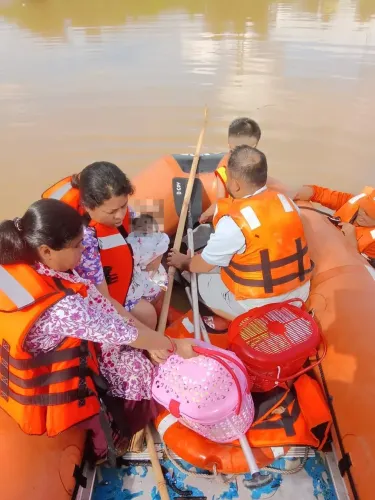
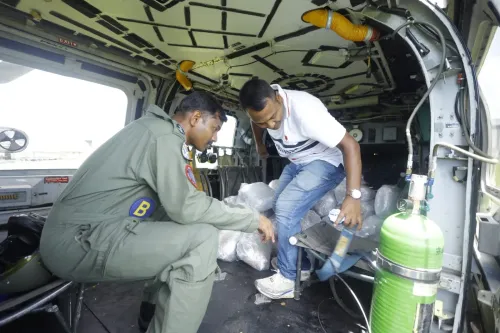
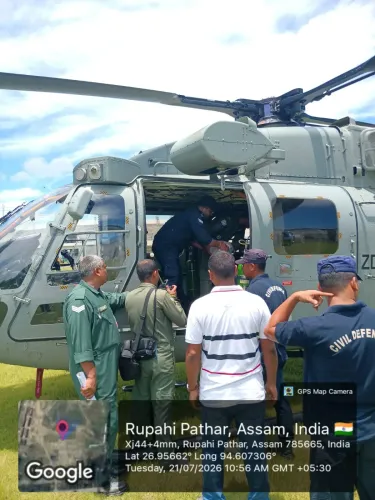
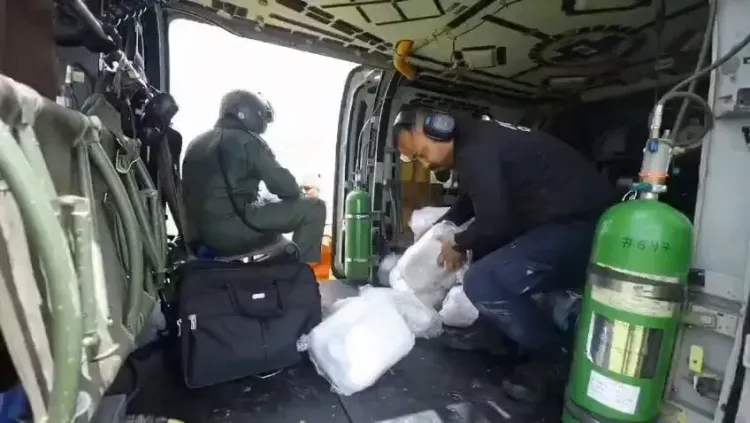
Indian Air Force helicopters are airdropping food, drinking water, and essential supplies to flood-stranded families in Sivasagar, Assam. The Chief Minister's Office confirmed the ongoing relief operation on 22 July 2026, as remote riverine communities remain cut off by monsoon floodwaters in the Brahmaputra valley.
Key Takeaways
IAF helicopters are actively conducting airdrops of food, safe drinking water, and essential supplies in Sivasagar district , Assam.
Operations are ongoing, with the Chief Minister's Office of Assam confirming the relief mission on 22 July 2026 .
Sivasagar is among eastern Assam's most flood-prone districts, situated along the Brahmaputra river basin.
IAF airdrop missions in Assam flood zones have precedent from 2017 , 2020 , and 2022 , reflecting institutionalised state-defence coordination.
Aerial relief supplements NDRF and SDRF ground deployments where road access has been severed by floodwaters.
Further sorties and possible post-flood rehabilitation budget measures are being watched as water levels remain high.
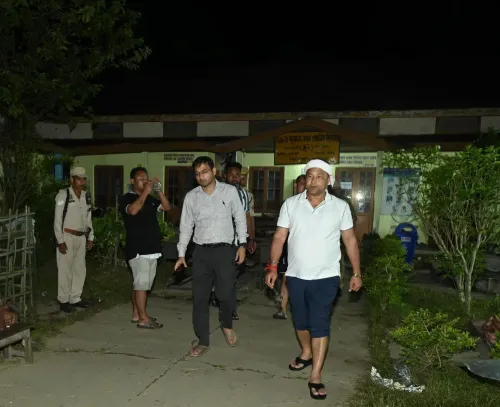
The Chief Minister's Office of Assam on Wednesday, 22 July 2026 confirmed that Indian Air Force helicopters are conducting active airdrops of food, safe drinking water, and essential supplies to families stranded in flood-affected remote areas of Sivasagar district, ensuring relief reaches communities cut off by rising waters.
Context
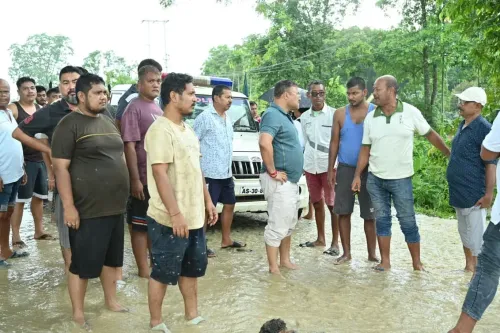
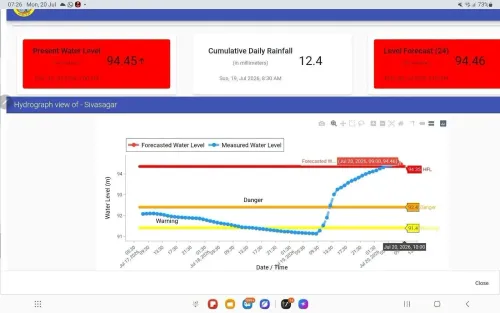
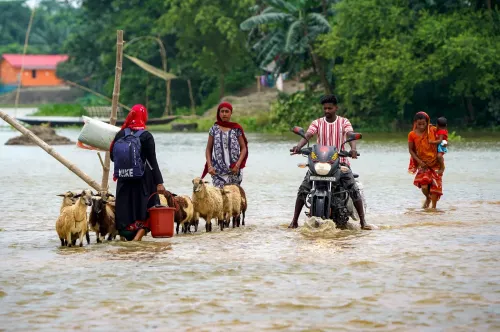
Sivasagar, located in eastern Assam along the Brahmaputra river basin, is among the districts most regularly inundated during the monsoon season. Floodwaters routinely sever road and bridge connectivity to riverine villages, making aerial delivery the only viable means of reaching stranded populations. The CMO's update confirms that IAF sorties coordinated through @IAF_MCC are currently active over the district.
The post states that helicopters 'continue to airdrop food, safe drinking water and other essential supplies to families stranded in remote flood-affected areas of Sivasagar, ensuring timely relief reaches those in need.' The use of the word 'continue' indicates operations were already under way before this update.
Policy Backdrop
Assam has institutionalised joint disaster-response protocols between the state administration and the Ministry of Defence, allowing the Indian Air Force to be deployed once district administrations declare areas inaccessible. Similar IAF airdrop missions were mounted in Assam flood zones in 2017, 2020, and 2022, when ground access was entirely cut off across multiple districts.
These aerial operations supplement ground-level deployments by the National Disaster Response Force (NDRF) and the state's own State Disaster Response Force (SDRF). The Brahmaputra valley's geography makes such multi-agency coordination a near-annual necessity rather than an exceptional measure.
Stakeholders and Impact
The immediate beneficiaries are flood-stranded families in the remote pockets of Sivasagar — primarily riverine and low-lying communities who lose access to markets, roads, and supply chains within days of peak monsoon inundation. For these households, IAF airdrops represent the difference between acute shortage and basic subsistence during the critical isolation period.
The broader stakeholder set includes the Assam government, which bears primary coordination responsibility, and the Union government through the Ministry of Defence and the National Disaster Management Authority (NDMA). Successful relief operations also carry political weight for the state administration, which uses real-time social media updates to demonstrate responsive governance during crises.
What's Next
Authorities and observers will watch whether water levels in the Brahmaputra basin recede sufficiently to restore ground access to isolated villages, or whether further IAF sorties and additional NDRF deployments become necessary. If inundation persists, the state government may also consider supplementary budget provisions for post-flood rehabilitation of affected households and damaged infrastructure in Sivasagar.
The scale and duration of this year's flood response in Assam will likely shape demands for long-term flood-mitigation investments — including embankment reinforcement and early-warning systems — in the state's next planning cycle.
Point of View
Responsive governance during a crisis that recurs with near-clockwork regularity each monsoon. The deployment of the Indian Air Force, rather than reliance solely on state machinery, underscores how flood severity in the Brahmaputra valley routinely exceeds the capacity of local disaster-response infrastructure. This pattern of annual federal military support raises a longer-term policy question: whether successive relief operations are substituting for structural flood-mitigation investment in embankment reinforcement and drainage systems. The optics of swift relief are politically valuable, but the frequency of IAF calls also signals the limits of state-level preparedness.
NationPress
22 Jul 2026
Frequently Asked Questions
Why are IAF helicopters dropping supplies in Sivasagar?
Floodwaters in Sivasagar district have cut off road access to remote riverine communities, making IAF helicopter airdrops the only viable way to deliver food, drinking water, and essential supplies to stranded families.
How bad are the floods in Assam in July 2026?
The Chief Minister's Office of Assam confirmed on 22 July 2026 that families in remote areas of Sivasagar district remain stranded, requiring active Indian Air Force airdrop operations — indicating significant inundation affecting ground connectivity.
Has the Indian Air Force helped in Assam floods before?
Yes. IAF helicopters have conducted similar airdrop missions in Assam flood zones in 2017, 2020, and 2022, reflecting a standing joint protocol between the Assam government and the Ministry of Defence for aerial relief when areas become inaccessible.
Which agency coordinates flood relief in Assam?
The Assam Chief Minister's Office coordinates overall disaster response, working alongside the National Disaster Response Force, the State Disaster Response Force, and the Indian Air Force for aerial operations in inaccessible areas.
What supplies are being airdropped to Sivasagar flood victims?
According to the Chief Minister's Office of Assam, IAF helicopters are airdropping food, safe drinking water, and other essential supplies to families stranded in remote flood-affected areas of Sivasagar.