NHAI empanels IITs to proof-check major bridge designs on National Highways
Synopsis
NHAI has enlisted around 12 IITs — including IIT Delhi, IIT Bombay, and IIT Roorkee — to independently proof-check bridge designs on National Highways, covering structures built to last 100 years or more. It is the first nationwide institutional framework of its kind for design vetting, and a direct response to the cost and safety risks of flawed bridge construction on India's expanding highway network.
Key Takeaways
NHAI on 30 June mandated independent proof-checking of major bridge designs on National Highways by IITs and premier institutions.
Around 12 IITs , including IIT Delhi , IIT Bombay , IIT Roorkee , and IIT Kharagpur , have agreed to participate.
Review scope includes structural calculations, engineering drawings, construction methodologies, geotechnical investigations, and hydraulic studies.
The framework targets bridges with a service life of 100 years or more and applies uniformly across all construction modes.
The initiative is designed to prevent costly mid-life failures and strengthen quality assurance across India's National Highway network.
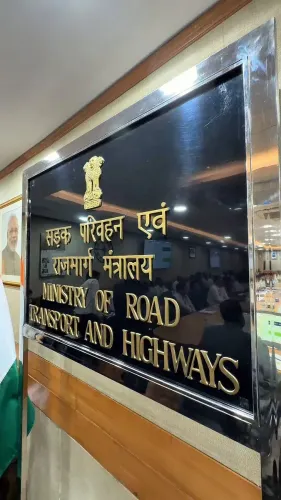
The National Highways Authority of India (NHAI) on 30 June mandated that Indian Institutes of Technology (IITs) and other premier academic institutions independently proof-check the designs of major bridges being constructed along National Highways across the country. The decision, backed by the Ministry of Road Transport and Highways (MoRTH), is aimed at strengthening structural safety and delivering long-term cost savings on critical infrastructure.
What the Framework Covers
Around 12 IITs — including IIT Delhi, IIT Bombay, IIT Roorkee, and IIT Kharagpur — along with several other premier institutions, have expressed willingness to collaborate with NHAI under the new arrangement. These institutions will be formally empanelled for independent proof-checking of hydraulic studies and the structural design of major bridge projects across all new National Highway schemes.
The review scope is comprehensive: it will cover structural design calculations, engineering drawings, construction methodologies, geotechnical investigations, and hydraulic studies, according to MoRTH.
Why NHAI Is Acting Now
The initiative specifically targets bridges designed for a service life of 100 years or more — structures where design flaws carry the highest long-term risk. A senior official noted that major bridges represent enormous capital outlays, and premature failures due to design deficiencies not only disrupt National Highway users but also inflate project costs significantly. This comes amid growing scrutiny of infrastructure quality across India's rapidly expanding highway network.
Notably, the framework will apply uniformly across all construction modes — whether projects are delivered through engineering-procurement-construction contracts, hybrid annuity models, or other formats — creating a consistent quality assurance baseline regardless of project delivery structure.
Building a Nationwide Institutional Mechanism
The empanelment of IITs and allied institutions is designed to create a nationwide institutional framework for design vetting of critical bridge projects. NHAI said the arrangement will strengthen quality assurance practices and promote higher standards in both design and execution.
The move aligns with NHAI's broader mandate to adopt best-in-class engineering practices as India accelerates its National Highway development programme. Independent academic review — rather than reliance solely on project consultants — introduces a structural check on the design pipeline that has previously been absent at this scale.
What Comes Next
With institutions already expressing willingness to participate, the empanelment process is expected to formalise the collaboration in the near term. The framework is set to be integrated into all new National Highway bridge projects going forward, marking a significant shift in how India vets its most consequential road infrastructure.
Point of View
But quality assurance has struggled to keep up — bridge collapses and structural distress events have drawn repeated public and parliamentary scrutiny. Bringing IITs into a formal proof-checking role is a meaningful structural fix, not just a signalling exercise, because it inserts an independent academic layer that project consultants cannot override. The real test will be whether NHAI's empanelment process is transparent, timely, and insulated from contractor pressure. If the framework is applied rigorously, it could set a precedent for independent technical oversight across other categories of highway infrastructure where design quality is similarly hard to audit after the fact.
NationPress
1 Jul 2026
Frequently Asked Questions
What has NHAI decided regarding bridge design on National Highways?
NHAI has decided to empanel IITs and other premier institutions to independently proof-check the hydraulic studies and structural designs of major bridges on all new National Highway projects. The decision was announced on 30 June and is backed by the Ministry of Road Transport and Highways.
Which IITs are involved in this bridge design review framework?
Around 12 IITs have expressed willingness to participate, including IIT Delhi, IIT Bombay, IIT Roorkee, and IIT Kharagpur, along with several other premier institutions. They will be formally empanelled by NHAI to carry out independent design vetting.
What exactly will these institutions review?
The institutions will review structural design calculations, engineering drawings, construction methodologies, geotechnical investigations, and hydraulic studies. The review targets major bridges designed for a service life of 100 years or more.
Why is NHAI introducing this independent proof-checking system?
According to a senior official, major bridges involve significant capital investment, and design flaws that cause premature failure lead to both severe disruption for highway users and substantial additional costs. Independent academic review is intended to catch such flaws before construction begins.
Will this framework apply to all types of highway construction contracts?
Yes, the framework will apply uniformly across all construction modes — including engineering-procurement-construction contracts, hybrid annuity models, and other project delivery formats — to ensure a consistent quality assurance standard across the board.