IMD forecasts heavy rain, thunderstorms across India on 11 July
Synopsis
The IMD has flagged a rare convergence of at least five active weather systems on 11 July, driving heavy rain from Delhi-NCR to the northeastern states simultaneously. Buried in the forecast is a striking milestone: Delhi's AQI hit 48 on 9 July — its first 'Good' air quality reading since September 2023, a reminder of just how dependent the capital's breathable air is on a single season.
Key Takeaways
The IMD has forecast heavy to very heavy rainfall across northern, central, eastern, and northeastern India on 11 July 2026 .
A low-pressure area over central Uttar Pradesh is expected to weaken within 24 hours , but widespread monsoon rain is set to continue.
Thunderstorms with gusts up to 60 kmph are likely over East Madhya Pradesh ; West Madhya Pradesh may see winds up to 50 kmph .
Delhi recorded an AQI of 48 on 9 July 2026 — its first 'Good' air quality day of the year and the cleanest since 10 September 2023 .
The IMD has advised residents to watch for waterlogging, reduced visibility, and localised flooding in low-lying areas.
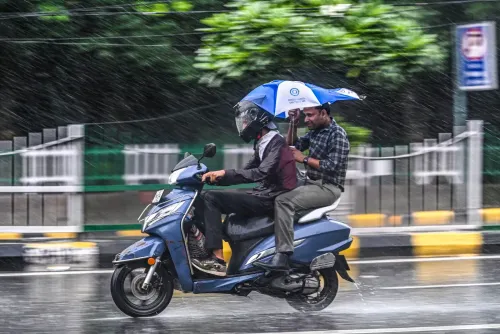
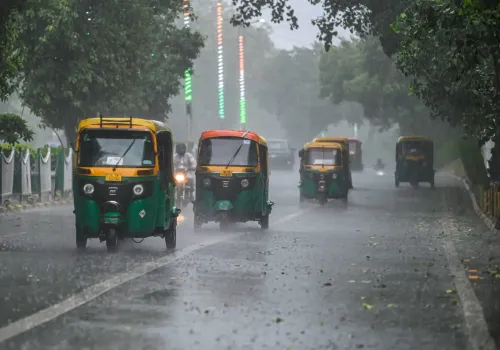
The India Meteorological Department (IMD) has forecast widespread, heavy to very heavy rainfall across large parts of India on 11 July 2026, with Delhi-NCR, northern states, central India, and the northeast all expected to receive significant showers. Thunderstorms accompanied by lightning and gusty winds are likely in multiple regions as an active monsoon continues to dominate the country's weather systems.
Key Meteorological Systems Driving the Rain
The IMD has identified several simultaneous weather systems fuelling the enhanced rainfall activity. A low-pressure area over northern parts of central Uttar Pradesh is expected to weaken gradually over the next 24 hours, though monsoon conditions are forecast to persist. The western end of the monsoon trough is positioned near its normal alignment, while its eastern end lies north of normal. Additionally, an upper air cyclonic circulation over Gangetic West Bengal and adjoining Bangladesh, two cyclonic circulations over west and northeast Assam, and an active western disturbance over north Pakistan and adjoining Punjab are all contributing to the widespread rainfall.
North and Central India Outlook
Isolated heavy rainfall has been forecast for Punjab, Haryana, Chandigarh, and Delhi on 11 July. Similar conditions are expected across Uttarakhand, Himachal Pradesh, Jammu and Kashmir, Ladakh, Gilgit-Baltistan, Muzaffarabad, and western Uttar Pradesh. In eastern Uttar Pradesh, widespread rain with heavy showers is forecast to intensify from 12 July onwards.
Central India is also set to remain under active monsoon influence. Scattered rainfall is expected across East and West Madhya Pradesh, Vidarbha, and Chhattisgarh. Thunderstorms with gusty winds reaching 40 to 50 kmph — with gusts up to 60 kmph — are likely over East Madhya Pradesh, while West Madhya Pradesh may see winds up to 50 kmph.
Northeast and Southern India
Widespread rainfall is expected across the entire northeastern region, covering Arunachal Pradesh, Assam, Meghalaya, Nagaland, Manipur, Mizoram, and Tripura. Arunachal Pradesh is likely to receive isolated heavy showers, while the remaining northeastern states face persistent monsoon rain with accompanying thunderstorms and lightning.
In the south, widespread rainfall is forecast over Coastal Karnataka, with Kerala and Mahe continuing to receive moderate to heavy showers. Tamil Nadu, Puducherry, and Karaikal may witness thunderstorms with gusty winds. Heavy rainfall is also likely over isolated parts of Telangana, Coastal Andhra Pradesh, Rayalaseema, and interior Karnataka.
Delhi Records Its First 'Good' Air Quality Day of 2026
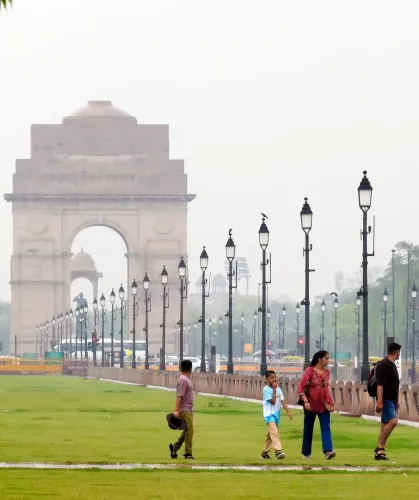
Notably, the ongoing monsoon has delivered a significant environmental milestone for the national capital. On 9 July 2026, Delhi recorded a daily average Air Quality Index (AQI) of 48 — its first 'Good' air quality day of the year, according to the Commission for Air Quality Management (CAQM). It was also the city's cleanest air day since 10 September 2023, underscoring the outsized role monsoon rainfall plays in clearing the capital's chronically polluted air.
Precautions and Public Advisory
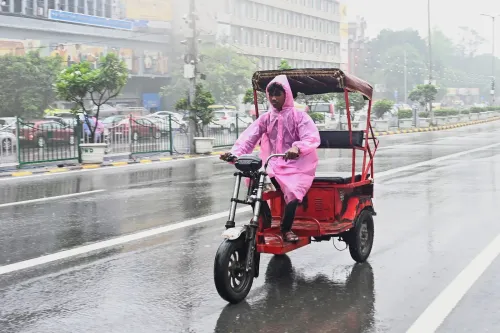
The IMD has urged residents across affected regions to exercise caution, as heavy rainfall may trigger waterlogging, reduced visibility, traffic disruptions, and localised flooding in low-lying areas. Authorities have advised the public to stay updated with official weather advisories and take necessary precautions during thunderstorms and periods of intense rainfall. With multiple active weather systems in play simultaneously, forecasters warn that conditions could evolve quickly over the coming days.
Point of View
And the IMD's advisory language — waterlogging, reduced visibility, localised flooding — signals that the risk is not routine. What mainstream coverage tends to underplay is the infrastructure stress: Indian cities, including Delhi, have repeatedly failed drainage audits, meaning the same rainfall that cleans the air also exposes the annual failure to build flood-resilient urban infrastructure. The AQI milestone is welcome, but it also illustrates a troubling dependency — Delhi's air is 'Good' roughly once every three years, and only because the monsoon does the work that policy has not.
NationPress
10 Oct 2026
Frequently Asked Questions
Which states are expected to receive heavy rain on 11 July 2026?
The IMD has forecast heavy to very heavy rainfall across Punjab, Haryana, Chandigarh, Delhi, Uttarakhand, Himachal Pradesh, Jammu and Kashmir, Uttar Pradesh, Madhya Pradesh, Chhattisgarh, Vidarbha, and all northeastern states on 11 July 2026. Southern states including Kerala, Coastal Karnataka, Tamil Nadu, and Telangana are also expected to see active monsoon conditions.
What weather systems are causing the heavy rain across India?
Multiple systems are active simultaneously: a low-pressure area over central Uttar Pradesh, a monsoon trough positioned near its normal alignment, an upper air cyclonic circulation over Gangetic West Bengal, two cyclonic circulations over Assam, and a western disturbance over north Pakistan and adjoining Punjab. Together, these are sustaining widespread rainfall across much of India.
Why did Delhi record a 'Good' AQI on 9 July 2026?
Delhi recorded a daily average AQI of 48 on 9 July 2026 — its first 'Good' air quality reading of the year — primarily due to monsoon rainfall washing out pollutants from the atmosphere. According to the Commission for Air Quality Management (CAQM), it was also the city's cleanest air day since 10 September 2023.
What precautions has the IMD advised for affected regions?
The IMD has urged residents to remain cautious of waterlogging, reduced visibility, traffic disruptions, and localised flooding in low-lying areas. People are advised to stay updated with official weather advisories and avoid unnecessary exposure during thunderstorms and periods of intense rainfall.
When will heavy rain intensify in eastern Uttar Pradesh?
While western Uttar Pradesh is expected to receive isolated heavy rainfall on 11 July, heavy and widespread showers in eastern Uttar Pradesh are forecast to become more pronounced from 12 July 2026 onwards, according to the IMD.