Delhi-NCR Heatwave to Break: Rain, Thunderstorms Forecast Over Next 4 Days

Synopsis
Delhi-NCR's brutal heatwave is set to break over the next four days as the IMD forecasts thunderstorms, lightning, and winds up to 50 kmph starting April 28 — but with Ghaziabad's AQI hitting 352 and temperatures bouncing back by May 1, the relief may be fleeting.
Key Takeaways
The IMD has forecast rain, thunderstorms, and winds up to 50 kmph for Delhi-NCR from April 28–May 1, 2025 , offering temporary heatwave relief.
Maximum temperatures are expected to drop from 40–42°C on April 28 to as low as 38°C on April 30 before rising again by May 1.
Ghaziabad's Ved Vihar-Loni recorded an alarming AQI of 352 ('very poor'), among the worst in the NCR region.
Schools in Delhi, Noida, and Uttar Pradesh have adjusted timings or announced closures to protect students from peak heat exposure.
Weather experts say the forecast rainfall may temporarily reduce dust and pollutants, but sustained improvement in AQI requires prolonged rainfall activity.
Delhi-NCR residents are set to get much-needed relief from a punishing heatwave over the next four days, as the India Meteorological Department (IMD) forecasts rainfall, thunderstorms, lightning, and gusty winds across the region starting April 28, 2025. The weather shift is also expected to bring a marginal improvement in the dangerously poor Air Quality Index (AQI) levels that have gripped New Delhi and its satellite cities.
This comes amid a broader, intensifying heatwave that has scorched large swathes of northern India, prompting authorities to issue public health advisories and schools to reschedule timings to protect students from peak afternoon heat.
Day-by-Day Weather Forecast for Delhi-NCR
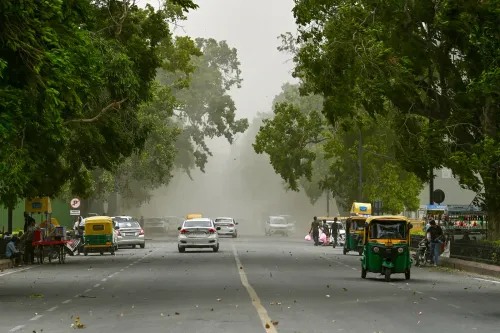
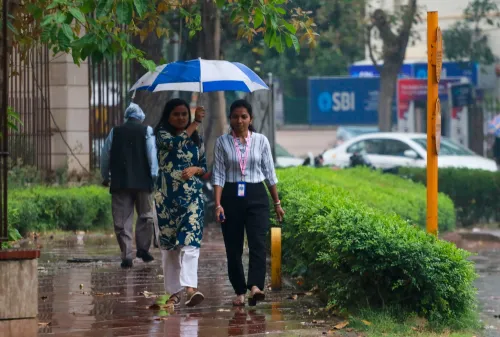
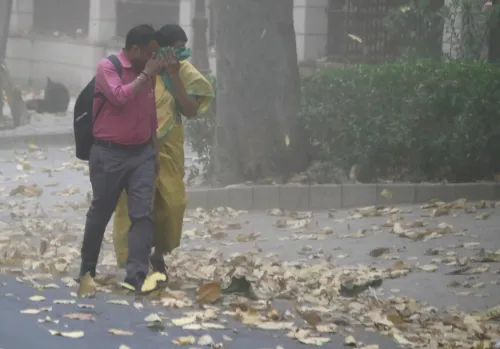
On Tuesday, April 28, maximum temperatures are expected to hover between 40–42 degrees Celsius. The national capital is likely to witness very light rain accompanied by thunderstorms and winds gusting up to 50 kmph — offering the first tangible break from relentless heat.
By April 29, temperatures are forecast to dip slightly, with the maximum settling near 40 degrees Celsius and the minimum around 26 degrees Celsius. Thunderstorms, lightning, and strong winds are anticipated during morning, afternoon, and evening hours, making it one of the more active weather days in the cycle.
The most significant cooling is expected on April 30, when the maximum temperature could fall to 38 degrees Celsius and the minimum to approximately 24 degrees Celsius. Skies are likely to remain partly cloudy, with isolated thunder and lightning in select pockets of the NCR.
By May 1, conditions are forecast to turn predominantly clear, though temperatures will climb back toward 40 degrees Celsius for the maximum and 24 degrees Celsius for the minimum — signalling a temporary, rather than sustained, weather reprieve.
Air Quality Snapshot Across Delhi-NCR
Air quality across the region continues to range between 'moderate' and 'poor' categories, with several hotspots recording alarming figures. In Delhi, Anand Vihar logged an AQI of 227, Bawana recorded 205, and the Cantonment area stood at 206 — all classified as 'poor.' Areas including Ashok Vihar (193), Aya Nagar (199), and Chandni Chowk (162) remained in the 'moderate' zone.
The situation is notably worse in Ghaziabad, where Ved Vihar-Loni recorded an AQI of 352 — firmly in the 'very poor' category. Other Ghaziabad localities including Loni (278), Indirapuram (214), Sanjay Nagar (228), and Vasundhara (225) also reported poor air quality. In Greater Noida, Knowledge Park-5 clocked an AQI of 253 and Knowledge Park-3 recorded 228.
Can Rain Help Clear the Air?
Weather experts suggest that the anticipated rainfall and high-speed winds may help wash out dust and pollutant particles from the atmosphere, providing temporary relief from the toxic air blanketing the NCR. Notably, such pre-monsoon convective activity — thunderstorms driven by intense surface heating — is a known natural mechanism for scrubbing urban air pollution. However, the relief is likely to be short-lived unless sustained rainfall follows.
Residents have been advised to exercise caution during thunderstorm periods, particularly given wind gusts forecast at 50 kmph, which can cause structural damage and pose risks to commuters.
Impact on Schools and Public Health Measures
The broader heatwave gripping northern India has already triggered administrative responses. Schools in Delhi, Noida, and several districts of Uttar Pradesh have been directed to adjust their timings to shield students from peak afternoon temperatures. Some states have moved forward summer vacation schedules, while others have opted for temporary closures — reflecting the growing public health dimension of extreme heat events in India.
With the IMD forecast pointing to a brief but meaningful weather window over the next four days, the key question is whether authorities will use this interval to reinforce long-term heat action plans ahead of what climate scientists warn could be an increasingly severe summer season.
Point of View
But it should not obscure a deeper policy failure: year after year, the region lurches between toxic air and extreme heat with no durable structural response. The fact that Ghaziabad's AQI is hitting 352 while schools scramble to adjust timings exposes how reactive — rather than proactive — India's urban heat and air quality governance remains. A pre-monsoon thunderstorm is not a climate strategy. As extreme heat events grow longer and more intense, the window for building genuine resilience is narrowing fast.
NationPress
11 Oct 2026
Frequently Asked Questions
When will Delhi-NCR get relief from the heatwave?
Delhi-NCR is expected to get relief from the heatwave starting April 28, 2025, with rain, thunderstorms, and winds forecast over the next four days according to the IMD. Temperatures may drop to as low as 38°C by April 30 before rising again around May 1.
What is the current AQI in Delhi and NCR?
As of April 28, 2025, AQI in Delhi ranges from 'moderate' to 'poor,' with Anand Vihar at 227 and Bawana at 205. Ghaziabad's Ved Vihar-Loni recorded the worst reading at 352, classified as 'very poor.'
Will the rain improve air quality in Delhi-NCR?
Weather experts say the forecast rainfall and strong winds may temporarily reduce dust and pollutants in the atmosphere, leading to a marginal AQI improvement. However, the relief is likely to be short-lived without sustained rainfall activity.
Are schools closed in Delhi due to the heatwave?
Schools in Delhi, Noida, and parts of Uttar Pradesh have been instructed to adjust their timings to avoid peak afternoon heat exposure. Some states have advanced summer vacations, while others have opted for temporary closures.
What wind speeds are expected during the Delhi thunderstorms?
The IMD has forecast wind gusts of up to 50 kmph accompanying thunderstorms in Delhi-NCR, particularly on April 28. Residents have been advised to exercise caution during these high-wind periods.