IMD Yellow Alert for Bihar: Heavy Rain, Thunderstorms and Lightning on 7 July

Synopsis
The IMD has placed all of Bihar under a Yellow alert on 7 July, with Orange alerts escalating across northern and eastern districts on 9 and 10 July. An active monsoon trough and a Bay of Bengal low-pressure system are driving the spell — and with lightning fatalities a recurring monsoon hazard in Bihar, the five-day wet forecast is more than a weather update.
Key Takeaways
The IMD issued a Yellow alert for the entire state of Bihar on 7 July , warning of heavy rain, thunderstorms, gusty winds, and lightning.
Districts including Kishanganj , Katihar , Bhagalpur , Banka , and West Champaran face the heaviest rainfall risk.
An Orange alert has been issued for 14 northern and eastern districts on 9 July and a separate set of 12 districts on 10 July .
Rainfall has already caused a 1–3 degree Celsius drop in daytime temperatures across Bihar.
The wet spell is driven by an active monsoon trough and a low-pressure area over the northwestern Bay of Bengal .
The IMD advises residents to avoid open fields, trees, and water bodies during thunderstorms and to follow official updates.
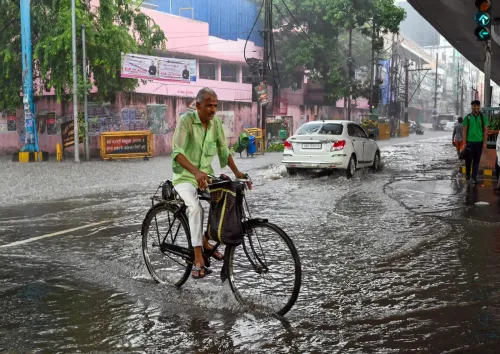
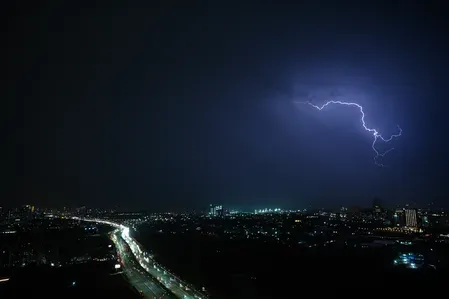
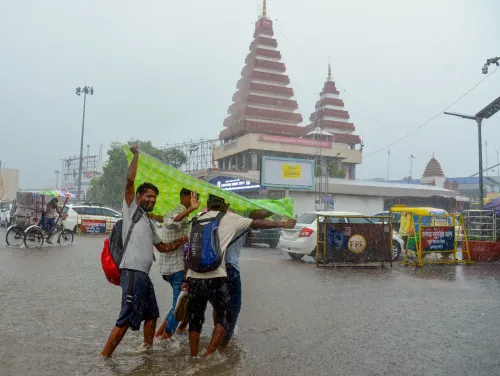
The India Meteorological Department (IMD) on Tuesday, 7 July issued a Yellow alert for the entire state of Bihar, warning of widespread rainfall, thunderstorms, gusty winds, and lightning. Dark clouds blanketed several parts of the state, including the capital Patna, as rain and strong winds brought relief from the prevailing heat. The IMD has cautioned residents to remain vigilant, particularly during thunderstorms, given the heightened risk of lightning strikes.
Districts Under Heaviest Threat
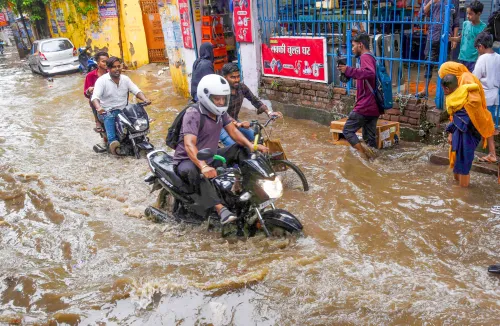
The IMD has flagged Kishanganj, Katihar, Bhagalpur, Banka, and West Champaran as likely to receive heavy rainfall. Isolated areas across the state also face the possibility of hailstorms. Over the past 24 hours, rainfall was recorded in Patna, Rohtas, Buxar, and Aurangabad, while Patna, Banka, Nalanda, and Jamui witnessed showers accompanied by strong winds on Monday afternoon.
Temperature Drop Across the State
The ongoing rainfall has triggered a drop of approximately 1–3 degrees Celsius in daytime temperatures across many parts of Bihar. Wet weather is forecast to continue over the state for the next five days, according to the IMD.
Alert Levels Day by Day
A Yellow alert remains in effect for the entire state on Wednesday, 9 July. Additionally, an Orange alert has been issued for Sheohar, Sitamarhi, Madhubani, Araria, Supaul, Muzaffarpur, Kishanganj, Vaishali, Darbhanga, Samastipur, Saharsa, Katihar, Madhepura, and Purnea on that day, with remaining districts under a Yellow alert.
On 10 July, an Orange alert covers East Champaran, West Champaran, Sitamarhi, Sheohar, Madhubani, Gopalganj, Siwan, Saran, Darbhanga, Vaishali, Muzaffarpur, and Samastipur, while the rest of the state remains on a Yellow alert. By 11 July, a Yellow alert will continue statewide, with cloudy skies, intermittent rainfall, and thunderstorms expected across many areas.
What Is Driving the Wet Spell
Meteorologists attribute the current rain activity to an active monsoon trough passing through eastern India. A low-pressure area over the northwestern Bay of Bengal is simultaneously supplying abundant moisture to the region. Together, these systems are expected to sustain widespread rainfall, thunderstorms, and lightning across Bihar over the coming days.
IMD Safety Advisory
The IMD has advised residents to avoid open fields, trees, and water bodies during thunderstorms, monitor official weather updates regularly, and take necessary precautions in areas vulnerable to heavy rain and lightning. This comes amid Bihar's historically high vulnerability to monsoon-season lightning fatalities — a recurring concern for state disaster management authorities each year.
Point of View
Orange across northern districts — reflects a familiar seasonal pattern, but the framing of it as routine weather news risks obscuring a genuine public safety crisis. Lightning strikes kill hundreds of people in Bihar every monsoon season, consistently ranking the state among India's most fatality-prone. The IMD's advisory is technically sound, but the gap between issuing alerts and translating them into last-mile community warnings — particularly in rural, low-connectivity districts like Sheohar and Madhubani — remains the real accountability question. State disaster management authorities need to be asked not just what the forecast says, but how many villages have actually been reached.
NationPress
6 Oct 2026
Frequently Asked Questions
What does the IMD Yellow alert for Bihar mean?
A Yellow alert issued by the India Meteorological Department signals that residents should 'be aware' of potentially severe weather. In Bihar's case on 7 July, it warns of widespread rainfall, thunderstorms, gusty winds, and lightning across the entire state, with heavy rain expected in specific districts.
Which Bihar districts are under an Orange alert?
On 9 July, an Orange alert covers Sheohar, Sitamarhi, Madhubani, Araria, Supaul, Muzaffarpur, Kishanganj, Vaishali, Darbhanga, Samastipur, Saharsa, Katihar, Madhepura, and Purnea. On 10 July, the Orange alert applies to East Champaran, West Champaran, Sitamarhi, Sheohar, Madhubani, Gopalganj, Siwan, Saran, Darbhanga, Vaishali, Muzaffarpur, and Samastipur.
How long will the heavy rain last in Bihar?
The IMD has forecast wet weather to continue across Bihar for at least the next five days from 7 July. A Yellow alert remains in effect through 11 July, with cloudy skies and intermittent thunderstorms expected.
What is causing the heavy rain in Bihar right now?
The current spell is being driven by an active monsoon trough passing through eastern India, combined with a low-pressure area over the northwestern Bay of Bengal that is channelling abundant moisture into the region.
What safety precautions has the IMD recommended during thunderstorms?
The IMD has advised people to avoid open fields, trees, and water bodies during thunderstorms, to monitor official weather updates regularly, and to take necessary precautions in areas prone to heavy rain and lightning strikes.