INCOIS deploys water quality buoy off Visakhapatnam
Synopsis
A new water quality buoy off Visakhapatnam will supply continuous coastal data as the NIRMaL Sagar pilot tracks marine litter. An initial survey has covered roughly 50 km of coastline and 20 km of nearshore waters, with researchers examining plastic waste entering the sea through urban drains.
Key Takeaways
INCOIS has deployed a water quality buoy off Visakhapatnam under the NIRMaL Sagar programme.
The pilot was launched in September with Andhra University and Vignana Bharati .
An initial survey covered roughly 50 km of coastline and 20 km of nearshore waters.
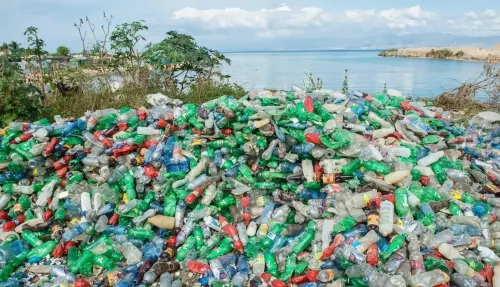
Researchers are examining marine plastic sources, including waste entering through open urban drains.
The programme envisages gradual expansion to other stretches of the Indian coastline.
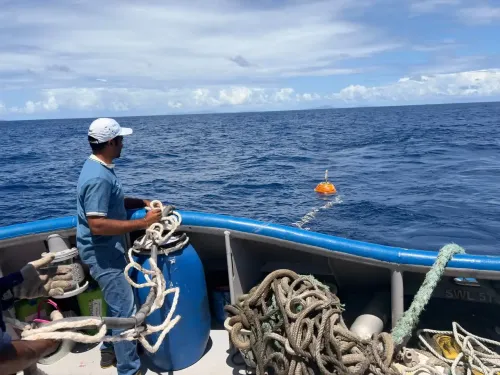
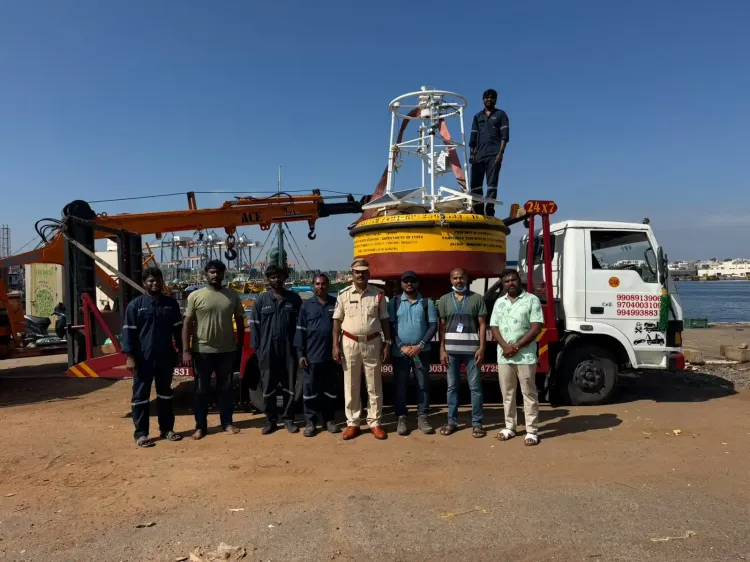
A water quality buoy has been deployed off the coast of Visakhapatnam under the NIRMaL Sagar marine litter programme, officials said on Monday, 23 November. The platform will provide continuous coastal data to support pollution monitoring and management as researchers study how plastic waste reaches and accumulates in the sea.
The pilot initiative was launched in September by the Indian National Centre for Ocean Information Services (INCOIS), under the Ministry of Earth Sciences, in collaboration with Andhra University and Vignana Bharati (VIBHA). It combines ocean modelling, satellite remote sensing, artificial intelligence and machine learning to identify, monitor and forecast marine litter hotspots for targeted clean-up operations.
What the buoy will monitor
According to INCOIS, the buoy carries autonomous sensors designed to provide continuous, real-time information on coastal oceanographic and biogeochemical conditions. Those observations are intended to support ecosystem health assessment, pollution monitoring, marine safety and sustainable coastal management.
Officials said the continuous data would help coastal management agencies address marine pollution and support the sustainable development of India's blue economy. The buoy forms part of a wider programme that uses several information sources to study litter, rather than relying on water-quality observations alone.
Why Visakhapatnam was selected
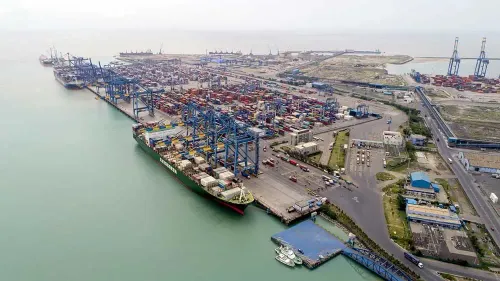
The pilot focuses on Visakhapatnam because its nearshore environment includes a major port, a fishing harbour, urban drainage outlets, beaches and coastal fishing settlements. Together, these features give researchers a range of coastal settings in which to examine marine litter.
Scientists are studying sources of plastic waste in and around the city, with particular attention to debris entering the sea through open urban drains. Identifying where waste comes from and where it accumulates can inform decisions about where removal efforts should be directed.
Survey and clean-up planning
An initial survey has covered roughly 50 km of coastline and 20 km of nearshore waters, according to the information provided by officials. The work is intended to map potential accumulation zones and develop approaches for waste removal and recycling.
The recycling element is intended to support a circular economy, while the programme's forecasting tools are designed to help identify hotspots for targeted clean-ups. The announcement did not specify a schedule for individual removal operations or provide a count of litter collected.
Broader coastal programme
The National Initiative for Remediation of Marine Litter (NIRMaL) Sagar seeks to establish what it describes as India's first integrated marine litter tracking framework. It is aligned with the Swachh Sagar, Surakshit Sagar mission and the United Nations Sustainable Development Goals.
The programme envisages a gradual expansion to other stretches of the Indian coastline after the pilot. For now, the work centres on observations and studies around Visakhapatnam, with further expansion envisaged over time.
Point of View
But data alone will not remove plastic from the sea. The practical test for NIRMaL Sagar will be whether its findings translate into measurable clean-up and recycling, particularly where waste enters through urban drains. Publishing methods and results would make it easier to assess the pilot before it expands.
NationPress
24 Nov 2026
Frequently Asked Questions
What has INCOIS deployed off Visakhapatnam?
INCOIS has deployed a water quality buoy off Visakhapatnam under the NIRMaL Sagar marine litter programme. Its autonomous sensors will provide continuous, real-time coastal data.
What is the NIRMaL Sagar programme?
NIRMaL Sagar is an initiative to identify, monitor and forecast marine litter hotspots for targeted clean-up. It uses ocean modelling, satellite remote sensing, artificial intelligence and machine learning.
Why was Visakhapatnam selected for the pilot?
Visakhapatnam was selected because its nearshore environment includes a port, fishing harbour, urban drains, beaches and coastal fishing settlements. Researchers are examining sources of plastic waste in and around the city.
How much of the Visakhapatnam coast has been surveyed?
The initial survey covered roughly 50 km of coastline and 20 km of nearshore waters. It sought to map potential litter accumulation zones and inform removal and recycling strategies.
Will NIRMaL Sagar expand beyond Visakhapatnam?
The programme envisages gradual expansion to other stretches of the Indian coastline. No expansion timetable was specified in the announcement.