Delhi Lakshmi Yojana: 9.22 lakh women enrolled, ₹2,500 monthly aid from Sept 1
Synopsis
Within 18 months of returning to power in Delhi, the BJP has handed the first certificates under the Lakshmi Yojana — a ₹2,500 monthly transfer for homemakers — to 2,500 women at Talkatora Stadium. With 9.22 lakh already enrolled and bank credits starting 1 September, the scheme's scale is ambitious; the execution test begins now.
Key Takeaways
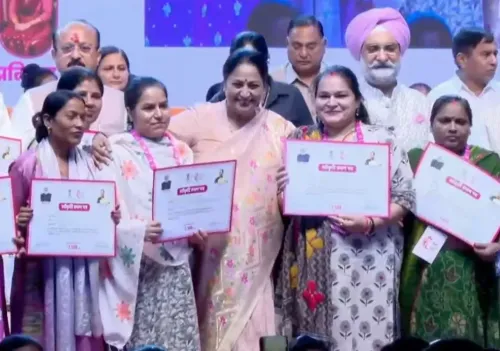
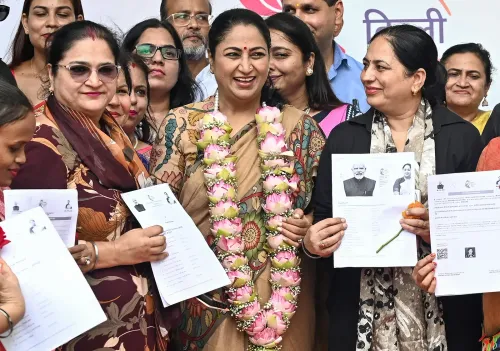
Chief Minister Rekha Gupta distributed verification certificates to 2,500 initial beneficiaries at Talkatora Stadium on 26 August .
The Delhi Lakshmi Yojana provides ₹2,500 per month directly to eligible women's bank accounts.
Since opening on 1 August , 9,22,000 women have registered under the scheme.
Direct bank transfers for the first batch are set to begin from 1 September .
MLA Anil Goyal described the scheme as fulfilment of a guarantee made by Prime Minister Narendra Modi .
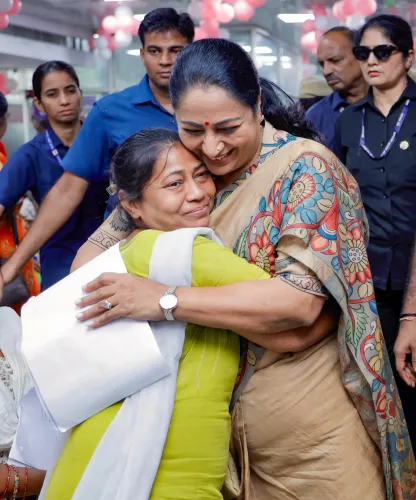
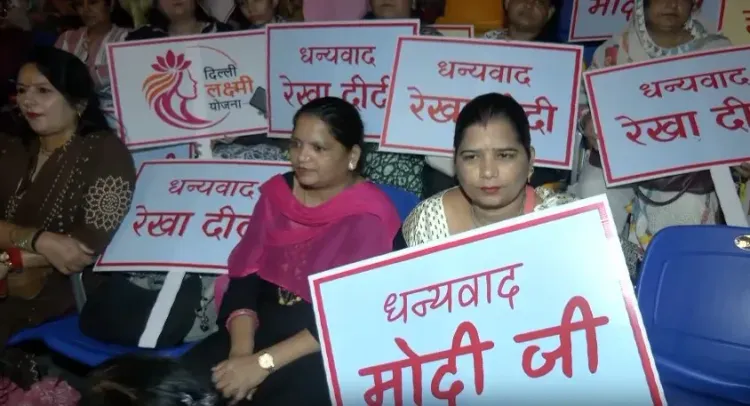
Chief Minister Rekha Gupta on Wednesday, 26 August officially handed over verification and approval certificates to 2,500 initial beneficiaries of the Delhi Lakshmi Yojana at a ceremony held at Talkatora Stadium, New Delhi. The ₹2,500 monthly cash-transfer scheme, which opened for registration on 1 August, has already enrolled 9,22,000 women across the capital, with direct bank transfers set to begin from 1 September.
What the Scheme Offers
Under the Delhi Lakshmi Yojana, eligible women will receive ₹2,500 per month credited directly to their bank accounts. The certificates handed over at Wednesday's event mark the formal approval stage; disbursements to the initial 2,500 beneficiaries are scheduled to begin from 1 September, with the process set to continue on a rolling basis for all registered women.
What CM Gupta Said
Addressing the gathering, Chief Minister Rekha Gupta said: 'All I want is that all my sisters should remain happy. This smile should forever stay on their faces. May all my sisters always progress in life, because I am right here with you!'
Gupta credited Prime Minister Narendra Modi for the scheme's vision, stating: 'I express gratitude to Prime Minister Narendra Modi for this Delhi Lakshmi Yojana, which has reached the doorsteps of all my sisters across Delhi.' She also reiterated a broader policy principle: 'Until the woman of a household progresses, prospers, and has her challenges resolved, the nation's problems cannot be solved.'
Beneficiaries React
Women who received their letters at the event were visibly emotional. One beneficiary said the Bharatiya Janata Party (BJP) government in Delhi had begun fulfilling its promises within one-and-a-half years of coming to power. Another drew a striking comparison: 'This is similar to Independence Day and Republic Day for us homemakers. So far those who were earning, were independent. It is the same feeling for us now.'
Several other recipients echoed the sentiment, with many expressing gratitude directly to Chief Minister Gupta.
Political Context
MLA Anil Goyal noted that the scheme was a guarantee made by Prime Minister Narendra Modi and is now being delivered. The rollout comes roughly 18 months after the BJP returned to power in Delhi, and the scheme's framing — linking women's economic independence to national progress — mirrors the Centre's broader 'Nari Shakti' narrative. Notably, direct benefit transfers targeting homemakers have become a recurring feature of BJP-governed state budgets, from Madhya Pradesh's Ladli Behna to Maharashtra's Mukhyamantri Majhi Ladki Bahin scheme.
What Comes Next
With 9,22,000 women already registered, the government faces the operational task of verifying eligibility and scaling disbursements beyond the initial 2,500 recipients. Officials have indicated the process will continue on a rolling basis. At ₹2,500 per month per beneficiary, a full rollout to all registered women would translate to a monthly outlay exceeding ₹230 crore, making execution capacity the scheme's most immediate test.
Point of View
But the harder number to watch is how many of those women actually receive their first credit on 1 September. Schemes like Ladli Behna in Madhya Pradesh showed that rapid enrolment and timely, sustained disbursement are two very different operational challenges. The ₹2,500 figure is also below comparable state schemes in inflation-adjusted terms, and without a published eligibility criterion in the public domain, questions of targeting efficiency remain open. The political dividend is real; the development dividend depends entirely on execution at scale.
NationPress
26 Aug 2026
Frequently Asked Questions
What is the Delhi Lakshmi Yojana?
The Delhi Lakshmi Yojana is a monthly cash-transfer scheme launched by the BJP government in Delhi that provides ₹2,500 per month directly to eligible women's bank accounts. It was launched on 1 August and is credited as a fulfilment of a pre-election guarantee made by Prime Minister Narendra Modi.
When will the money be credited under Delhi Lakshmi Yojana?
Direct bank transfers for the initial 2,500 verified beneficiaries are scheduled to begin from 1 September. The government has said the process will continue on a rolling basis for all registered women.
How many women have registered for the Delhi Lakshmi Yojana?
As of 26 August, 9,22,000 women had registered under the Delhi Lakshmi Yojana since its launch on 1 August. Of these, 2,500 received official verification and approval certificates at the Talkatora Stadium event.
Who is eligible for the Delhi Lakshmi Yojana?
The scheme targets homemakers and women residents of Delhi. Detailed eligibility criteria have not been publicly specified in available reports; the government has indicated that eligible women will receive benefits on a rolling basis as verification is completed.
How does Delhi Lakshmi Yojana compare to similar state schemes?
The Delhi scheme joins a growing list of BJP-governed state direct-benefit programmes for women, including Madhya Pradesh's Ladli Behna and Maharashtra's Mukhyamantri Majhi Ladki Bahin. At ₹2,500 per month, it is broadly comparable in structure, though the sustainability and targeting efficiency of such schemes have drawn scrutiny from economists and opposition parties across states.