India-Vietnam Security Dialogue 2026: Counter-terrorism, cyber security top fourth meet
Synopsis
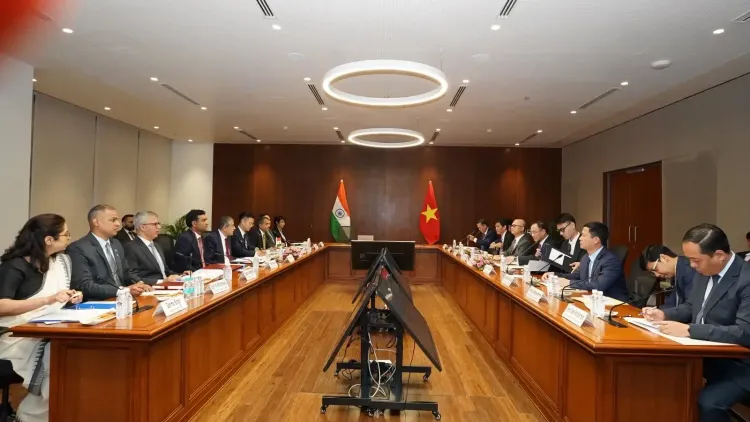
India and Vietnam wrapped up their fourth Security Dialogue in New Delhi on 16 October, covering counter-terrorism, cyber security, maritime engagements, and emerging technologies. Coming months after the bilateral relationship was elevated to an Enhanced Comprehensive Strategic Partnership and PM Modi's proposal of a 2+2 mechanism with Vietnam, Friday's dialogue marks a steady institutionalisation of one of India's most consequential Act East partnerships.
Key Takeaways
India and Vietnam held the fourth Security Dialogue in New Delhi on 16 October 2026 .
The talks covered counter-terrorism , cyber security , maritime engagements , economic security , and emerging technologies .
The dialogue was co-chaired by Deputy NSA Pavan Kapoor and Vietnam's Senior Lieutenant General Pham The Tung .
PM Modi proposed a 2+2 defence and foreign ministers' mechanism with Vietnam on the sidelines of the BRICS Summit in September 2026.
The bilateral relationship was elevated to an Enhanced Comprehensive Strategic Partnership during President To Lam's state visit to India in May 2026 .
India and Vietnam are working towards a bilateral trade target of USD 25 billion by 2030 .
India and Vietnam on Friday, 16 October 2026, concluded the fourth edition of their bilateral Security Dialogue in New Delhi, undertaking a wide-ranging review of cooperation in counter-terrorism, cyber security, maritime engagements, economic security, and emerging technologies, the Ministry of External Affairs (MEA) confirmed. The dialogue signals deepening institutional ties between the two countries at a moment of heightened regional security attention.
Who Led the Talks
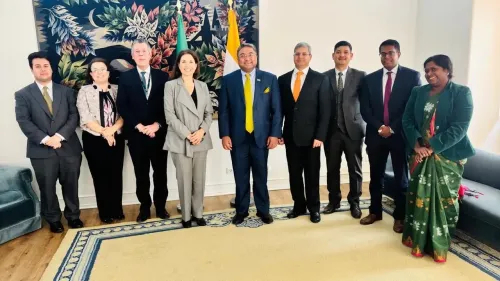
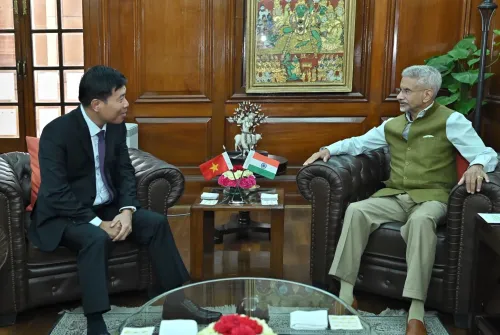
The dialogue was co-chaired by India's Deputy National Security Advisor Pavan Kapoor and Vietnam's Deputy Minister of Public Security, Senior Lieutenant General Pham The Tung. The seniority of both delegations underscores the strategic weight that both governments attach to the bilateral security architecture.
Key Areas Reviewed
'Both sides undertook a comprehensive review covering, inter alia, economic security, maritime engagements, counter-terrorism, emerging technologies and cyber security. They also exchanged views on the regional and global security environment and reaffirmed closer collaboration on issues of mutual interest,' the MEA said in its official statement. Notably, the inclusion of emerging technologies and cyber security in a formal security dialogue reflects the expanding definition of national security for both nations — one that now reaches well beyond conventional military domains.
Context: Modi-Hung Meeting at BRICS and the Upgraded Partnership
The Security Dialogue follows a high-level diplomatic push in recent months. In September 2026, Prime Minister Narendra Modi met Vietnamese Prime Minister Le Minh Hung on the sidelines of the BRICS Summit in New Delhi, where the two leaders discussed a broad cooperation agenda. In a post on X, Modi wrote: 'Met Prime Minister Lee Minh Hung of Vietnam on the sidelines of the BRICS Summit. We had productive discussions on: Deepening defence and security cooperation, including the proposed 2+2 mechanism. Expanding cooperation in energy, rare earths and space. Working towards USD 25 billion bilateral trade by 2030 and greater two-way investment. Strengthening our deep cultural and civilisational linkages. Vietnam will always remain a key pillar of India's Act East Policy and MAHASAGAR vision.' The reference to a 2+2 mechanism — combining defence and foreign ministers — signals a structural upgrade to the bilateral format, mirroring the framework India uses with the United States, Japan, and Australia.
This momentum builds on the elevation of the India-Vietnam relationship to an Enhanced Comprehensive Strategic Partnership during the state visit of General Secretary and President To Lam of Vietnam to India in May 2026. That upgrade brought with it expanded commitments across defence, trade, and people-to-people ties.
Why This Matters: Act East and the Indo-Pacific
Vietnam occupies a pivotal position in India's Act East Policy and the broader MAHASAGAR vision, which frames India's maritime and strategic engagement across the Indo-Pacific. Both countries share concerns about freedom of navigation in the South China Sea, making maritime security a particularly sensitive — and consequential — area of dialogue. The MEA described the India-Vietnam friendship as 'time-tested,' rooted in 'shared civilisational heritage, mutual trust and understanding.' This comes amid a period of active Indian diplomacy across Southeast Asia, with New Delhi expanding its security footprint through bilateral frameworks and multilateral forums including ASEAN and the Quad.
What Comes Next
The two sides reaffirmed intent to deepen collaboration on issues of mutual interest, with the proposed 2+2 ministerial dialogue mechanism likely to be a near-term priority. The bilateral trade target of USD 25 billion by 2030 and cooperation in rare earths, energy, and space also remain on the agenda. The fifth Security Dialogue is expected to further institutionalise the security partnership as both countries navigate a complex regional environment.
Point of View
Institutionalised security relationship rather than a transactional one. The proposed 2+2 mechanism, if formalised, would place Vietnam in an exclusive club alongside the US, Japan, and Australia in India's security architecture. What mainstream coverage often misses is the rare earths dimension: Vietnam holds some of the world's largest rare earth reserves, and India's interest in securing supply chains for semiconductors and clean energy adds a hard economic-security logic to what looks like a diplomatic ritual. The real test is whether the 2+2 moves from proposal to reality before the next election cycle resets priorities on either side.
NationPress
16 Oct 2026
Frequently Asked Questions
What was discussed at the India-Vietnam Security Dialogue on 16 October 2026?
The fourth India-Vietnam Security Dialogue, held in New Delhi on 16 October 2026, covered counter-terrorism, cyber security, maritime engagements, economic security, and emerging technologies. Both sides also exchanged views on the regional and global security environment and reaffirmed closer collaboration on issues of mutual interest.
Who represented India and Vietnam at the Security Dialogue?
India was represented by Deputy National Security Advisor Pavan Kapoor, while Vietnam's side was led by Deputy Minister of Public Security, Senior Lieutenant General Pham The Tung. Both officials co-chaired the dialogue.
What is the India-Vietnam Enhanced Comprehensive Strategic Partnership?
It is the upgraded framework governing India-Vietnam bilateral ties, announced during the state visit of Vietnamese General Secretary and President To Lam to India in May 2026. The elevation brought expanded commitments on defence, trade, energy, rare earths, and people-to-people cooperation.
What is the proposed 2+2 mechanism between India and Vietnam?
PM Modi proposed a 2+2 dialogue mechanism — involving both defence and foreign ministers of both countries — when he met Vietnamese PM Le Minh Hung on the sidelines of the BRICS Summit in September 2026. If formalised, it would place Vietnam alongside the US, Japan, and Australia as countries with which India holds this senior-level combined format.
Why is Vietnam important to India's Act East Policy?
Vietnam is described by India's Ministry of External Affairs as a 'key pillar' of the Act East Policy and India's MAHASAGAR vision. Both countries share concerns about maritime security in the South China Sea, and Vietnam's strategic location, plus its large rare earth reserves and growing economy, make it a critical partner in India's Indo-Pacific engagement.