India's Blue Economy push: Govt commits ₹39,272 crore for fisheries growth
Synopsis
India's fisheries sector is getting its biggest structural makeover yet — ₹39,272 crore committed, 46,500 new facilities added, and 2,195 producer organisations formed. With smart fish markets, ONDC integration, and a dedicated women's empowerment push, the government is betting that Blue Economy gains can be both scale-worthy and inclusive.
Key Takeaways
The government has committed ₹39,272 crore to the fisheries sector through five key schemes including PMMSY , FIDF , and PM-MKSSY .
The investment targets employment and livelihood creation for 74.66 lakh fishers and fish farmers across India.
46,500 facilities including cold storages, ice plants, and fish markets have been added with an outlay of ₹3,393.85 crore .
Over ₹4,155 crore in projects approved under PMMSY over five years for more than 1.28 lakh women beneficiaries.
2,195 Fisheries Farmer Producer Organisations (FFPOs) formed; several integrated with ONDC for digital market access.
Five smart fish markets under development, expected to generate 15,900 jobs.
The Indian government has sharply scaled up public investment in the fisheries sector, committing ₹39,272 crore across a suite of key schemes and programmes, according to an official statement released on Friday, 30 October 2026. The interventions are designed to expand infrastructure, strengthen production and post-harvest systems, and generate employment and livelihood opportunities for 74.66 lakh fishers and fish farmers nationwide.
Key Schemes Driving the Push
The Ministry of Fisheries, Animal Husbandry and Dairying has identified five flagship interventions powering this transformation: the Blue Revolution Scheme, the Fisheries and Aquaculture Infrastructure Development Fund (FIDF), the Pradhan Mantri Matsya Sampada Yojana (PMMSY), the Pradhan Mantri Matsya Samridhi Sah Yojana (PM-MKSSY), and the Kisan Credit Card (KCC). Together, these programmes aim to convert fisheries from a subsistence-level activity into a technology-driven, value-oriented pillar of the national economy.
Infrastructure and Logistics Overhaul
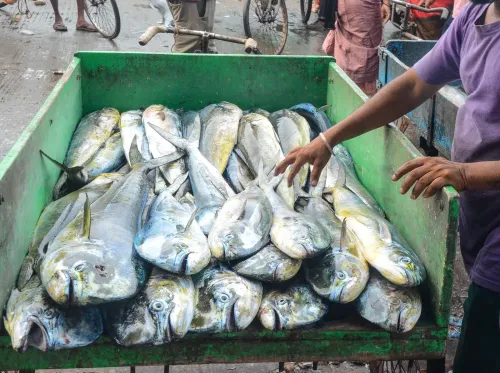
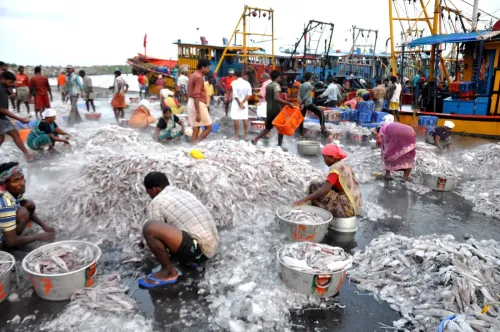
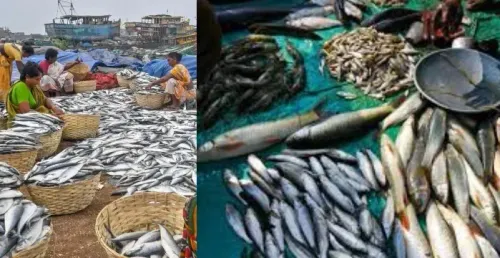
A significant component of the investment has gone into transportation and logistics networks. According to the ministry, 46,500 facilities — spanning fish transportation systems, retail and wholesale fish markets, kiosks, feed mills, ice plants, cold storages, and value-added enterprise units — have been added with an investment of ₹3,393.85 crore. Additionally, five modern, smart fish markets integrating advanced IT systems, green technologies, and integrated logistics supply chains are currently under development, with an expected generation of 15,900 employment opportunities.
Women's Empowerment at the Centre
A particular focus has been placed on expanding women's participation in post-harvest activities and fisheries-based enterprises. Under the PMMSY, projects worth over ₹4,155 crore — with a central share of ₹1,572 crore — have been approved over the last five years for the benefit of more than 1.28 lakh women beneficiaries. The ministry noted that this support has enabled women to engage in diverse activities including fish drying, preparation of fish pickles and papad, smoked fish products, fish powder, and packaging and retailing.
Producer Organisations and Digital Integration
The government has also backed the formation of 2,195 Fisheries Farmer Producer Organisations (FFPOs), enabling producers to aggregate output, pool resources, and participate more effectively in processing, branding, and marketing. Notably, several of these organisations have been integrated with the Open Network for Digital Commerce (ONDC), widening their access to digital markets and improving prospects for fair price realisation. Under PM-MKSSY, 5,500 fisheries cooperatives are being strengthened to function as FFPOs in collaboration with intermediary agencies including NCDC, NAFED, SFAC, and NERAMAC.
This comes amid a broader government effort to reposition India's Blue Economy as a strategic growth frontier, with fisheries exports already making a significant contribution to the country's foreign exchange earnings. The next phase of implementation will test whether the infrastructure built on paper translates into durable income gains for coastal and inland fishing communities.
Point of View
272 crore commitment is substantial on paper, but India's fisheries sector has historically struggled with the last-mile problem — cold chain gaps, middlemen dominance, and poor price realisation at the farm gate. The ONDC integration and FFPO formation are structurally sound ideas, but their impact depends entirely on whether these digital channels reach small-scale fishers in coastal Odisha or inland Bihar, not just aggregator-friendly clusters. The women's empowerment component is the most credible part of this package, given PMMSY's documented outreach to 1.28 lakh beneficiaries — but value-chain activities like fish pickling and packaging need market linkages, not just training. The real scorecard will be export growth and per-capita fisher income, neither of which the ministry has benchmarked publicly.
NationPress
30 Oct 2026
Frequently Asked Questions
How much has the Indian government invested in the fisheries sector?
The government has committed ₹39,272 crore across five key schemes — the Blue Revolution Scheme, FIDF, PMMSY, PM-MKSSY, and the Kisan Credit Card — aimed at expanding infrastructure and generating employment for 74.66 lakh fishers and fish farmers.
What is the Pradhan Mantri Matsya Sampada Yojana (PMMSY)?
PMMSY is a flagship government scheme focused on transforming the fisheries sector through infrastructure investment, production enhancement, and post-harvest value addition. Over the last five years, projects worth over ₹4,155 crore have been approved under it, including dedicated programmes benefiting more than 1.28 lakh women.
How are women being empowered through India's fisheries schemes?
Under PMMSY, projects with a central share of ₹1,572 crore have been approved to support more than 1.28 lakh women beneficiaries. This has enabled women to participate in fish drying, pickle and papad preparation, smoked fish production, fish powder processing, and packaging and retailing.
What role does ONDC play in India's fisheries push?
Several of the 2,195 Fisheries Farmer Producer Organisations (FFPOs) formed under the government's initiative have been integrated with the Open Network for Digital Commerce (ONDC), giving fishers and fish farmers direct access to digital markets and better prospects for fair price realisation.
What new infrastructure has been created under India's fisheries investment?
A total of 46,500 facilities — including fish transportation systems, retail and wholesale markets, ice plants, cold storages, feed mills, and value-added enterprise units — have been added with an investment of ₹3,393.85 crore. Five smart fish markets integrating IT systems and green logistics are also under development, expected to create 15,900 jobs.