Goyal flags immense growth potential in India's fisheries sector
Synopsis
Union Commerce Minister Piyush Goyal has flagged immense growth potential in India's fisheries sector, reinforcing the government's Blue Economy push backed by the Rs 20,000 crore PMMSY scheme and a target of 22 million tonnes of fish production. Coastal fishermen and seafood exporters stand to gain from sustained policy momentum.
Key Takeaways
Union Commerce and Industry Minister Piyush Goyal publicly highlighted the 'immense potential' for further growth in India's fisheries sector on June 5, 2026 .
The government's Pradhan Mantri Matsya Sampada Yojana (PMMSY) , launched in 2020 , carries an outlay of Rs 20,000 crore to modernise fisheries infrastructure.
PMMSY set a target of raising fish production to 22 million tonnes by 2024-25 .
The National Fisheries Development Board (NFDB) is the primary autonomous body overseeing sustainable fisheries development and export promotion.
Key beneficiaries include coastal fishermen , seafood exporters , and inland aquaculture states that have recorded faster recent growth.
Upcoming fish production data from the Department of Fisheries and Union Budget allocations will be the next key indicators of policy direction.
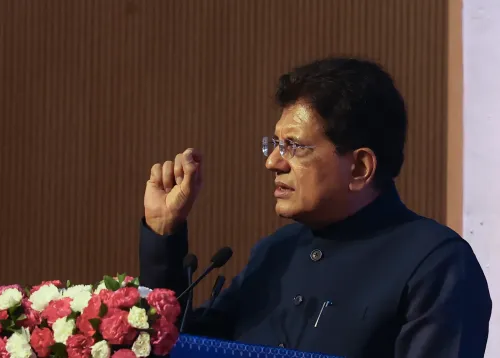
Union Commerce and Industry Minister Piyush Goyal on Friday, June 5, 2026, highlighted the vast untapped potential of India's fisheries sector, signalling the government's continued focus on expanding marine and inland aquaculture output as a key driver of the broader Blue Economy agenda.
Context
In his post on X, Goyal stated: 'There is immense potential for further growth of India's fisheries sector.' The remark, brief but pointed, comes from the minister who oversees trade policy and marine product exports — sectors directly intertwined with how fish and seafood reach global markets. As Leader of the House in the Rajya Sabha and a senior BJP leader, Goyal's public statements on economic sectors carry significant policy signalling weight.
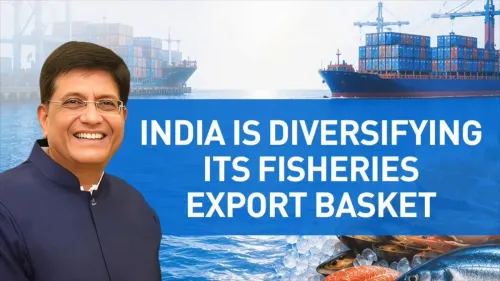
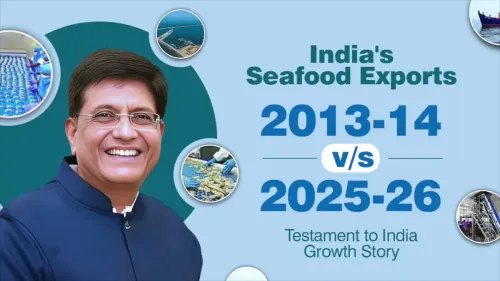
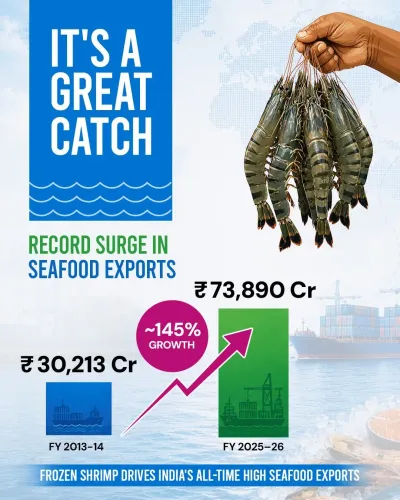
The fisheries sector has emerged as one of the faster-growing segments of Indian agriculture, with both marine capture and inland aquaculture recording consistent output increases over the past decade. India is among the world's top fish-producing and fish-exporting nations, with coastal states driving the bulk of production and inland states recording sharper recent growth rates.
Policy Backdrop
The government's flagship Pradhan Mantri Matsya Sampada Yojana (PMMSY), approved in 2020 with an outlay of Rs 20,000 crore, was designed precisely to modernise fisheries infrastructure, build value chains, and raise fish production to 22 million tonnes by 2024-25. The scheme targets cold-chain infrastructure, deep-sea fishing vessels, and compliance with international sanitary standards to widen market access.
The National Fisheries Development Board (NFDB), the autonomous body under the Ministry of Fisheries, has been the primary implementation arm for these initiatives. The Blue Economy narrative was formally anchored in policy as early as the 2019-20 Economic Survey, which linked fisheries growth to coastal employment and export earnings. Successive governments have sustained this emphasis, treating seafood exports as a reliable foreign exchange earner.
Stakeholders and Impact
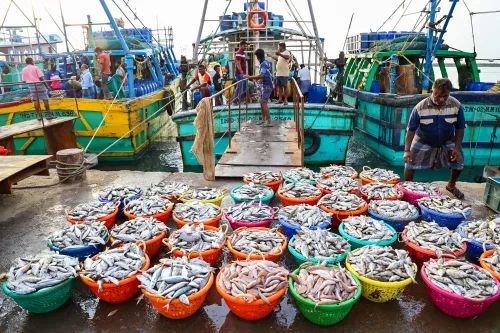
Coastal fishermen and seafood exporters are the most direct stakeholders in any policy push on this front. For fishing communities along India's roughly 8,000-kilometre coastline, infrastructure investment translates into better storage, faster logistics, and improved incomes. For exporters, compliance upgrades and cold-chain expansion determine access to high-value markets in Europe, the United States, and Southeast Asia.
Inland aquaculture states — which have recorded faster growth rates in recent years — stand to benefit from increased investment in freshwater fish farming, feed supply chains, and processing capacity. The minister's signal could also encourage private investment in a sector that has historically been underfinanced relative to its export potential.
What's Next
Attention will now turn to the release of the next fish production and export figures by the Department of Fisheries, which will provide a clearer picture of how close the sector has come to its PMMSY targets. Any fresh budgetary allocations in the forthcoming Union Budget will be closely watched by industry groups and coastal state governments as a measure of the Centre's commitment to sustaining this growth trajectory.
If the minister's statement is followed by concrete policy announcements — whether on deep-sea fishing fleet expansion, export incentives, or processing infrastructure — it could mark a renewed push to position India as a dominant force in global seafood trade in the years ahead.
Point of View
Not a peripheral one. Coming from the minister who controls trade policy, the remark ties Blue Economy ambitions directly to export earnings and foreign exchange — a framing that has gained traction since the 2019-20 Economic Survey. With the Union Budget cycle approaching, such public positioning often precedes fresh allocations or scheme revisions, suggesting the government may be preparing to double down on PMMSY or introduce complementary trade facilitation measures. The broader pattern is one of consistent, cross-government consensus on fisheries as a high-growth sector, making this less a partisan statement and more a continuation of an established policy arc.
NationPress
21 Sept 2026
Frequently Asked Questions
What did Piyush Goyal say about India's fisheries sector?
Piyush Goyal stated on June 5, 2026, that 'there is immense potential for further growth of India's fisheries sector,' signalling the government's continued focus on expanding marine and aquaculture output.
What is the Pradhan Mantri Matsya Sampada Yojana (PMMSY)?
PMMSY is a central sector scheme launched in 2020 with an outlay of Rs 20,000 crore to modernise fisheries infrastructure, build value chains, and raise fish production to 22 million tonnes by 2024-25.
What is India's fish production target under PMMSY?
Under PMMSY, the government set a target of reaching 22 million tonnes of fish production by 2024-25, supported by investment in cold-chain infrastructure, deep-sea vessels, and processing facilities.
Who benefits from India's fisheries sector growth?
The primary beneficiaries are coastal fishermen, seafood exporters, and inland aquaculture states, all of whom gain from improved infrastructure, better logistics, and expanded access to international markets.
What is the National Fisheries Development Board?
The National Fisheries Development Board (NFDB) is an autonomous body under the Ministry of Fisheries responsible for promoting sustainable fisheries development and supporting export growth across India.