Goyal: Modi govt focused on fisherfolk, farmers, exporters
Synopsis
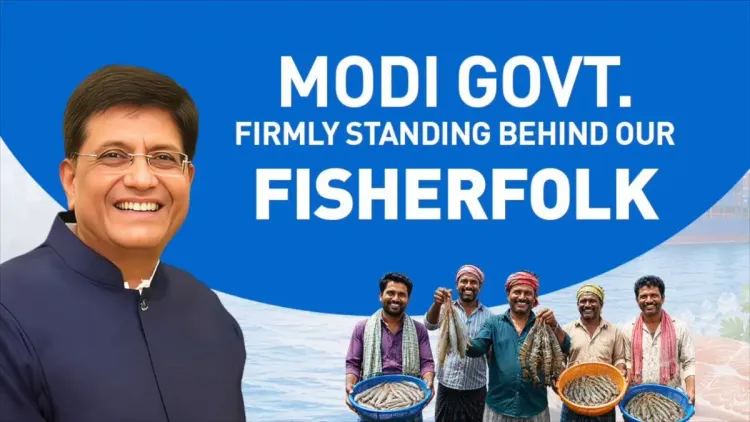
Commerce Minister Piyush Goyal on June 5, 2026 reaffirmed the Modi government's mission to help fisherfolk, farmers, and exporters access global markets, invoking flagship schemes like the Agricultural Export Policy and PMMSY as part of India's export diversification drive.
Key Takeaways
Commerce Minister Piyush Goyal on June 5, 2026 stated the Modi government is singularly focused on expanding global market access for fisherfolk, farmers, and exporters.
The Agricultural Export Policy (2018) was designed to integrate Indian farmers into global value chains and raise agri-export volumes.
The Pradhan Mantri Matsya Sampada Yojana (PMMSY, 2020) allocated dedicated funds to modernise fishing infrastructure and promote seafood exports.
India's export diversification strategy spans bilateral free trade agreements, production-linked incentives, and sector-specific schemes targeting rural producers.
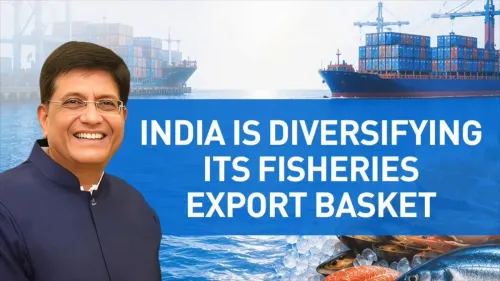
Coastal fishing communities in states such as Kerala, Tamil Nadu, Andhra Pradesh, Gujarat , and West Bengal are key beneficiaries of the fisheries export push.
Upcoming agricultural and marine export data and new trade agreement developments will be the key metrics to watch.
Union Commerce and Industry Minister Piyush Goyal on Friday, June 5, 2026, reaffirmed that the Modi government is pursuing a singular mission to help fisherfolk, farmers, and exporters access global markets, underlining the administration's continued focus on export-led growth for India's primary sector.
Context
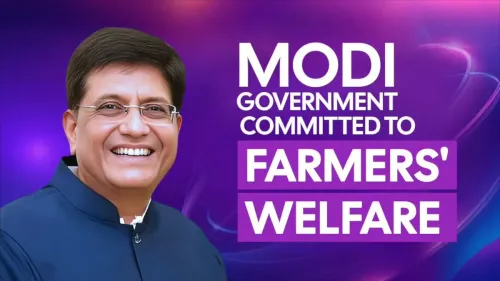
In the post, Goyal stated: 'The Modi government is working with the singular mission to help our fisherfolk, farmers, and exporters expand to global markets.' The statement comes as India's commerce ministry continues to position agricultural and marine exports as central pillars of the country's broader merchandise trade strategy. The explicit mention of three distinct constituencies — fisherfolk, farmers, and exporters — signals a coordinated outreach across the rural and trade ecosystem.
Policy Backdrop
The government's push for global market integration in agriculture and fisheries has deep policy roots. In 2018, the administration released the Agricultural Export Policy, which sought to integrate farmers into global value chains and raise India's share of agri exports in world trade. Two years later, in 2020, the Pradhan Mantri Matsya Sampada Yojana (PMMSY) was launched with dedicated funds to modernise fishing infrastructure and boost seafood exports from coastal communities.
Together, these schemes form part of a wider export diversification strategy that has also included bilateral free trade agreements and domestic production-linked incentive programmes. The consistent thread across successive policy moves since 2014 has been raising the share of agriculture and marine products in India's merchandise export basket.
Stakeholders and Impact
India's fisherfolk — concentrated along the coastlines of states such as Kerala, Tamil Nadu, Andhra Pradesh, Gujarat, and West Bengal — stand to benefit from improved cold-chain logistics, port infrastructure, and market-access negotiations that reduce tariff barriers on seafood. For farmers, the emphasis on global markets translates into better price realisation for exportable commodities such as rice, spices, and processed foods. Exporters, particularly small and medium enterprises in the agri-processing sector, gain from policy certainty and diplomatic groundwork that opens new trade corridors.
The commerce ministry's focus on these three groups also reflects an acknowledgement that rural income enhancement and export growth are interlinked objectives — a message that carries political weight ahead of any state or national electoral cycle.
What's Next
Observers will watch for the release of the latest agricultural and marine export data, which will serve as a concrete measure of whether policy intent is translating into trade volumes. Any new bilateral or multilateral trade agreements under negotiation — particularly those covering tariff lines for seafood, cereals, and processed foods — will be closely tracked as a follow-through to Goyal's statement. The ministry's upcoming trade promotion events and buyer-seller meets for agri exporters will also indicate the operational momentum behind this mission.
Point of View
Tying together three politically and economically significant constituencies under one policy umbrella. By invoking fisherfolk alongside farmers and exporters, the commerce ministry signals that the marine economy — often overshadowed by agricultural trade debates — is being elevated as an export priority. The statement aligns with a pattern of high-visibility ministerial communication that precedes either a data release, a trade agreement announcement, or a scheme milestone. It also reinforces the BJP's long-running effort to frame economic policy as a direct service to rural and coastal India, blurring the line between trade diplomacy and grassroots outreach.
NationPress
24 Sept 2026
Frequently Asked Questions
What did Piyush Goyal say about farmers and fisherfolk on June 5 2026?
Piyush Goyal stated that the Modi government is working with a singular mission to help fisherfolk, farmers, and exporters expand to global markets, reaffirming the administration's export-led growth focus for India's primary sector.
What is the Pradhan Mantri Matsya Sampada Yojana?
The Pradhan Mantri Matsya Sampada Yojana (PMMSY) is a central government scheme launched in 2020 to modernise fishing infrastructure and boost seafood exports from India's coastal communities.
What is India's Agricultural Export Policy?
India's Agricultural Export Policy, released in 2018, aims to integrate farmers into global value chains and raise the share of agricultural products in India's merchandise exports.
How does the Modi government plan to help Indian exporters access global markets?
The government's approach includes dedicated schemes like PMMSY and the Agricultural Export Policy, bilateral and multilateral free trade agreements, production-linked incentives, and trade promotion activities coordinated by the commerce ministry.
Which states benefit most from India's fisheries export push?
Coastal states such as Kerala, Tamil Nadu, Andhra Pradesh, Gujarat, and West Bengal are among the primary beneficiaries, as their fishing communities stand to gain from improved infrastructure, cold-chain logistics, and reduced tariff barriers on seafood exports.