Goyal Reaffirms Modi Govt's Commitment to Farmer Welfare
Synopsis
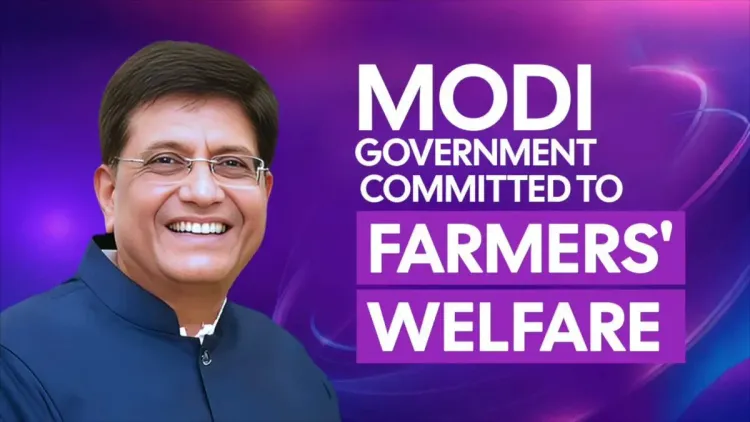
Union Commerce and Industry Minister Piyush Goyal on 22 June 2026 reaffirmed the Modi Government's commitment to protecting farmer interests, a statement that carries weight amid ongoing WTO negotiations and bilateral trade talks where India's agricultural safeguards are under scrutiny.
Key Takeaways
Union Minister Piyush Goyal posted on 22 June 2026 that the Modi Government remains committed to protecting farmer interests.
The statement comes amid active WTO discussions on public stockholding and ongoing bilateral trade negotiations involving agricultural market access.
The PM-KISAN scheme, launched in 2019 , remains a flagship direct income-support measure for landholding farmers.
The government repealed three central farm laws in 2021 following widespread protests, establishing a precedent of political responsiveness on agricultural issues.
India's Commerce Ministry uses Minimum Support Prices (MSPs) and import restrictions as key tools to protect farmers from global price volatility.
Outcomes of the next WTO ministerial meeting and any new bilateral trade deals will test whether this commitment shapes concrete negotiating positions.
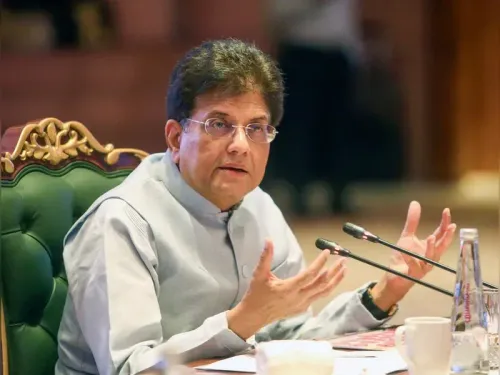
Union Commerce and Industry Minister Piyush Goyal on Monday, 22 June 2026 reaffirmed that the Modi Government remains committed to protecting the interests of farmers, posting the statement on his official X account in what signals a continued policy emphasis on agricultural welfare amid ongoing trade negotiations.
Context
The minister's post — 'The Modi Government remains committed to protecting the interests of our farmers' — is a direct assertion of the government's policy stance on agriculture. While no specific trigger has been officially cited, Commerce Ministry statements on farmer welfare frequently coincide with periods of active trade diplomacy, including discussions at the World Trade Organisation (WTO) where India has historically defended its right to maintain tariff protections and public stockholding programmes for sensitive crops.
Goyal, as Leader of the House in the Rajya Sabha and a senior BJP leader, carries significant weight when making such declarations. His portfolio at the Commerce and Industry Ministry places him at the intersection of export promotion and domestic agricultural safeguards.
Policy Backdrop
The Modi Government's agricultural policy record spans several landmark interventions. The PM-KISAN scheme, launched in 2019, provides direct income support to landholding farmers across the country and has been one of the flagship welfare measures of the current administration.
A defining moment came in 2021, when the government repealed three central farm laws following prolonged and widespread protests by farmer groups, primarily from Punjab, Haryana, and Uttar Pradesh. That decision underscored the political sensitivity of agricultural policy in India and the government's responsiveness to farmer concerns. Since then, reaffirmations of farmer-first commitments have been a consistent feature of BJP's political messaging.
India's Commerce Ministry also plays a critical role in bilateral and multilateral trade agreements, where agricultural market access — covering commodities such as dairy, oilseeds, pulses, and cereals — is frequently a contentious issue. Minimum Support Prices (MSPs) and import restrictions remain key instruments the government uses to insulate domestic farmers from global price volatility.
Stakeholders and Impact
India's farming community, estimated at over 100 million households, constitutes one of the country's largest and most politically significant constituencies. Any shift in trade policy affecting agricultural imports or export restrictions has an immediate bearing on farm incomes and rural livelihoods.
Industry stakeholders — including agri-exporters and food processing companies — also watch Commerce Ministry signals closely, as they determine the regulatory environment for farm produce moving in and out of the country. Goyal's statement, while broad, is likely to be read by both groups as an assurance that farmer protections will not be compromised in ongoing trade negotiations.
What's Next
Attention now turns to the outcomes of forthcoming WTO ministerial discussions on public stockholding for food security, a provision India has long sought to make permanent. Any new bilateral trade agreement — particularly with partners seeking greater access to India's agricultural market — will be closely watched to see whether the government's stated commitment to farmers translates into specific negotiating red lines.
As trade talks intensify globally, Goyal's reaffirmation sets a clear political benchmark: farm welfare will remain a non-negotiable priority for the Modi Government in its commercial diplomacy.
Point of View
Particularly when external pressure on India's agricultural protections is building. As Commerce Minister, Goyal sits at a strategic juncture where WTO obligations and bilateral market-access demands could conflict with domestic farm safeguards — making such public reaffirmations as much a negotiating signal to trade partners as a domestic political message. The 2021 farm law repeal remains a live reference point: it demonstrated that farmer sentiment can override policy ambition, and any future trade concession perceived as hurting cultivators carries real political risk. Expect this commitment to be tested concretely in the fine print of any upcoming trade agreement involving agricultural tariffs or import quotas.
NationPress
21 Sept 2026
Frequently Asked Questions
What did Piyush Goyal say about farmers on 22 June 2026?
Piyush Goyal posted on X that 'The Modi Government remains committed to protecting the interests of our farmers,' reaffirming the government's agricultural welfare stance.
What is the PM-KISAN scheme?
PM-KISAN is a direct income-support scheme launched by the Modi Government in 2019 that provides financial assistance to landholding farmer households across India.
Why did the Modi Government repeal the farm laws in 2021?
The three central farm laws were repealed in 2021 following prolonged and widespread protests by farmer groups, primarily from Punjab, Haryana, and Uttar Pradesh, who feared the laws would undermine their income security.
How does India protect farmers in WTO trade negotiations?
India defends provisions such as public stockholding for food security and maintains tariff protections on sensitive crops, using Minimum Support Prices and import restrictions as domestic safeguards.
What is Piyush Goyal's role in agricultural policy?
As Union Minister of Commerce and Industry, Piyush Goyal oversees trade policies that directly affect farm produce exports and imports, placing him at the centre of negotiations that balance farmer welfare with India's trade commitments.