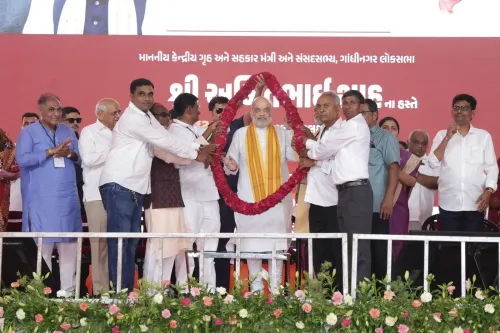
CM Bhupendra Patel backs ₹2,814 cr critical minerals scheme
Synopsis
The Union Cabinet cleared a ₹2,814 crore scheme to build domestic processing capacity for lithium, nickel and cobalt — minerals critical to EVs, electronics and defence. Gujarat CM Bhupendra Patel welcomed the move as a step toward supply-chain self-reliance under the Atmanirbhar Bharat framework.
Key Takeaways
The Union Cabinet approved a ₹2,814 crore scheme focused on domestic processing of lithium, nickel and cobalt .
Gujarat CM Bhupendra Patel publicly backed the decision, linking it to EV, battery, electronics and defence supply chains.
The move builds on the Mines and Minerals (Development and Regulation) Amendment Act, 2023 and the National Mineral Policy 2019 .
India's critical mineral refining gap leaves it dependent on foreign — predominantly Chinese — processing facilities, a vulnerability the scheme directly targets.
Detailed implementation guidelines on plant locations, technology transfer and timelines are yet to be released.
The decision aligns with PM Narendra Modi 's Atmanirbhar Bharat framework for strategic industrial self-reliance.
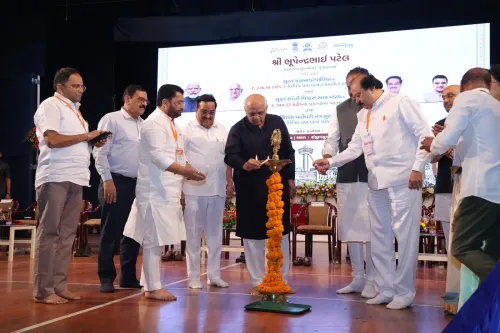
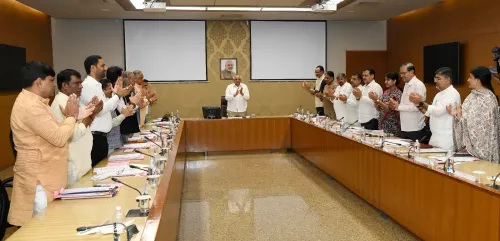
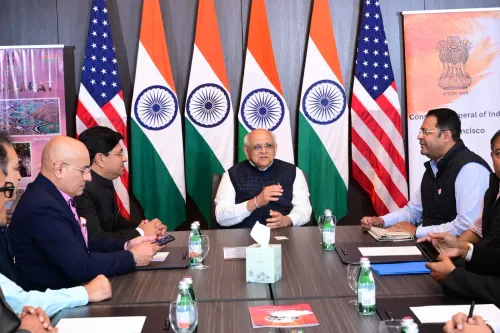
India's electric vehicle and defence industries run on three metals — lithium, nickel and cobalt — and right now, almost none of them are refined at home. Gujarat Chief Minister Bhupendra Patel on Wednesday, 4 November 2026 welcomed a Union Cabinet decision that sets out to change exactly that, backing a ₹2,814 crore scheme to build domestic critical mineral processing capacity.
What the ₹2,814 crore scheme targets
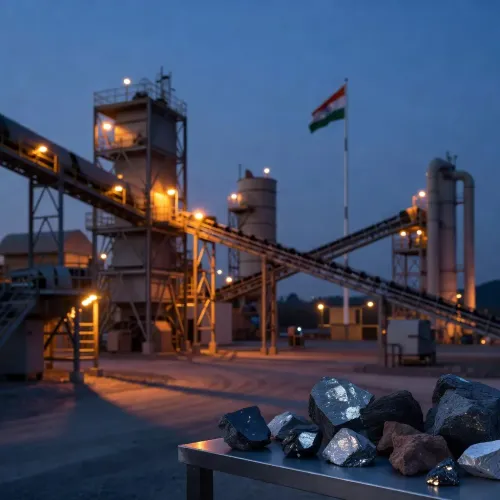
The Cabinet approval, announced by Prime Minister Narendra Modi's government, channels funds specifically toward processing infrastructure for lithium, nickel and cobalt — the trio that underpins EV batteries, consumer electronics and advanced defence systems. CM Patel described them as 'the backbone of EVs, batteries, electronics and defence,' underscoring how central the decision is to industries Gujarat itself is rapidly scaling up.
The core logic is straightforward: India can mine or acquire these minerals, but without domestic refining capacity, the raw material still travels abroad — overwhelmingly to Chinese facilities — before coming back as processed inputs. The new scheme attacks that bottleneck directly.
From legislation to investment: the policy runway behind this moment
This cabinet decision does not arrive in a vacuum. The Mines and Minerals (Development and Regulation) Amendment Act, 2023 unlocked central-government auctions for critical mineral blocks and cleared state-level hurdles that had long delayed exploration. Before that, the National Mineral Policy 2019 first codified self-reliance in strategic minerals as a formal government objective.
Together, those legislative moves created the auction pipeline and the regulatory confidence needed to attract processing investment. The ₹2,814 crore scheme is, in effect, the fiscal muscle being placed behind that legislative skeleton — moving India from mapping its critical mineral wealth to actually refining it.
Why the supply-chain stakes extend well beyond EVs
India's EV market is growing at pace, and battery manufacturers have flagged import dependence as a key cost and supply-risk factor. But the defence dimension is arguably sharper: nickel alloys and cobalt-based compounds are integral to jet engines, missile guidance systems and naval components. Refining them domestically means strategic supply chains that cannot be disrupted by geopolitical friction in distant markets.
CM Patel framed the ambition plainly — 'self-reliance in the minerals that will power tomorrow' — connecting the Cabinet decision to Prime Minister Modi's broader Atmanirbhar Bharat framework. Gujarat, home to major EV and battery manufacturing clusters, stands to be an early beneficiary if scheme guidelines prioritise states with existing industrial corridors.
What industry and states will watch for next
The headline approval is the starting gun, not the finish line. Detailed scheme guidelines — covering plant-location criteria, technology-transfer norms and phased implementation timelines — will determine how quickly processing capacity actually comes online. Observers will also track whether follow-up mineral block auctions keep pace with the new refining incentive, and how states coordinate on land allocation and power linkages for greenfield facilities.
India has signalled its critical minerals ambitions through legislation and diplomacy for years. A ₹2,814 crore processing scheme turns that signal into a capital commitment — and the clock on supply-chain transformation starts now.
Point of View
814 crore critical minerals scheme represents a deliberate pivot from upstream ambition to downstream execution — a gap that has long weakened India's energy-transition and defence-industrial strategy. By pairing fiscal incentives with the legislative groundwork laid in 2023, the government is attempting to compress a supply-chain transformation that typically takes decades. CM Patel's endorsement signals BJP-governed industrial states are ready to compete for scheme allocations, turning central policy into a state-level investment race. If guidelines match the ambition, this could mark the moment India's critical minerals strategy graduated from aspiration to infrastructure.
NationPress
4 Nov 2026
Frequently Asked Questions
What is the ₹2,814 crore critical minerals scheme approved by the Union Cabinet?
The Union Cabinet approved a ₹2,814 crore scheme to build domestic processing and refining capacity for critical minerals — specifically lithium, nickel and cobalt — which are essential for EV batteries, electronics and defence manufacturing.
Why are lithium, nickel and cobalt called critical minerals?
Lithium, nickel and cobalt are labelled 'critical' because they are essential inputs for electric vehicle batteries, consumer electronics and advanced defence systems, yet their refining is currently concentrated in a handful of countries, creating strategic supply-chain vulnerabilities.
How does this scheme relate to Atmanirbhar Bharat?
The scheme directly advances the Atmanirbhar Bharat goal of reducing import dependence by ensuring India can process its own strategic mineral inputs rather than relying on foreign refining facilities, particularly in China-dominated supply chains.
What earlier laws paved the way for India's critical minerals push?
The Mines and Minerals (Development and Regulation) Amendment Act 2023 enabled central auctions of critical mineral blocks, while the National Mineral Policy 2019 first formalised self-reliance in strategic minerals as a government objective.
What will determine how quickly this scheme delivers results?
Implementation speed will depend on detailed guidelines covering plant-location criteria, technology-transfer norms and timelines, as well as the pace of follow-up mineral block auctions and state-level coordination on land and power supply for new facilities.