World Bank confirms India's record poverty reduction: 49.6 crore lifted since 2011
Synopsis
The World Bank's October 2026 Poverty & Equity Brief puts a hard number on India's anti-poverty story: 49.6 crore people lifted above the $4.20-a-day line in just 12 years, with extreme poverty at $3/day shrinking from 27.1% to 2.6%. The data, cited by Commerce Minister Piyush Goyal, frames India's welfare push as one of the largest poverty exits in modern economic history.
Key Takeaways
The World Bank's October 2026 Poverty & Equity Brief confirms 49.6 crore Indians rose above the $4.20/day poverty line between 2011 and 2023 .
India's lower-middle-income poverty rate fell from 57.7% to 16.1% over the same period.
Extreme poverty at the $3/day threshold dropped sharply from 27.1% to 2.6% .
Total employment grew by 13.4 crore between 2017 and 2023 , nearly twice the growth of the working-age population.
Rural women drove a significant share of employment gains, according to the World Bank brief.
Electricity access now covers 99% of the population, up from a much lower base.
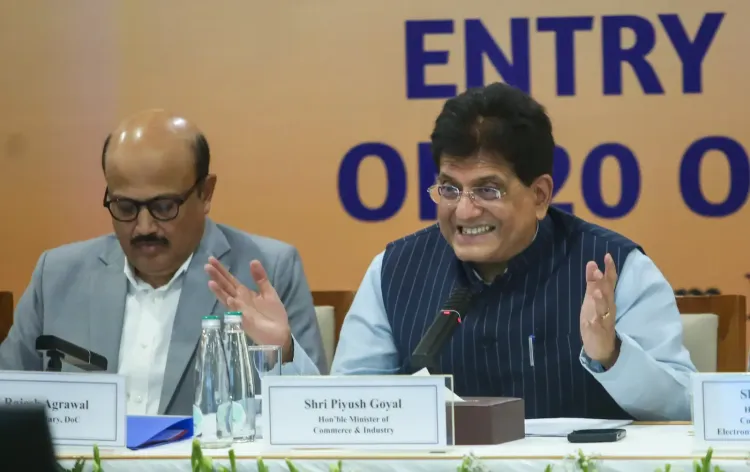
The World Bank Group's 'October 2026 Poverty & Equity Brief' confirms that India has achieved one of the fastest and most expansive poverty reductions in modern history, Commerce and Industry Minister Piyush Goyal said on 31 October 2026. The report documents 49.6 crore people rising above the lower-middle-income poverty line of $4.20 a day between 2011 and 2023, with the poverty rate falling from 57.7 per cent to 16.1 per cent.
Key Findings from the World Bank Report
The World Bank brief highlights several landmark gains. Measured at the more stringent $3 per day (2021 PPP) threshold, extreme poverty collapsed from 27.1 per cent to 2.6 per cent over the same period — a reduction of more than 24 percentage points. The report attributes these outcomes to robust consumption growth, women-led employment expansion, and comprehensive social transfer programmes spanning targeted food security and direct benefit delivery.
Foundational quality-of-life indicators also recorded sharp improvement. Electricity access now reaches 99 per cent of the population, up from a far lower base at the start of the period under review.
Employment Growth and Women's Role
Total employment in India expanded by 13.4 crore between 2017 and 2023 — reportedly nearly twice the growth rate of the working-age population over the same span. The World Bank specifically highlighted the role of rural women, who entered paid work in unprecedented numbers, multiplying household breadwinners and lifting family incomes across the country.
Rural India, according to the brief, progressed faster than urban India in key welfare indicators, helping narrow a long-standing geographic disparity in living standards.
What the Government Said
Minister Goyal, sharing the findings on X (formerly Twitter), said: 'Between 2011 and 2023, an astounding 49.6 crore citizens rose above the lower-middle-income poverty line ($4.20/day, 2021 PPP), driving the poverty rate down from 57.7 per cent to 16.1 per cent. Measured at $3/day (2021 PPP), extreme poverty plummeted from 27.1 per cent to 2.6 per cent.'
He attributed the transformation to 'targeted policy, structural reforms, and resolute governance' under Prime Minister Narendra Modi, adding: 'Rural women led this economic transformation by entering paid work in unprecedented numbers, multiplying household breadwinners and lifting family incomes.'
Goyal also framed the data in political terms, stating: 'Good governance is ultimately measured by public trust. This transformation is the bedrock of the people's sustained faith in the NDA and PM Modi's leadership.'
Context and What It Means
The scale of the reduction, if sustained, would represent one of the largest single-country poverty exits in the history of development economics — comparable in magnitude, though different in speed and method, to China's poverty reduction drive of the 1990s and 2000s. Notably, the World Bank report covers a period that spans multiple governments but largely falls within the tenure of the current administration, making attribution a point of political debate.
Critics and independent economists have previously questioned whether consumption-based poverty metrics fully capture welfare gains, or whether informal employment growth and social transfers represent durable income improvements. The World Bank's framing — emphasising structural drivers including women's employment and direct benefit transfers — suggests a multi-factor story rather than a single policy lever.
What Comes Next
The World Bank brief is expected to feed into India's pre-Budget consultations for the next financial year, with the government likely to use the data to anchor its Viksit Bharat development narrative ahead of upcoming state elections. Independent researchers and opposition parties are likely to scrutinise the underlying methodology, particularly the choice of poverty lines and the base-year adjustments applied to the 2011 data.
Point of View
Making clean attribution impossible, even as the government presents it as a Modi-era achievement. The more durable question is whether the gains are structurally entrenched or partly inflated by post-pandemic consumption rebounds and social transfer flows that could taper. The World Bank's own emphasis on 'women-led employment' as a key driver is also a double-edged signal — it confirms real income diversification, but also raises questions about job quality and whether the formalisation agenda has kept pace with headline employment numbers.
NationPress
31 Oct 2026
Frequently Asked Questions
What does the World Bank's October 2026 Poverty & Equity Brief say about India?
The brief confirms that India achieved one of the fastest and most expansive poverty reductions in modern history, with 49.6 crore people rising above the $4.20-a-day lower-middle-income poverty line between 2011 and 2023. The poverty rate at that threshold fell from 57.7% to 16.1% over the period.
How much did extreme poverty fall in India according to the World Bank?
Measured at the $3-per-day (2021 PPP) threshold, extreme poverty in India fell from 27.1% to 2.6% between 2011 and 2023, a reduction of more than 24 percentage points, according to the World Bank brief.
What drove India's poverty reduction according to the World Bank report?
The World Bank attributed the gains to robust consumption growth, women-led employment expansion — particularly among rural women entering paid work — and comprehensive social transfers including targeted food security and direct benefit delivery.
How much did employment grow in India between 2017 and 2023?
Total employment in India expanded by 13.4 crore between 2017 and 2023, reportedly nearly twice the growth of the working-age population over the same period, according to the World Bank brief cited by Commerce Minister Piyush Goyal.
Why is the World Bank poverty report politically significant in India?
Commerce Minister Piyush Goyal cited the report as validation of NDA governance under Prime Minister Narendra Modi, linking the poverty reduction data directly to the government's Viksit Bharat development agenda. However, the 2011–2023 window covers governments led by both the UPA and the NDA, and independent economists have raised questions about methodology and the durability of the gains.