Electric bus share in India to surge from 7% to 35–40% of sales by FY35
Synopsis
India's electric bus market is at an inflection point. A new KPMG report projects penetration jumping from 7% to 35–40% of annual bus sales by FY35, with 16,300 e-buses already on the road, 62,000 tenders issued, and the PM-eBus Sewa scheme alone potentially saving $2–3 billion in oil imports. The next frontier is private and intercity mobility — not just government fleets.
Key Takeaways
India's electric bus penetration is projected to rise from 7% currently to 35–40% of annual bus sales by FY35 .
Public transport EV penetration is forecast to exceed 85% over the same period, per the KPMG in India report.
As of March 2026 , approximately 16,300 electric buses were operational on Indian roads, against 62,000 tenders issued.
The PM-eBus Sewa scheme's 6,600 -bus tender could save 1–2 million tonnes of CO2 and $2–3 billion in oil imports over the concession period.
India targets tendering nearly 40,000 additional e-buses by FY30 through central and state initiatives.
Electric buses offer up to 70% higher energy efficiency than diesel equivalents, according to the report.
India's electric bus penetration is set to climb sharply — from roughly 7 per cent of annual bus sales today to 35–40 per cent by FY35, while public transport EV penetration is projected to exceed 85 per cent over the same period, according to a new report by KPMG in India released on Thursday, 14 May 2026. The findings signal a structural shift in a market that has historically moved 35,000–50,000 units annually.
Scale of the Transition
Buses account for nearly 57 per cent of passenger-kilometres travelled across India, making the electrification of this segment central to the country's clean mobility and decarbonisation agenda. The KPMG report frames the shift not as a policy experiment but as a structural transformation already underway, driven by government procurement, improving cost economics, and expanding charging infrastructure.
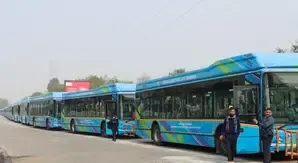
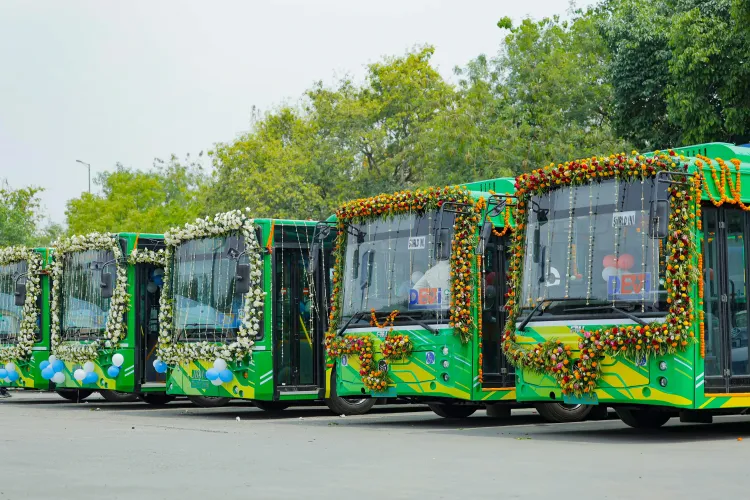
As of March 2026, approximately 16,300 electric buses were operational on Indian roads. Against that, nearly 62,000 e-bus tenders have been issued nationally, with around 46,000 buses awarded under various government schemes — a gap that reflects both strong momentum and persistent deployment challenges.
Government Programmes Leading Adoption
More than 90 per cent of India's current e-bus deployments have been driven by government-led tenders and public transport undertakings. The PM-eBus Sewa scheme alone has tendered approximately 6,600 buses, which could potentially save 1–2 million tonnes of carbon dioxide and $2–3 billion in oil imports over the concession period, according to the report.
India is expected to tender nearly 40,000 additional electric buses by FY30 through central and state-led initiatives, sustaining procurement momentum even as private-sector adoption remains nascent.
What Industry Experts Said
Rohan Rao, Partner, Automotive and Lead, Electric Mobility, KPMG India, said the transition is moving beyond a policy-led initiative. "India's electric bus transition is moving beyond a policy-led initiative to becoming a structural transformation opportunity for the broader mobility ecosystem. Public transport electrification has already created strong momentum, supported by government procurement programmes, improving cost economics, and increasing infrastructure investments," he said.
Raghavan Viswanathan, Partner, Deal Advisory, KPMG in India, noted that the next phase of growth is expected from private intercity mobility, airport transport, platform-based mobility solutions, and corporate fleets — segments that have so far lagged public bus adoption.
Efficiency and Emissions Case
Electric buses can deliver up to 70 per cent higher energy efficiency and significantly lower lifetime emissions compared to diesel buses, according to the report. This positions e-bus adoption as both an economic and environmental imperative as India pursues its net-zero commitments.
What Comes Next
The report identifies domestic manufacturing scale, financing innovation, charging infrastructure expansion, and operational efficiency as the four pillars that will determine the pace of long-term growth across both public and private transport segments. With urbanisation accelerating and mobility demand rising, the structural case for electrification is expected to strengthen further through the decade.
Point of View
But the gap between tenders issued — 62,000 — and buses actually on the road — 16,300 — is the story mainstream coverage is missing. India is good at announcing e-bus programmes; it is still learning to deploy them at scale. More than 90% of current adoption is government-driven, which means the market remains structurally dependent on procurement cycles and subsidy continuity rather than organic demand. The real test of the 35–40% FY35 target will be whether private intercity and corporate fleet segments develop independently, or whether the headline number is once again carried almost entirely by public undertakings.
NationPress
13 Oct 2026
Frequently Asked Questions
What is India's electric bus penetration target by FY35?
India's electric bus penetration is projected to rise from approximately 7% of annual bus sales currently to 35–40% by FY35, according to a KPMG in India report released in May 2026. Public transport EV penetration is separately forecast to exceed 85% over the same period.
How many electric buses are currently operational in India?
As of March 2026, approximately 16,300 electric buses were operational on Indian roads. Nearly 62,000 e-bus tenders have been issued nationally, with around 46,000 buses awarded under various government schemes.
What is the PM-eBus Sewa scheme and what impact could it have?
PM-eBus Sewa is a central government procurement programme under which tenders for approximately 6,600 electric buses have been issued. The KPMG report estimates these could save 1–2 million tonnes of carbon dioxide and $2–3 billion in oil import costs over the concession period.
Why does electrification of buses matter for India?
Buses account for nearly 57% of passenger-kilometres travelled in India, making the segment critical to the country's clean mobility and decarbonisation goals. Electric buses also offer up to 70% higher energy efficiency compared to diesel buses, reducing both emissions and operating costs.
What is expected to drive the next phase of e-bus growth in India?
While government-led tenders have driven over 90% of current deployments, the next phase of growth is expected from private intercity mobility, airport transport, platform-based mobility solutions, and corporate fleets, according to KPMG in India.