Has India Become a Major Global Player in Fisheries and Aquaculture?
Click to start listening
Synopsis
India's fisheries and aquaculture sector is soaring to new heights, with seafood exports experiencing remarkable growth. With strong government policies and innovative practices, the nation is committed to sustainable development and international cooperation. Discover how India is positioning itself as a leader in this vital global industry.
Key Takeaways
- India is a major player in global fisheries and aquaculture.
- Seafood export values have doubled over the last decade.
- Strong policies focus on sustainability and compliance.
- Collaboration in technology and innovation is key for future growth.
- Seafood is essential for nutrition and global food security.
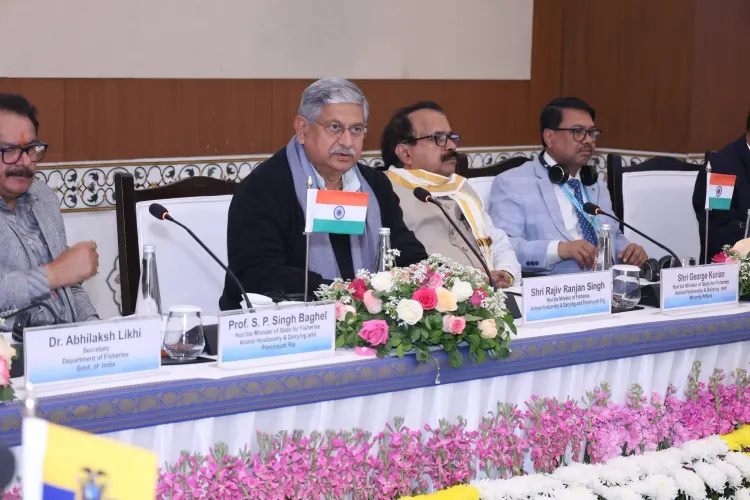
New Delhi, Jan 22 (NationPress) India has positioned itself as a significant global player in fisheries and aquaculture, bolstered by robust policies, enhanced processing capabilities, and efficient logistics. According to Rajiv Ranjan Singh, Minister of Fisheries, Animal Husbandry and Dairying and Panchayati Raj, the value of seafood exports has doubled in the last decade.
He pointed out that India is enhancing compliance and transparency through initiatives such as the National Framework on Traceability (2025), EEZ Rules (2025), and revised High Sea Fishing Guidelines (2025), all aimed at promoting sustainable and export-driven growth in the Andaman & Nicobar and Lakshadweep Islands.
The minister also highlighted potential collaboration in cutting-edge aquaculture and mariculture technologies, processing, cold chain logistics, vessel design, digital monitoring, joint research and development, technology transfer, climate resilience, sustainable fisheries management, trade expansion, and private sector partnerships.
Addressing a conference attended by diplomats from 40 countries, including Ambassadors and High Commissioners, the minister emphasized the strengthening of India's international partnerships in the fisheries and seafood sector.
Key areas for enhanced cooperation identified included climate change impacts, ocean health, sustainability, responsible fishing practices, technology transfer, green innovation, capacity building, supply chain development, and emerging sectors like ornamental fisheries and seaweed cultivation.
Professor S.P. Singh Baghel, Minister of State for Fisheries, Animal Husbandry and Dairying and Panchayati Raj, remarked that seafood is essential for nutrition, significantly contributes to global food security, creates extensive employment opportunities, and bolsters national economies.
He noted that the Department of Fisheries is implementing a comprehensive value-chain strategy, from production to export, to guarantee sustainable development in the sector.
George Kurian, Minister of State for Fisheries, Animal Husbandry and Dairying and Minority Affairs, underscored India's swift aquaculture growth, mentioning substantial production increases and the Department's goal to elevate seafood exports to Rs 1 lakh crore.
Kurian highlighted that export values have surged by 21 percent over the past seven months, showcasing the sector's vigorous momentum.
Point of View
The emergence of India as a global leader in fisheries and aquaculture represents a significant opportunity for economic growth and international collaboration. The government's proactive measures to ensure sustainability and compliance are commendable, and they reflect a commitment to responsible resource management. This narrative aligns with national interests and fosters a positive image of India on the global stage.
NationPress
22/01/2026
Frequently Asked Questions
What factors have contributed to India's growth in fisheries and aquaculture?
Strong government policies, enhanced processing capacity, and logistics have significantly contributed to India's growth in fisheries and aquaculture.
What initiatives is India implementing for sustainable fisheries?
India is introducing the National Framework on Traceability (2025), EEZ Rules (2025), and updated High Sea Fishing Guidelines (2025) to promote sustainability.
How is India addressing climate change in the fisheries sector?
India is focusing on climate resilience and sustainable fisheries management as key pillars for collaboration and growth in the sector.
What are the export goals for India's seafood industry?
The Department of Fisheries aims to increase seafood exports to Rs 1 lakh crore, reflecting the sector's robust momentum.
How does seafood contribute to global food security?
Seafood is a vital source of nutrition and plays a significant role in enhancing global food security while generating employment opportunities.