India reaffirms Bangladesh ties amid Tarique Rahman's indirect India swipe
Synopsis
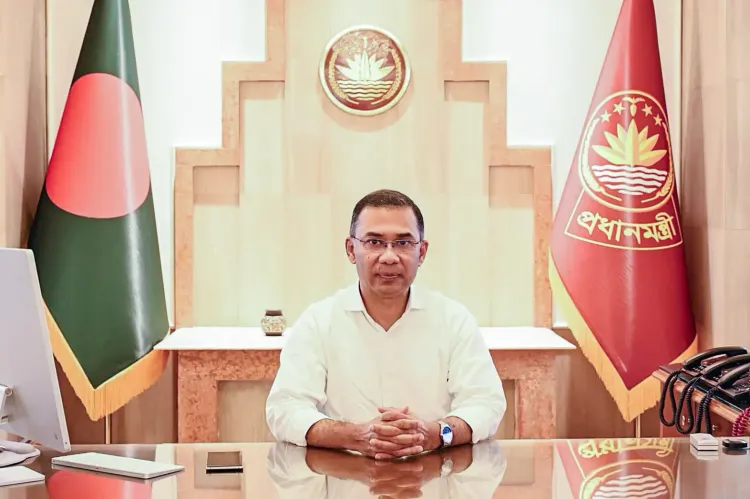
India pointedly declined to react to Bangladeshi PM Tarique Rahman's thinly veiled accusation that Sheikh Hasina is 'plotting to please her masters abroad' — widely read as a dig at New Delhi. With violence spreading across 12 Bangladeshi districts and the Ganga Water Sharing Treaty expiring on December 12, India's diplomatic silence is doing considerable work.
Key Takeaways
MEA spokesperson Randhir Jaiswal on 20 November 2026 reaffirmed India's desire for a 'positive, constructive and forward-looking relationship' with Bangladesh , declining to comment on internal developments there.
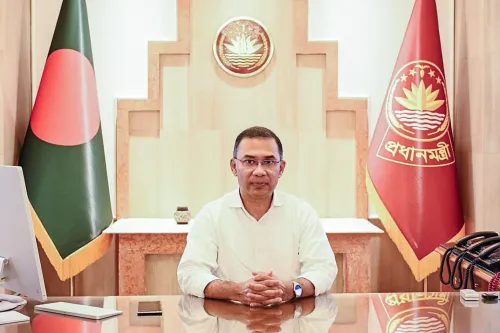
Bangladesh PM Tarique Rahman addressed a rally in Lalmonirhat district and, without naming India, allegedly said Sheikh Hasina is 'plotting to please her masters abroad.' At least four people were killed and several others injured in violence across at least 12 Bangladeshi districts between 14 and 19 November 2026 .
Targets included police stations, political leaders' residences, public offices, and financial and educational institutions.
The Ganga Water Sharing Treaty between India and Bangladesh is set to expire on 12 December 2026 ; India pointed to the Joint Rivers Commission as the established mechanism for discussions.
India on Friday, 20 November 2026, reiterated its commitment to a positive and constructive relationship with Bangladesh, even as Bangladeshi Prime Minister Tarique Rahman stopped short of naming New Delhi while accusing the ousted Awami League of plotting violence from abroad at the behest of foreign masters.
India's Official Position
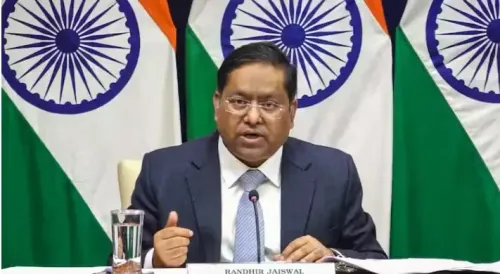
Ministry of External Affairs (MEA) spokesperson Randhir Jaiswal, speaking at a bi-weekly media briefing in New Delhi, said India's stance on the bilateral relationship remains unchanged. 'Our position remains consistent that India desires a positive, constructive and forward-looking relationship with Bangladesh, one which is rooted in the shared history of the two countries and the common cultural values of its people. I have no comments to offer on the internal developments in Bangladesh,' Jaiswal said, responding to questions about Rahman's recent remarks.
The carefully worded response — reaffirming engagement while deliberately sidestepping the veiled swipe — reflects New Delhi's established posture of diplomatic restraint in the face of Dhaka's current political turbulence.
Rahman's Veiled Swipe at India
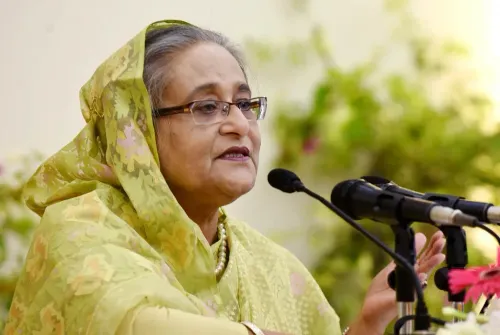
On Thursday, Rahman addressed a rally in Lalmonirhat district and called on Bangladeshis to unite against what he described as renewed attempts by the Awami League — led by exiled former Prime Minister Sheikh Hasina — to trigger fresh arson attacks and violence. 'Let us all prepare ourselves once again, as we did in 2024, to give these terrorists a befitting response. I am making this call for preparation today,' Rahman was quoted as saying by local media outlet UNB.
Rahman further alleged that the Awami League was orchestrating the violence from exile: 'Look at what they have been doing over the past few days. Even after fleeing the country, they have once again started their politics of arson and killing people. They are attacking people from behind and killing them,' he said.
Notably, according to a report in prominent Dhaka-based Bangla-language daily Dainik Khola Kagoj, Rahman — without naming India — reportedly said that Hasina, whom he called a 'fugitive dictator', is 'once again plotting to please her masters abroad.' The remark was widely interpreted as an indirect reference to India, where Hasina has been residing since she fled Bangladesh following the mass uprising of 2024.
Violence Grips Bangladesh Across 12 Districts
According to Bangladeshi media reports, at least four people were killed and several others injured over six days — between 14 and 19 November — as widespread violence, marked by arson attacks, crude bomb explosions, vandalism, road blockades, and clashes, spread across at least 12 districts.
Targeted in the attacks were police stations, residences of political leaders, public offices, vehicles, transport infrastructure, and financial and educational institutions. Homes of Awami League leaders and party-affiliated individuals were among the most heavily targeted, with properties reportedly vandalised, looted, and set ablaze, according to Bangladeshi daily The Business Standard.
Critics have raised serious questions over the authorities' ability to maintain law and order, with the sustained targeting of political residences and police installations deepening concerns about the country's security situation.
Ganga Water Treaty Also in Frame
Jaiswal was also asked about the Ganga Water Sharing Treaty with Bangladesh, which is set to expire on 12 December 2026. He said the India-Bangladesh Joint Rivers Commission remains the established forum for all cross-border water-related discussions. 'The India-Bangladesh Joint Rivers Commission is the established mechanism to discuss all water-related cross-border, cross-boundary river-related issues, including the Ganga. And the Government of India remains committed to a constructive and forward-looking relationship with Bangladesh, while safeguarding India's interests,' he said.
What This Means Going Forward
India-Bangladesh ties have been under strain since Hasina's ouster in mid-2024, with Dhaka's interim and now elected leadership navigating an increasingly fraught domestic landscape. New Delhi's refusal to be drawn into Bangladeshi political commentary, even as an implicit target, signals that it is prioritising the long-term bilateral architecture over short-term point-scoring. How the two countries handle the expiring Ganga treaty by December 12 will be the next concrete test of that relationship.
Point of View
But it carries a cost: silence can also be read as passivity in the face of a deteriorating bilateral climate. The real pressure point is the Ganga treaty expiry on December 12 — a hard deadline that cannot be talked past with carefully worded MEA statements. Rahman's framing of Hasina as a tool of 'foreign masters' is domestically convenient but structurally corrosive; if it hardens into Dhaka's official posture, it will complicate every conversation from water-sharing to trade to border management. New Delhi's bet is that institutional channels — the Joint Rivers Commission, back-channel diplomacy — will hold. Whether that bet survives the December deadline, and the ongoing violence, is the story to watch.
NationPress
20 Nov 2026
Frequently Asked Questions
What did India say about its relationship with Bangladesh on 20 November 2026?
India reiterated that it desires a 'positive, constructive and forward-looking relationship' with Bangladesh rooted in shared history and cultural values. MEA spokesperson Randhir Jaiswal made the statement at a bi-weekly media briefing in New Delhi, while declining to comment on Bangladesh's internal developments.
What did Bangladeshi PM Tarique Rahman say that was seen as a dig at India?
Rahman, addressing a rally in Lalmonirhat, reportedly said — without naming India — that ousted former PM Sheikh Hasina was 'once again plotting to please her masters abroad,' a phrase widely interpreted as a reference to New Delhi. He also accused the Awami League of orchestrating ongoing violence in Bangladesh from exile.
How serious is the violence in Bangladesh, and where is it happening?
At least four people have been killed and several others injured in violence that spread across at least 12 Bangladeshi districts between 14 and 19 November 2026. Attacks targeted police stations, residences of Awami League leaders, public offices, transport infrastructure, and educational and financial institutions.
What is the Ganga Water Sharing Treaty and why does it matter now?
The Ganga Water Sharing Treaty is a bilateral agreement between India and Bangladesh governing the sharing of Ganga river water, and it is set to expire on 12 December 2026. India has pointed to the India-Bangladesh Joint Rivers Commission as the established mechanism for renegotiation talks, but the expiry deadline adds urgency to an already strained relationship.
Where is Sheikh Hasina and why is she significant to these events?
Sheikh Hasina fled Bangladesh following the mass uprising of 2024 and has since been residing abroad, reportedly in India. Rahman's government has accused her Awami League party of orchestrating the current wave of violence in Bangladesh from outside the country, making her whereabouts a politically sensitive issue in India-Bangladesh relations.