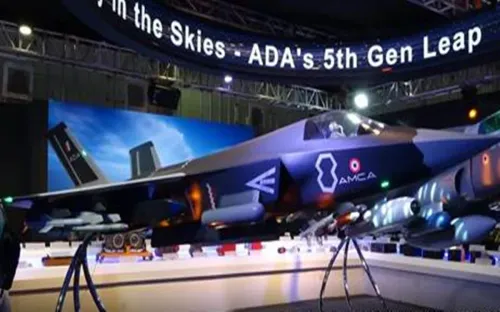
AMCA RFP issued: India's 5th-gen stealth fighter bids open June 11
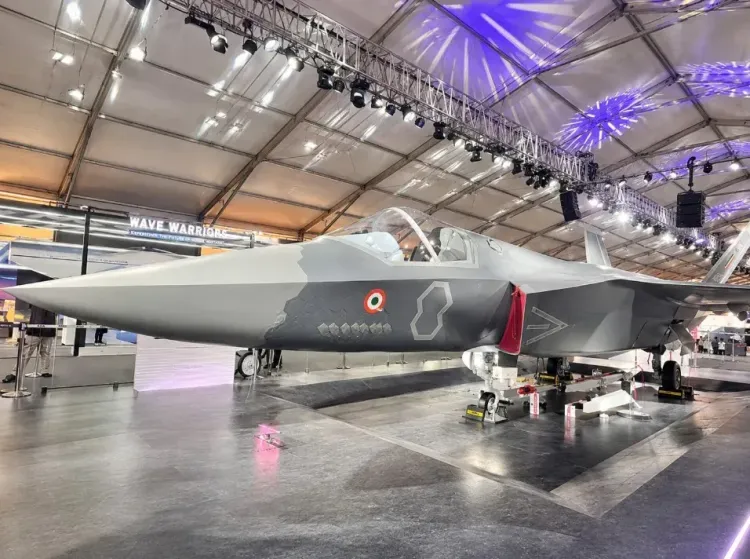
Synopsis
India has formally issued the RFP for its most ambitious indigenous combat aircraft program — the AMCA. With bids opening on 11 June and a 30-month prototype deadline, three private-sector consortiums including Tata, L&T-BEL, and Bharat Forge-BEML are now in a race to build India's first twin-engine stealth fighter. The clock is ticking on a generational bet for the IAF.
Key Takeaways
The Ministry of Defence issued the AMCA RFP on 27 May 2025 , formally launching the competitive bidding phase.
Bidding opens 11 June ; final submissions due end of July; bids to be opened on 28 July .
The selected contractor must fly the first prototype within 30 months of contract signing; five low-observable prototypes are required.
Three consortiums are shortlisted: Tata Advanced Systems , Larsen and Toubro–BEL , and Bharat Forge–BEML .
The AMCA will be India's first indigenous twin-engine fighter jet , featuring an internal weapons bay and up to 10 hours of continuous flight endurance.
Defence Minister Rajnath Singh had approved the private-sector execution model on 27 May 2025 , exactly one year before the RFP issuance.
The Ministry of Defence on Wednesday, 27 May issued the Request for Proposal (RFP) for the Advanced Medium Combat Aircraft (AMCA) program, marking a significant acceleration in India's bid to develop an indigenous fifth-generation stealth fighter jet. The move signals that the project, long in its conceptual and approval phases, has now entered a competitive procurement sprint.
Key Timelines and Bidding Process
According to the RFP, the formal bidding process will commence on 11 June, with interested parties required to submit their final bids by the end of July. Bids are scheduled to be opened on 28 July. Crucially, the selected contractor must have the first prototype airborne within 30 months of signing the contract. A total of five low-observable prototypes are to be built under the program.
Bidders will also be required to support flight testing and type certification activities for the AMCA, and dedicated testing facilities are to be established as part of the contract scope. The aircraft will be configured in line with the Equipment Standard of Preparation (ESOP), incorporating the necessary Line Replaceable Units (LRUs) and onboard systems for operations, testing, and evaluation.
Three Consortiums in the Race
Three private sector-led consortiums have been shortlisted for the AMCA bidding process: Tata Advanced Systems Limited, Larsen and Toubro–Bharat Electronics Limited, and Bharat Forge–BEML. Their participation underscores the government's push to anchor defence manufacturing in the private sector — a structural shift from the historically public-sector-dominated defence production model.
This comes roughly a year after Defence Minister Rajnath Singh approved the execution model for the AMCA program on 27 May 2025, which formally opened the door for private companies. Expressions of Interest from private firms followed approximately 20 days later.
What Makes the AMCA Distinctive
The AMCA is designed as a medium-weight, multi-role, twin-engine stealth fighter tailored to the operational requirements of the Indian Air Force (IAF). It will be India's first indigenous twin-engine fighter jet — a milestone in the country's decades-long pursuit of self-reliance in combat aviation.
The aircraft incorporates advanced stealth features engineered to minimise radar cross-section, making it significantly harder for adversary radar systems to detect. Unlike conventional fighters — where missiles and weapons are mounted externally under wings or the fuselage, making them radar-visible — the AMCA will house its armaments in an internal weapons bay, substantially enhancing its stealth profile.
The jet is also designed for extended endurance, with a projected continuous airborne duration of nearly 10 hours. Several ergonomic and systems modifications are reportedly being incorporated to ensure pilot comfort during such prolonged missions.
Strategic Context
India's push to develop the AMCA comes as the IAF's fighter squadron strength has been a persistent concern, with the fleet currently below sanctioned levels. The AMCA is intended to eventually replace ageing platforms and reduce India's heavy dependence on imported combat aircraft. Notably, this is one of the most ambitious indigenous defence programs India has undertaken, comparable in scale and complexity to the Tejas Light Combat Aircraft (LCA) program — though the AMCA targets a significantly higher technological tier.
With bids due by end of July and a 30-month prototype deadline on the horizon, the pace of execution over the next year will be the first real test of whether India's private defence sector can deliver on a generational leap in aerial warfare capability.
Point of View
But milestones in Indian defence procurement have a history of slipping. The 30-month prototype deadline is aggressive by any standard — the Tejas program took decades from concept to induction. The real signal to watch is not the bid opening date but whether the winning consortium has the manufacturing depth and systems integration capability to actually meet that timeline. India's private defence sector is maturing, but it has never been asked to deliver something at this level of complexity. The IAF's squadron shortfall makes success urgent, not optional.
NationPress
11 Oct 2026
Frequently Asked Questions
What is the AMCA and why is it significant?
The Advanced Medium Combat Aircraft (AMCA) is India's indigenous fifth-generation, medium-weight, twin-engine stealth fighter being developed for the Indian Air Force. It is significant because it will be India's first homegrown twin-engine fighter jet, incorporating advanced stealth features including an internal weapons bay, and represents a major leap in self-reliance for combat aviation.
What are the key deadlines in the AMCA RFP process?
The bidding process opens on 11 June, with final submissions due by the end of July and bids to be opened on 28 July. After contract signing, the selected bidder must have the first prototype airborne within 30 months, with five low-observable prototypes to be developed in total.
Which companies are competing for the AMCA contract?
Three private sector-led consortiums are in the running: Tata Advanced Systems Limited, Larsen and Toubro–Bharat Electronics Limited, and Bharat Forge–BEML. Their inclusion reflects the government's strategic push to build indigenous defence manufacturing capability in the private sector.
How does the AMCA's stealth design differ from conventional fighters?
Unlike conventional fighter jets where missiles and weapons are mounted externally under wings or the fuselage — making them detectable by enemy radar — the AMCA stores its armaments in an internal weapons bay. Combined with advanced stealth shaping, this is designed to significantly reduce the aircraft's radar cross-section.
What is the background to the AMCA program reaching this stage?
Defence Minister Rajnath Singh approved the private-sector execution model for the AMCA on 27 May 2025. Expressions of Interest from private firms were invited approximately 20 days later. The RFP issued on 27 May marks the formal start of competitive procurement, roughly one year after that foundational approval.