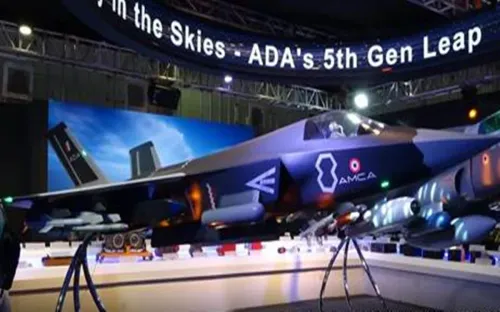
Rajnath Singh lays AMCA foundation at Puttaparthi, ₹15,803 crore project to create 7,500 jobs

Synopsis
India's most ambitious indigenous fighter programme just got a physical address. The ₹15,803 crore AMCA complex at Puttaparthi — covering 650 acres and promising 7,500 high-skilled jobs — is not just a foundation stone; it is a strategic declaration that India intends to test, certify, and fly its own fifth-generation stealth fighter on home soil, without dependence on foreign testing ecosystems.
Key Takeaways
Defence Minister Rajnath Singh laid the foundation stone for the AMCA Aircraft Integration and Flight Test Centre at Puttaparthi, Andhra Pradesh on 15 May 2025 .
The AMCA project is estimated at ₹15,803 crore and will span nearly 650 acres in Puttaparthi.
The complex is projected to generate approximately 7,500 high-skilled direct jobs over its lifecycle.
Foundation stones were also laid for a BDL Naval Systems Facility at Anakapalli, a Defence Energetics and Ammunition Hub at Madakasira, and projects under Drone City, Kurnool .
Defence MoUs were exchanged between the Centre and the Government of Andhra Pradesh covering defence manufacturing, aerospace, and drone technologies.
Andhra Pradesh's Aerospace and Defence Policy 2025–30 identifies six specialised clusters targeting global OEMs and Tier-1 suppliers.
Defence Minister Rajnath Singh on Friday, 15 May laid the foundation stone for the Aircraft Integration and Flight Test Centre of the Aeronautical Development Agency (ADA) at Puttaparthi in Sri Sathya Sai district, Andhra Pradesh, marking a landmark moment in India's push for indigenous fifth-generation combat aviation. The event, held alongside Andhra Pradesh Chief Minister N. Chandrababu Naidu, covered groundbreaking ceremonies for a cluster of aerospace and defence projects spread across the state.
Key Projects Launched
The centrepiece of the day was the Advanced Medium Combat Aircraft (AMCA) programme, being developed by the ADA under the Defence Research and Development Organisation (DRDO). Estimated at ₹15,803 crore, the AMCA complex will serve as the primary hub for aircraft integration, development, and flight-testing of India's flagship indigenous stealth fighter. Spread across nearly 650 acres in Puttaparthi, it is projected to generate approximately 7,500 high-skilled direct employment opportunities over its lifecycle.
Foundation stones were also laid for a new BDL Naval Systems Manufacturing Facility at T. Sirasapalli, Anakapalli district, and a Defence Energetics Facility and Ammunition Hub at Madakasira in Sri Sathya Sai district. Groundbreaking ceremonies for an array of projects under Drone City, Kurnool, were also conducted.
Defence MoUs and Exhibition
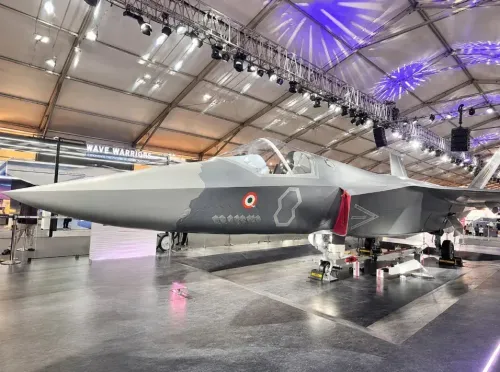
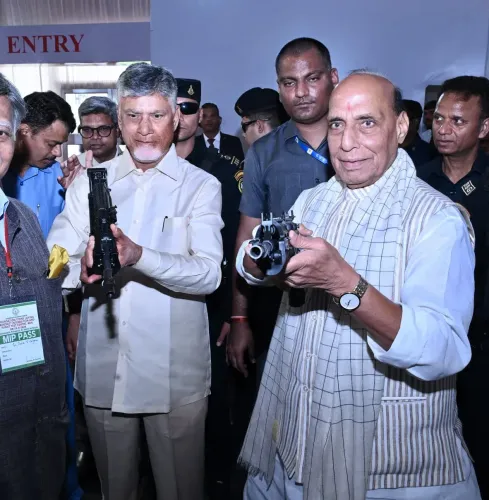
The occasion saw the exchange of Defence MoUs between the Union government and the Government of Andhra Pradesh, aimed at deepening collaboration in defence manufacturing, aerospace innovation, and next-generation drone technologies. Civil Aviation Minister Ram Mohan Naidu and state IT and Electronics Minister Nara Lokesh were also present. Dignitaries viewed an exhibition of defence products including missiles, hand grenades, modern firearms, and a fighter aircraft prototype.
Strategic Significance of the AMCA Complex
The AMCA programme is designed to advance India's self-reliance in next-generation combat aviation, encompassing stealth systems, advanced avionics, and integrated combat capabilities. According to officials, the Puttaparthi complex will reduce India's dependence on external testing ecosystems, consolidating integration, validation, flight testing, and certification under one national facility. Notably, Sri Sathya Sai district's proximity to the Bengaluru aerospace corridor — including Kempegowda International Airport and major defence establishments — positions it as a natural extension of India's southern aerospace hub.
Andhra Pradesh's Defence Manufacturing Ambitions
Andhra Pradesh has been actively positioning itself as a destination for high-technology defence manufacturing, leveraging port connectivity, skilled workforce, and investor-friendly policies. The state already hosts investments from Bharat Electronics Limited (BEL), Bharat Dynamics Limited (BDL), and Kalyani Strategic Systems. Under the Aerospace and Defence Policy 2025–30, the state has identified six specialised clusters focused on naval systems, missiles and ammunition, unmanned systems, aerospace electronics, aircraft components, precision manufacturing, and defence R&D — targeting global OEMs, Tier-1 suppliers, and technology companies.
This comes amid a broader national drive to reduce dependence on defence imports, with the AMCA representing one of the most ambitious indigenisation bets India has placed in the aviation sector. The Rayalaseema region, long underserved in industrial investment, stands to be a key beneficiary as the aerospace ecosystem takes shape around Puttaparthi and Kurnool.
Point of View
But the harder question is timeline: India's fifth-generation fighter programme has been in development for over a decade, and a flight-test centre breaking ground in 2025 does not guarantee the aircraft flies on schedule. Andhra Pradesh's aggressive defence clustering under the 2025–30 policy is a smart hedge — spreading aerospace investment across naval, drone, and ammunition verticals reduces the state's exposure if any single programme slips. What this event really signals is that the Centre is willing to anchor strategic infrastructure in Tier-2 districts, a political and economic bet that the Rayalaseema region's proximity to Bengaluru is an asset, not a liability. Whether the ecosystem — skilled workforce, supply chain, testing protocols — matures fast enough to match the ambition is the accountability test that will play out over the next decade.
NationPress
12 Oct 2026
Frequently Asked Questions
What is the AMCA project launched at Puttaparthi?
The Advanced Medium Combat Aircraft (AMCA) project is India's flagship indigenous fifth-generation stealth fighter programme, developed by the Aeronautical Development Agency (ADA) under DRDO. The Aircraft Integration and Flight Test Centre being built at Puttaparthi will serve as the primary hub for integration, development, and flight-testing of the aircraft, at an estimated cost of ₹15,803 crore.
How many jobs will the AMCA complex at Puttaparthi create?
The AMCA complex is projected to generate approximately 7,500 high-skilled direct employment opportunities over its lifecycle. It is also expected to catalyse broader aerospace and defence manufacturing activity in the Rayalaseema region of Andhra Pradesh.
What other defence projects were launched alongside the AMCA centre?
Foundation stones were laid for a BDL Naval Systems Manufacturing Facility at T. Sirasapalli in Anakapalli district, a Defence Energetics Facility and Ammunition Hub at Madakasira in Sri Sathya Sai district, and multiple projects under Drone City in Kurnool. Defence MoUs were also exchanged between the Centre and the Government of Andhra Pradesh.
Why is Puttaparthi chosen for the AMCA flight test centre?
Sri Sathya Sai district, where Puttaparthi is located, offers strategic proximity to the Bengaluru aerospace corridor, including Kempegowda International Airport and major defence establishments, positioning it as a natural extension of India's southern aerospace hub. The region has also seen growing industrial activity in aerospace, defence electronics, and allied sectors.
What is Andhra Pradesh's Aerospace and Defence Policy 2025–30?
It is a state policy under which Andhra Pradesh has identified six specialised defence and aerospace clusters covering naval systems, missiles and ammunition, unmanned systems, aerospace electronics, aircraft components, precision manufacturing, and defence R&D. The policy targets global OEMs, Tier-1 suppliers, and technology companies, building on existing investments by BEL, BDL, and Kalyani Strategic Systems.