COP31: India launches LeadIT 3.0 to scale industrial decarbonisation by 2030
Synopsis
At COP31 in Antalya — dubbed the 'COP of Implementation' — India launched LeadIT 3.0, shifting the global industrial decarbonisation platform from partnership-building to scaling real projects in steel, cement and transport. With 20 countries and 33 companies on board, and Brazil as the newest member, the 2027–2030 phase will test whether climate commitments can be converted into bankable industrial outcomes.
Key Takeaways
Bhupender Yadav launched LeadIT 3.0 at COP31 in Antalya, Turkey on 17 November 2026 .
The new phase covers 2027–2030 and focuses on scaling industrial projects, mobilising capital, and policy support including carbon markets.
LeadIT membership has grown to 20 countries and 33 companies ; Brazil joined as the newest country member.
India has achieved a 37.38% reduction in emissions intensity (2005–2022) and reached 50% non-fossil fuel electricity capacity , five years ahead of target.
LeadIT's second phase delivered 11 pre-pilot projects in steel and cement, covering hydrogen ironmaking, carbon capture, and AI-driven cement demand reduction.
Steel, cement, and transport remain core sectors under LeadIT 3.0, with the platform open to additional sectors and technologies.
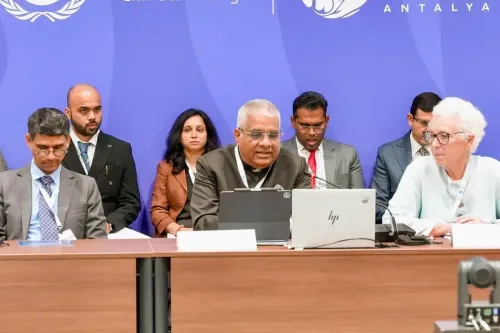
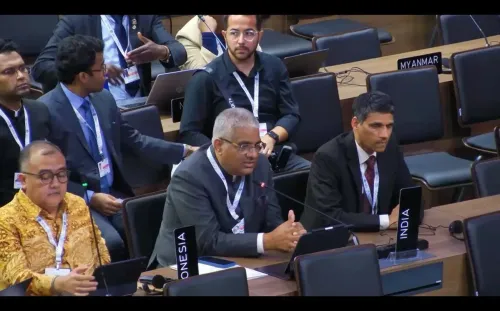
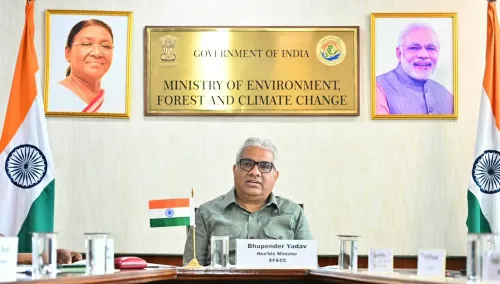
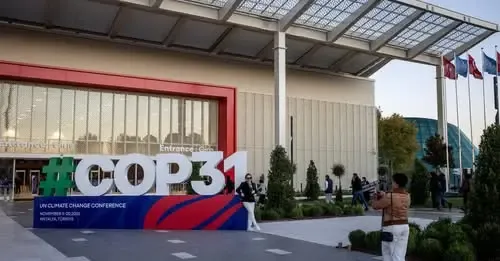
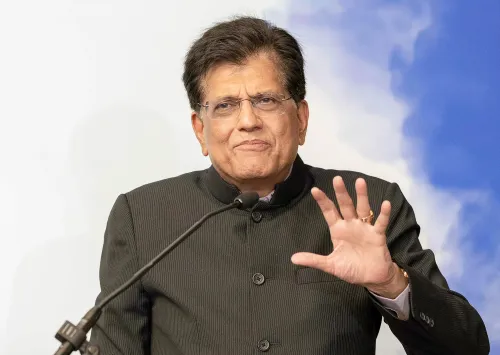
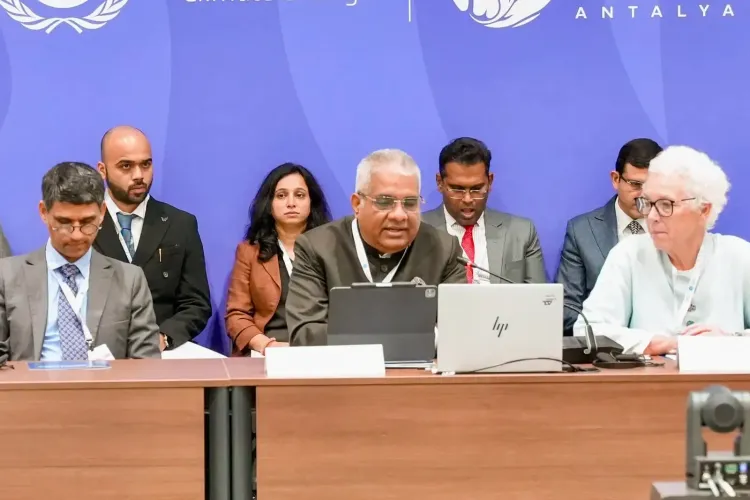
Union Minister for Environment, Forest and Climate Change Bhupender Yadav on Tuesday, 17 November 2026, announced the launch of the third phase of the Leadership Group for Industry Transition (LeadIT 3.0) at the Industry Leaders' Roundtable on the sidelines of the United Nations Climate Change Conference (COP31) in Antalya, Turkey. The new phase, covering 2027 to 2030, marks a strategic pivot from building partnerships to scaling industrial projects, mobilising capital, and delivering measurable outcomes in hard-to-abate sectors.
What Was Announced
The roundtable was co-chaired by Minister Yadav and Helena Dyrssen, State Secretary at Sweden's Ministry of Climate and Enterprise. Selwin Hart, Special Adviser and Assistant Secretary-General for UN Climate Action, was also present. India and Sweden first launched LeadIT in 2019, and the platform has since grown to 20 countries and 33 companies. Brazil was welcomed as the newest country member, reinforcing the Global South's presence within the initiative.
LeadIT 3.0 will anchor itself around three priorities: technology development and diffusion through industrial projects; capital mobilisation and de-risking to connect projects with finance; and capacity building and policy support, including carbon markets and workforce transition. Steel, cement, and transport will remain the core sectors, though the platform is open to new sectors and technologies.
India's Climate Record on the Global Stage
Minister Yadav highlighted that India has achieved a 37.38% reduction in emissions intensity between 2005 and 2022 and has reached 50% non-fossil fuel-based installed electricity capacity — five years ahead of its target. India's additional forest carbon sink has reached approximately 2.44 billion tonnes of CO₂ equivalent. These achievements drew applause from the gathered industry leaders and were described as 'a guiding light for other nations.' India's decarbonisation efforts were specifically appreciated by Hart and the European Union.
Progress Under LeadIT's Second Phase
Yadav noted that LeadIT's second phase facilitated 11 pre-pilot projects in steel and cement under the India-Sweden Industry Transition Partnership, while also expanding cooperation into low-carbon heavy-duty transport. These projects cover a range of technologies including hydrogen-based ironmaking, electrification of industrial heat, carbon capture and utilisation, clinker substitution, industrial circularity, and the application of artificial intelligence to reduce cement demand. The platform has also supported South Africa's investment plan under the Climate Investment Funds and Ethiopia's engagement on low-carbon cement.
The Strategic Context
Addressing the gathering, Yadav underscored that geopolitical conflicts, volatile energy markets, and competing development priorities make international cooperation more critical than ever, particularly for hard-to-abate industrial sectors. He stressed that India's priorities — poverty alleviation, energy access, job creation, and infrastructure development — must advance in tandem with its climate commitments. The minister called upon countries and companies to join LeadIT and translate industrial transition pledges into action, noting that COP31's presidency has itself framed this edition as the 'COP of Implementation.'
He also emphasised that the industrial transition must create opportunities for workers, communities, and developing economies — a signal that just-transition frameworks will be central to LeadIT 3.0's work programme.
What Comes Next
With LeadIT 3.0 formally launched, the focus will shift to moving eligible projects from feasibility studies into pilots, demonstration, and replication phases. Capital mobilisation will be a defining challenge — connecting early-stage industrial decarbonisation projects with institutional finance at scale remains one of the hardest gaps to close in the global climate architecture. The platform's expanded membership and its South-South cooperation dimension, bolstered by Brazil's entry, could provide new pathways for emerging economies navigating this transition.
Point of View
And India is walking a tightrope: it has outperformed on emissions intensity and renewable capacity, yet its development needs mean it cannot afford transitions that price out growth. The pivot from feasibility studies to funded pilots is exactly the right call, but capital mobilisation for hard-to-abate sectors remains chronically under-delivered in every previous climate financing framework. Brazil's entry broadens the South-South coalition, but the harder question is whether multilateral finance institutions will commit at the scale LeadIT 3.0 requires. COP31 as the 'COP of Implementation' is the right framing — the credibility of this phase will be judged entirely on whether steel plants and cement kilns actually decarbonise, not on how many countries sign the membership roster.
NationPress
17 Nov 2026
Frequently Asked Questions
What is LeadIT 3.0 and why was it launched at COP31?
LeadIT 3.0 is the third phase of the Leadership Group for Industry Transition, a platform co-founded by India and Sweden in 2019 to decarbonise hard-to-abate industrial sectors. Launched at COP31 in Antalya on 17 November 2026, it covers 2027–2030 and shifts focus from building partnerships to scaling projects, mobilising capital, and delivering measurable outcomes in steel, cement, and transport.
What are the three priorities of LeadIT 3.0?
LeadIT 3.0 is built around three priorities: technology development and diffusion through industrial projects; capital mobilisation and de-risking to connect projects with finance; and capacity building and policy support, including carbon markets and workforce transition. Steel, cement, and transport remain the core sectors, with the platform open to new sectors and technologies.
What has India achieved on climate targets so far?
India has achieved a 37.38% reduction in emissions intensity between 2005 and 2022, reached 50% non-fossil fuel-based installed electricity capacity five years ahead of schedule, and built an additional forest carbon sink of approximately 2.44 billion tonnes of CO₂ equivalent. These achievements were highlighted by Minister Bhupender Yadav at the COP31 roundtable and drew appreciation from Selwin Hart and the European Union.
Which countries and companies are part of LeadIT?
LeadIT's membership has grown to 20 countries and 33 companies. Brazil was welcomed as the newest country member at COP31, strengthening the platform's Global South representation. The initiative also supports countries such as South Africa and Ethiopia through investments in low-carbon cement and industrial transition planning.
What did LeadIT's second phase accomplish?
LeadIT's second phase facilitated 11 pre-pilot projects in steel and cement under the India-Sweden Industry Transition Partnership, expanding into low-carbon heavy-duty transport. Projects covered hydrogen-based ironmaking, electrification of industrial heat, carbon capture and utilisation, clinker substitution, industrial circularity, and AI-driven cement demand reduction.