COP31 Antalya: 100+ leaders rally on electrification and green industry
Synopsis
More than 100 world leaders descended on Antalya for COP31's opening day, with Türkiye using the host platform to launch a Green Industrialisation Compact, an electrification drive, and a #OneBillion food-waste challenge — framing climate action not as a burden but as an economic opportunity. The gap between political momentum and binding commitments remains the central question.
Key Takeaways
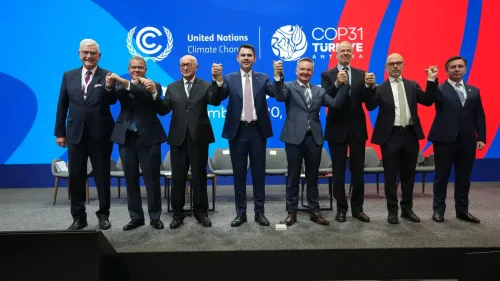
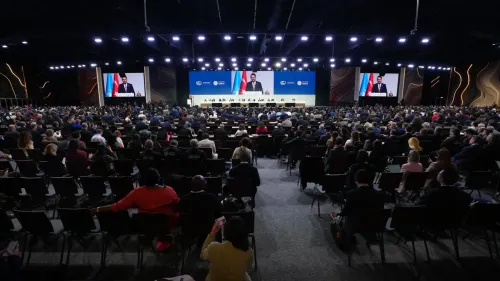
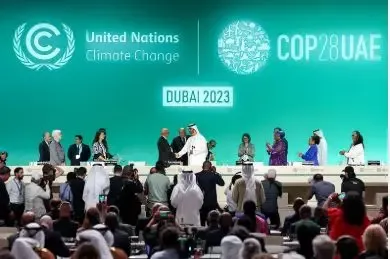
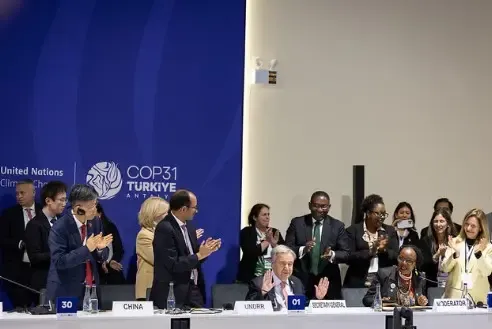
More than 100 national leaders and UN Secretary-General António Guterres gathered in Antalya, Türkiye on 12 November 2026 for the COP31 Leaders' Summit .
Host President Recep Tayyip Erdoğan chaired a leader-level event on electrification , backed by Türkiye's newly released National Energy Plan .
The Antalya Green Industrialisation Compact was introduced to accelerate near-zero emissions industrial production; industry accounts for roughly 25% of direct global CO2 emissions.
First Lady Emine Erdoğan led the Zero Waste session, targeting a 50% reduction in municipal solid waste growth by 2035 and a 15% circular material use rate.
The #OneBillion Challenge was launched to mobilise global action on food waste reduction.
The waste sector contributes approximately 20% of human-caused methane emissions — a gas 80 times more potent than CO2 in atmospheric warming impact.
More than 100 national leaders and UN Secretary-General António Guterres convened in the coastal Turkish city of Antalya on 12 November 2026 for the opening day of the COP31 Leaders' Summit, with electrification, green industrialisation, and waste reduction emerging as the defining priorities. The gathering was designed to inject fresh political momentum into global climate commitments ahead of key negotiations.
Erdoğan Sets the Tone on Electrification
Host nation President Recep Tayyip Erdoğan opened proceedings with a call for civilisational accountability on climate, telling world leaders: 'Respect for nature lies at the heart of our civilization. Earth is a sacred trust that must be protected and cared for… This culture, which considers bread as fertility, water as holy, and a tree as life, serves as our compass in our environmental and climate policies.'
Erdoğan went on to frame Türkiye's approach as one of active participation rather than passive obligation: 'Properly fulfilling our responsibilities in the fight against climate change, we are working to become a part of the solution rather than the problem.' He subsequently hosted a leader-level event on electrification alongside UN Secretary-General Guterres, aimed at mapping both the opportunities and persistent barriers to accelerating the global energy transition. Türkiye reinforced its credentials by publishing its own National Energy Plan earlier this month, outlining decarbonisation pathways across energy, industry, transport, and agriculture.
Green Industrialisation Compact Unveiled
COP31 President Murat Kurum made the case for aligning climate action with national economic interest, arguing: 'Using energy more efficiently makes energy supplies more secure. Investing in water strengthens food security. Clean technologies create opportunities for industry and employment. Resilient cities strengthen our economies. Well-designed climate action is an investment in prosperity, security and competitiveness.'
The COP31 Presidency also hosted a leader-level event on Green Industrialisation, building political support for the Antalya Green Industrialisation Compact. Industry accounts for approximately a quarter of direct global CO2 emissions, and the compact is intended to accelerate investment in near-zero and low-emissions industrial production. It supports the presidency's twin targets on electrification and circularity, with industrial electrification and increased use of circular materials identified as the primary levers for decarbonising the sector.
Zero Waste Takes Centre Stage
First Lady of Türkiye Emine Erdoğan addressed a leader-level event on Zero Waste, a thematic priority for the COP31 Presidency. The session focused on reducing the projected growth in global municipal solid waste by at least 50 per cent by 2035 and raising the global circular material use rate to at least 15 per cent. The waste sector is responsible for roughly 20 per cent of human-caused methane emissions — a greenhouse gas considered 80 times more potent than carbon dioxide over comparable atmospheric warming timescales.
Notably, the COP31 High-Level Champion launched the #OneBillion Challenge on the summit's opening day, aiming to mobilise households, businesses, cities, and organisations globally to reduce food waste. The initiative is supported by the Zero Waste Foundation and seeks to aggregate grassroots action with measurable outcomes.
Methane Reduction Dialogue
Running alongside the Zero Waste event, the COP31 Presidency hosted a Global High-Level Dialogue on Methane Emissions from the Waste Sector, aimed at identifying concrete policies and bankable projects to drive down methane output. This comes amid growing scientific consensus that rapid methane reductions offer one of the fastest near-term pathways to limiting temperature rise, given the gas's shorter but more intense atmospheric lifespan compared to CO2.
What Comes Next
The Leaders' Summit sets the political temperature for the technical negotiations that follow over the coming days in Antalya. With the Antalya Green Industrialisation Compact now on the table and the electrification agenda formally launched, attention will shift to whether major emitters translate summit-level rhetoric into binding commitments and finance pledges. The scale of participation on Day 1 signals political will, but observers note that outcomes will ultimately be judged on the specificity and accountability of any agreements reached before the conference closes.
Point of View
Green industrialisation, and waste — but the Antalya summit faces the same structural challenge as every COP before it: the distance between high-attendance rhetoric and enforceable commitments. Türkiye's decision to publish its National Energy Plan ahead of the summit was a credibility play, but the Green Industrialisation Compact's real test will be whether it attracts hard finance rather than soft endorsements. With major emitters under domestic economic pressure, the compact's near-zero emissions targets risk becoming another aspirational framework without a compliance mechanism to give them teeth.
NationPress
12 Nov 2026
Frequently Asked Questions
What is COP31 and where is it being held?
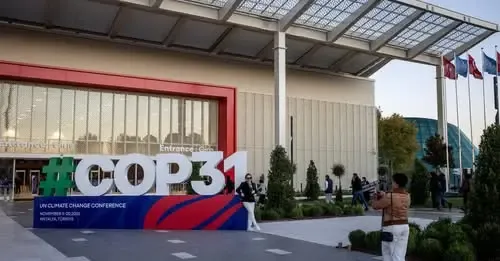
COP31 is the 31st session of the Conference of the Parties to the UN Framework Convention on Climate Change, held in Antalya, Türkiye in November 2026. The Leaders' Summit on 12 November brought together more than 100 heads of state to build political momentum on electrification, green industrialisation, and waste reduction.
What is the Antalya Green Industrialisation Compact?
The Antalya Green Industrialisation Compact is a COP31 initiative aimed at accelerating investment in near-zero and low-emissions industrial production. Industry accounts for about a quarter of direct global CO2 emissions, and the compact focuses on industrial electrification and circular materials as the primary decarbonisation tools.
What is the #OneBillion Challenge launched at COP31?
The #OneBillion Challenge, launched by the COP31 High-Level Champion and supported by the Zero Waste Foundation, aims to mobilise one billion people and organisations to reduce food waste. It is part of the COP31 Presidency's Zero Waste priority, which targets a 50% reduction in municipal solid waste growth by 2035.
Why is methane from waste a focus at COP31?
The waste sector accounts for approximately 20% of human-caused methane emissions, and methane is considered 80 times more potent than carbon dioxide in terms of atmospheric warming. Reducing methane from waste is seen as one of the fastest near-term pathways to limiting global temperature rise, prompting a dedicated High-Level Dialogue at COP31.
What did President Erdoğan announce for Türkiye at COP31?
President Erdoğan highlighted Türkiye's National Energy Plan, published earlier in November 2026, which outlines decarbonisation across energy, industry, transport, and agriculture. He also hosted leader-level events on electrification and green industrialisation, positioning Türkiye as an active participant in the global energy transition rather than a bystander.