Puri flags new IOCL-Mauritius 5-year energy pact, first vessel lands
Synopsis
Union Petroleum Minister Hardeep Singh Puri has announced a new five-year G2G petroleum supply agreement between IOCL and Mauritius's STC. The first vessel, MT Torm Splendid, carrying 39.5 TMT of products from Paradeep Refinery, has already arrived — backed by India's Neighbourhood First and MAHASAGAR frameworks.
Key Takeaways
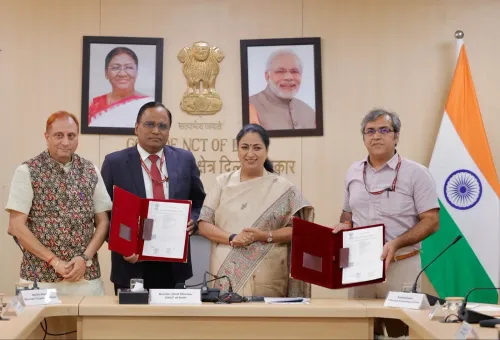
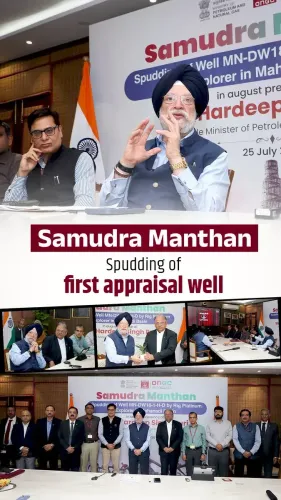
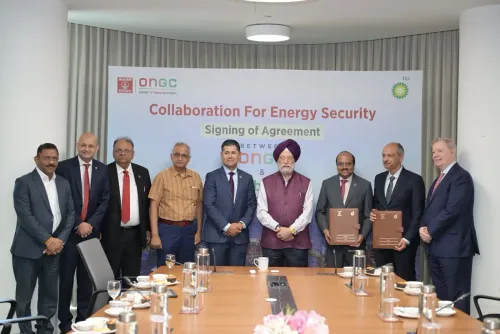
IOCL and STC Mauritius have signed a new five-year G2G petroleum supply agreement , formalized during Minister Puri's recent visit to Mauritius.
The first delivery vessel, MT Torm Splendid , loaded at IndianOil's Paradeep Refinery , has arrived in Mauritius carrying 39.5 TMT of MoGas, GasOil, Jet A1 and MGO.
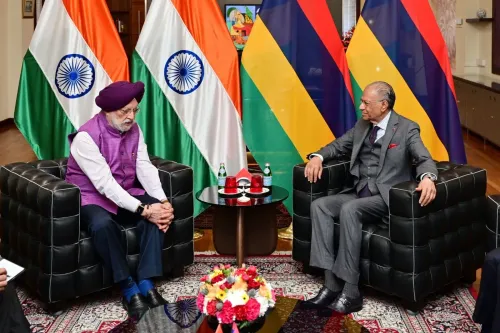
Minister Puri and Mauritian Commerce Minister John Michaël Tzoun Sao Yeung Sik Yuen jointly laid the Foundation Stone for the IOML bunkering facility expansion .
The deal is framed under India's Neighbourhood First Policy and the MAHASAGAR vision for a secure Indian Ocean Region, championed by PM Narendra Modi .
The Paradeep Refinery is emerging as a key origin point for India's export-linked petroleum diplomacy toward Indian Ocean island states.
A tanker loaded at IndianOil's Paradeep Refinery in Odisha has docked in Mauritius — and with it, a new chapter in India-Mauritius energy cooperation has officially set sail. Union Petroleum Minister Hardeep Singh Puri announced on Thursday, 24 September 2026 that a fresh five-year petroleum supply agreement between Indian Oil Corporation Ltd (IOCL) and State Trading Corporation (STC) of Mauritius has been signed under a government-to-government (G2G) arrangement — and the first shipment has already arrived.
MT Torm Splendid's maiden run: 39,500 tonnes across the Indian Ocean
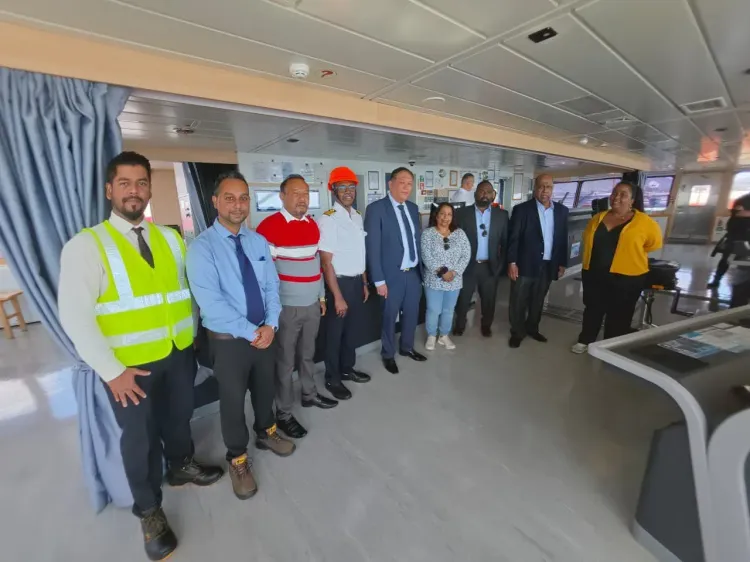
The vessel MT Torm Splendid, carrying a combined cargo of 39.5 TMT (thousand metric tonnes) of petroleum products — MoGas, GasOil, Jet A1 and MGO — made the inaugural run under the new agreement. It was received in Mauritius by H.E. Mr. John Michaël Tzoun Sao Yeung Sik Yuen, Minister of Commerce and Consumer Protection of Mauritius. The four-product slate signals a comprehensive fuel supply partnership, covering transport fuels, aviation fuel, and marine gasoil in a single delivery.
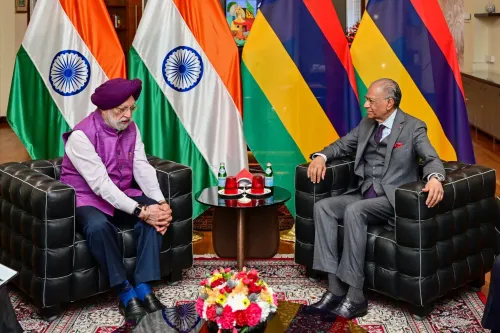
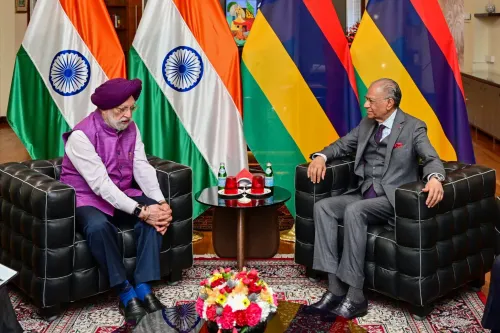
Minister Puri was present for the signing ceremony during his recent visit to the island nation, and subsequently joined the Mauritian minister in laying the Foundation Stone for the expansion of the IOML bunkering facility — a move that extends India's commercial and maritime footprint in the port infrastructure of Mauritius.
Neighbourhood First meets MAHASAGAR: the strategic frame behind the fuel deal
The agreement sits squarely within two of New Delhi's signature foreign-policy frameworks. India's Neighbourhood First Policy, pursued since 2014 under Prime Minister Narendra Modi, has consistently elevated Mauritius through connectivity, defence, and economic initiatives. The MAHASAGAR vision — an evolution of PM Modi's earlier SAGAR doctrine announced in 2015 — frames the Indian Ocean Region as a zone of collective security and shared prosperity, with India as the net security and development provider.
Energy supply is not incidental to this strategy — it is central. G2G petroleum deals reduce the transaction costs and commercial risks for small island states, lock in supply certainty, and embed India's national oil companies as long-term partners rather than spot-market vendors. The IOCL-STC arrangement follows earlier bilateral energy and trade cooperation agreements stretching back to the mid-2010s.
Paradeep Refinery's expanding export role
Paradeep Refinery, IOCL's large-scale facility on the Odisha coast, is increasingly the origin point for India's export-linked petroleum diplomacy in the Indian Ocean. Its east-coast location makes it geographically well-suited to serve Indian Ocean island states — Mauritius sits roughly 4,000 kilometres to the southwest. The IOML (IndianOil Mauritius Ltd) bunkering facility expansion now underway will further tie Mauritian port operations to Indian supply chains, with implications for shipping lanes across the western Indian Ocean.
India's strategic competitors have invested heavily in port and infrastructure presence across the Indian Ocean — from Hambantota to Gwadar. New Delhi's counter has been quieter but consistent: energy supply agreements, bunkering infrastructure, and capacity-building, all packaged as development partnership. The IOCL-STC five-year deal is the latest chapter in that playbook.
What the IOML bunkering expansion means for the region
Bunkering — the supply of fuel to ships in port — is a strategically significant service. Countries that control bunkering capacity hold leverage over commercial shipping routes. The expansion of the IOML bunkering facility in Mauritius, with the Foundation Stone laid during Minister Puri's visit, positions Indian-linked infrastructure at a crossroads of Indian Ocean trade. Watch for follow-on agreements in defence logistics, port access, or digital connectivity as the broader bilateral relationship deepens.
One tanker's arrival in Port Louis is a data point. But behind it stands a five-year contract, a refinery on India's eastern coast, an expanding bunkering terminal, and a diplomatic doctrine that treats the Indian Ocean not as a backdrop — but as the main stage.
Point of View
Long-term commercial arrangements that also carry strategic weight. By locking Mauritius into a five-year supply relationship and simultaneously expanding bunkering infrastructure through IOML, India is building durable leverage at a strategically important Indian Ocean node — one that rivals have also courted. The MAHASAGAR framing elevates what could be a routine oil deal into an explicit geopolitical statement: the Indian Ocean is India's near-abroad, and energy is the sinew of that relationship. The ministerial-level visit and the symbolic first-vessel reception suggest New Delhi wants the optics of continuity and commitment, not just the transaction.
NationPress
25 Sept 2026
Frequently Asked Questions
What is the new IOCL-Mauritius energy agreement about?
Indian Oil Corporation Ltd (IOCL) and the State Trading Corporation (STC) of Mauritius have signed a five-year government-to-government (G2G) agreement for the supply of petroleum products, including MoGas, GasOil, Jet A1 and MGO, sourced from India's Paradeep Refinery.
What cargo did MT Torm Splendid carry to Mauritius?
MT Torm Splendid, the first vessel under the new IOCL-STC agreement, carried a total of 39.5 TMT of petroleum products — MoGas, GasOil, Jet A1 and Marine Gasoil (MGO) — loaded at IndianOil's Paradeep Refinery in Odisha.
What is the MAHASAGAR vision that India's policy references?
MAHASAGAR is India's evolved framework for the Indian Ocean Region, building on PM Modi's 2015 SAGAR (Security and Growth for All in the Region) doctrine. It aims to promote collective security, economic prosperity and resilience among Indian Ocean nations, with India as a key partner.
What is the IOML bunkering facility in Mauritius?
IndianOil Mauritius Ltd (IOML) operates a bunkering facility — a ship-fuelling infrastructure — in Mauritius. During Minister Puri's recent visit, the Foundation Stone for its expansion was laid, deepening India's maritime fuel supply presence in the western Indian Ocean.
Why does India sign G2G petroleum deals with small island nations?
Government-to-government petroleum arrangements reduce commercial risk and ensure supply certainty for small island states, while giving India's national oil companies long-term footholds in strategically located markets. They are a key tool in India's Neighbourhood First Policy and Indian Ocean strategy.