India-Myanmar Defence Cooperation Meeting held in Guwahati, Op Brahma aid lauded
Synopsis
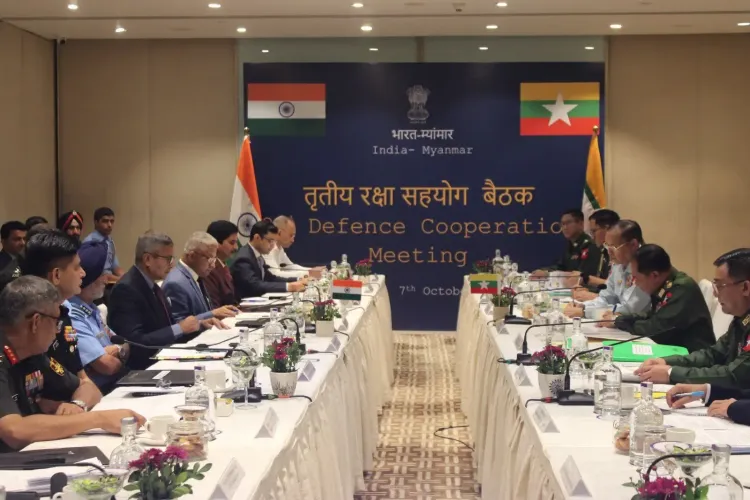
India and Myanmar held their third institutionalised defence cooperation meeting in Guwahati on 7 October 2026 — and the headline wasn't just military drills. Myanmar's formal appreciation of India's earthquake relief under Operation Brahma underlines how humanitarian diplomacy is quietly deepening a strategic partnership that has survived the 2021 coup, international censure, and shifting regional alignments.
Key Takeaways
The 3rd India-Myanmar Defence Cooperation Meeting was held in Guwahati on 7 October 2026 , co-chaired by Defence Secretary Rajesh Kumar Singh and Myanmar's Lt Gen Pyae Sone Linn .
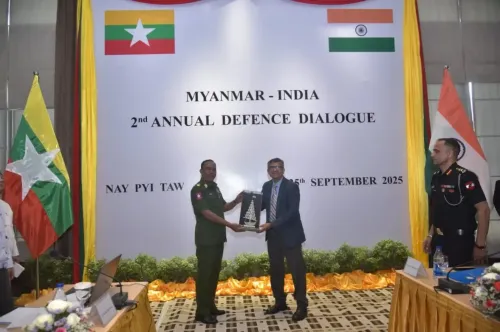
Both sides reviewed progress on initiatives agreed at the previous meeting in Yangon in 2025 and discussed new areas of collaboration, especially training and capacity building .
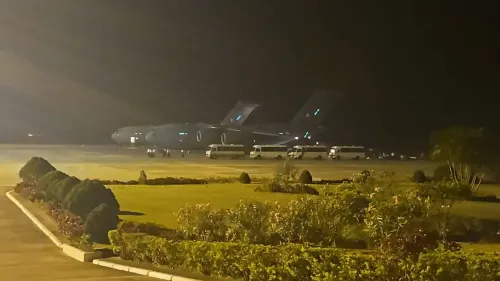
Myanmar formally appreciated India's humanitarian response under Operation Brahma following the devastating earthquake.
In May 2026 , then Chief of Naval Staff Admiral Dinesh K.
Tripathi visited Myanmar, meeting senior naval and defence officials to advance navy-to-navy ties.
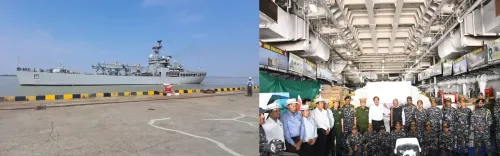
India handed over a Containerised Small Arms Simulator and a Rigid Inflatable Boat to Myanmar's Naval Training Command to bolster Bay of Bengal maritime security.
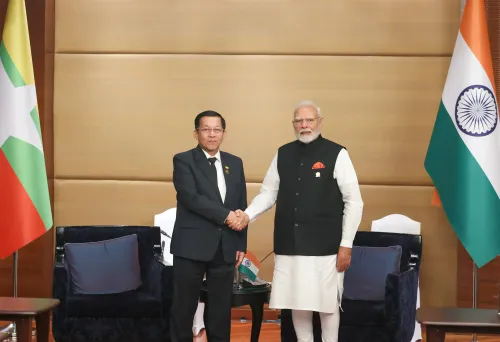
India and Myanmar held their 3rd Defence Cooperation Meeting in Guwahati on 7 October 2026, reviewing progress on bilateral defence initiatives and charting new areas of collaboration, with a special focus on training, capacity building, and mutual security. The meeting was co-chaired by Defence Secretary Rajesh Kumar Singh and Myanmar's Chief of Armed Forces Training Lt Gen Pyae Sone Linn, with Myanmar officials expressing appreciation for India's post-earthquake humanitarian response under 'Operation Brahma'.
Key Agenda and Outcomes
Both sides reviewed the progress made on bilateral defence cooperation initiatives agreed during the last Defence Cooperation Meeting held in Yangon in 2025. The two countries exchanged views on new initiatives, with training and capacity building as well as enhancing mutual security receiving special emphasis. Myanmar's delegation acknowledged India's role as the 'First Responder' and a close neighbour in the aftermath of the devastating earthquake, citing the swift deployment of resources under Operation Brahma.
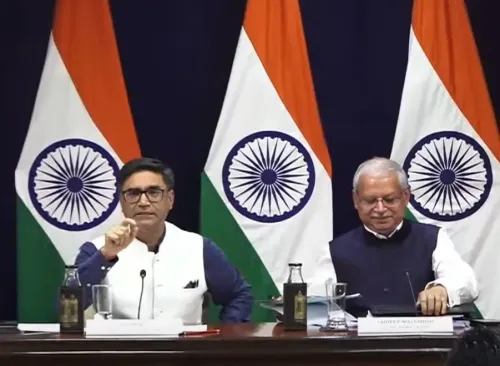
The Ministry of Defence (MoD) spokesperson confirmed the meeting's outcomes, noting that both sides identified priorities for deeper strategic engagement while underscoring the regional importance of sustained India-Myanmar defence ties.
Operation Brahma: Cementing India's Goodwill
Myanmar officials specifically praised India's humanitarian posture under Operation Brahma, which positioned New Delhi as the first country to respond to the earthquake that struck Myanmar. This goodwill has become a significant diplomatic asset, reinforcing India's Neighbourhood First policy and its broader MAHASAGAR vision for the Bay of Bengal region. Critics have previously questioned the depth of India-Myanmar ties given the military junta's human rights record, but defence officials argue that sustained engagement serves regional stability.
Naval Engagement: A Parallel Track
The Guwahati meeting follows a substantive naval engagement earlier this year. In May 2026, then Chief of Naval Staff Admiral Dinesh K. Tripathi visited Naypyitaw, where he met Myanmar Navy's Commander-in-Chief Admiral Htein Win. Their discussions covered maritime engagement opportunities, capacity building, training exchanges, Mobile Training Teams (MTTs), hydrography, and enhancing interoperability. Admiral Tripathi also called on Myanmar's Defence Minister General Htun Aung, reviewing the broader bilateral canvas and identifying strategic priorities.
During the visit, Admiral Tripathi met senior Myanmar naval commanders — Rear Admiral Aung Aung Naing, chief of the Central Naval Command, and Rear Admiral Khun Aung Kyaw, chief of the Training Command — to further bolster navy-to-navy cooperation and explore future avenues of collaboration.
Equipment Handover and Capacity Building
A notable highlight of Admiral Tripathi's May visit was the formal handover of equipment under Indian government assistance at the Naval Training Command in Myanmar. Items transferred included a Containerised Small Arms Simulator and a Rigid Inflatable Boat, both aimed at augmenting maritime security capabilities in the Bay of Bengal. India also briefed the Myanmar side on the effectiveness of the MTT programme, reaffirming its commitment to professional exchanges and capacity building.
Strategic Context
The back-to-back engagement — the naval visit in May and the defence cooperation meeting in October — signals a deliberate, layered effort by India to maintain strategic influence along its eastern flank. Myanmar shares a 1,643-kilometre land border with India and is a critical node in New Delhi's Act East Policy. This is the third such bilateral defence cooperation meeting, reflecting an institutionalised framework that has survived significant political turbulence in Myanmar since the 2021 military coup. How India calibrates this partnership amid continuing international scrutiny of the junta will shape its regional posture in the years ahead.
Point of View
New Delhi's 'Neighbourhood First' calculus — rooted in border security, Act East connectivity, and countering Chinese influence in Naypyitaw — keeps the relationship alive and institutionalised. The Operation Brahma goodwill is real, but it also serves a strategic function: it gives India non-military leverage without political endorsement of the junta. The harder question — how deep India should go on interoperability with an armed force facing international sanctions — remains conspicuously unanswered in official readouts.
NationPress
8 Oct 2026
Frequently Asked Questions
What was discussed at the 3rd India-Myanmar Defence Cooperation Meeting?
The meeting, held in Guwahati on 7 October 2026, reviewed progress on bilateral defence initiatives agreed at the previous meeting in Yangon in 2025, and discussed new measures to strengthen cooperation with a focus on training, capacity building, and mutual security. Myanmar officials also formally appreciated India's humanitarian response under Operation Brahma following the Myanmar earthquake.
Who co-chaired the India-Myanmar Defence Cooperation Meeting?
The meeting was co-chaired by India's Defence Secretary Rajesh Kumar Singh and Myanmar's Chief of Armed Forces Training Lt Gen Pyae Sone Linn. Officials from both countries participated in the discussions held in Guwahati.
What is Operation Brahma?
Operation Brahma was India's humanitarian relief operation launched in the aftermath of a devastating earthquake in Myanmar, positioning India as the 'First Responder' among neighbouring countries. Myanmar officials acknowledged the operation at the October 2026 defence meeting as a significant gesture from a close neighbour.
What did India's Chief of Naval Staff discuss during his May 2026 visit to Myanmar?
Then Chief of Naval Staff Admiral Dinesh K. Tripathi visited Myanmar in May 2026, meeting Myanmar Navy's Commander-in-Chief Admiral Htein Win and Defence Minister General Htun Aung. Discussions covered maritime engagement opportunities, capacity building, Mobile Training Teams, hydrography, and interoperability, and India formally handed over a Containerised Small Arms Simulator and a Rigid Inflatable Boat to Myanmar's Naval Training Command.
Why does India maintain defence ties with Myanmar despite the 2021 military coup?
India views Myanmar as a critical partner under its Neighbourhood First and Act East policies, given the 1,643-kilometre shared border and Myanmar's strategic position linking South and Southeast Asia. New Delhi has continued institutionalised defence engagement, balancing regional security interests — including countering Chinese influence — against international scrutiny of Myanmar's military-led government.