Shekhawat: India's Rail Network Ran Uninterrupted Amid Hormuz Crisis
Synopsis
Union Minister Gajendra Singh Shekhawat has highlighted that India's rail network kept running seamlessly amid Hormuz Strait tensions, pointing to decades of railway electrification, strategic petroleum reserves, and diversified crude sourcing as the structural reasons behind the country's energy resilience.
Key Takeaways
Union Minister Gajendra Singh Shekhawat stated on 20 July 2026 that India's railways faced no disruption during the Hormuz crisis .
Indian Railways operates over 13,000 trains daily and has been pursuing 100% broad-gauge electrification to reduce diesel dependency.
Strategic Petroleum Reserves at Mangalore, Padur and other sites were established from 2005 to buffer against Gulf supply shocks.
The Atmanirbhar Bharat programme, launched in 2020 , formally linked transport decarbonisation with national energy self-reliance goals.
India's National Energy Policy framework, updated in 2017 , prioritised crude import diversification and a higher renewables share in power generation.
The minister's post frames uninterrupted rail operations as the outcome of cumulative, long-term policy choices rather than a short-term crisis response.
Union Culture and Tourism Minister Gajendra Singh Shekhawat on Monday, 20 July 2026, highlighted that India's railway network continued operating without disruption even as global anxieties over oil supply through the Strait of Hormuz mounted, crediting the country's foresight in energy policy and self-reliance.
Context
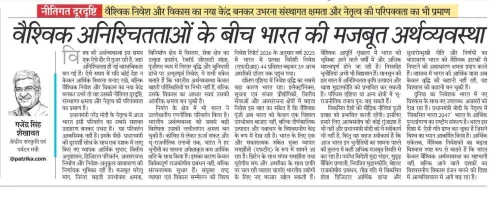
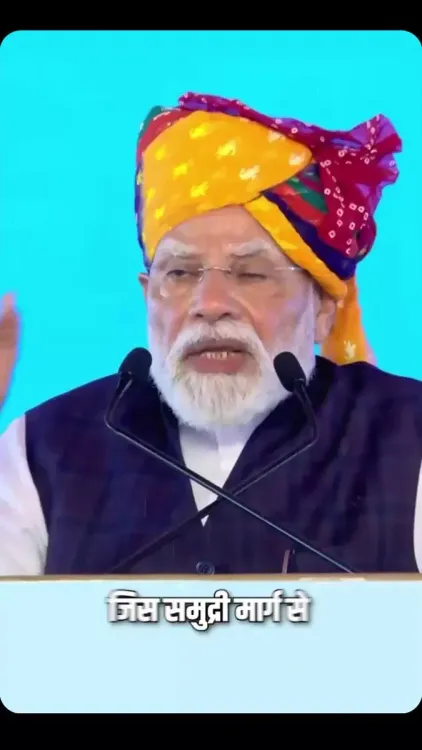
Shekhawat posted in Hindi, writing: 'Hormuz sankat ke beech bhi Bharat ki speed nahin kam hui!' ('India's speed did not slow even amid the Hormuz crisis!'). He stated that while the world was anxious about oil supply and energy security, India kept its rail services running normally across the country through 'far-sighted policies and effective energy management.' The post was accompanied by a video elaborating on India's energy strategy and the journey toward self-reliance.
Policy Backdrop
The Strait of Hormuz, the narrow maritime chokepoint between Iran and Oman, carries roughly one-fifth of global oil trade. Disruptions or threats in the region have historically rattled energy markets and exposed import-dependent economies to supply shocks. India has responded over successive years by building Strategic Petroleum Reserves at sites including Mangalore and Padur, which were established from 2005 onward to provide a buffer against exactly such situations.
Simultaneously, Indian Railways — the world's fourth-largest rail network by route length, running over 13,000 trains daily — has been on an accelerated electrification drive since 2014, aiming to achieve 100 per cent broad-gauge electrification. By shifting traction from diesel to electric power, the network has progressively reduced its exposure to crude oil price volatility. The Atmanirbhar Bharat programme launched in 2020 further embedded transport decarbonisation and domestic energy production within a broader self-reliance framework.
Stakeholders and Impact
The immediate beneficiaries of uninterrupted rail operations are the millions of daily rail passengers and freight operators who depend on the network for mobility and supply-chain continuity. For freight customers in particular, any diesel-supply disruption that halted goods trains would cascade rapidly into food, coal, and industrial logistics. The minister's framing positions the electrification programme as a strategic hedge that insulated ordinary commuters and businesses from a global energy shock.
Oil importers and energy planners are the other key stakeholder group. India has progressively widened its crude import sources beyond Gulf suppliers and updated its National Energy Policy framework — most recently in 2017 — to emphasise source diversification and a higher share of renewables in power generation. These choices, cumulatively, are what Shekhawat credits for the network's resilience.
What's Next
Parliamentary scrutiny of railway electrification completion rates is expected to intensify in the next budget session, with opposition members likely to press the government on precise milestones and any gaps between targets and actual progress. Announcements on expanded strategic petroleum reserve capacity could also feature in forthcoming budget or policy documents. Shekhawat's post signals that the ruling dispensation intends to frame India's energy-infrastructure resilience as a political and governance achievement, particularly in the context of global supply-chain stress.
Point of View
Anchoring the BJP's narrative of strategic foresight around a tangible, everyday service that voters use. By crediting railway electrification and strategic reserves — policies with cross-government lineage — the minister simultaneously claims credit for the current dispensation while implicitly arguing that the Atmanirbhar Bharat framework has delivered measurable resilience. The framing is notable because it connects infrastructure investment, energy security, and geopolitical risk in a single communication, a more sophisticated policy-communication posture than routine scheme promotion. Whether the electrification targets have actually been met in full will likely become the pivot on which opposition scrutiny turns.
NationPress
20 Oct 2026
Frequently Asked Questions
Why did the Hormuz crisis affect global oil supply in 2026?
The Strait of Hormuz is a narrow chokepoint between Iran and Oman through which roughly one-fifth of global oil trade passes; any military or political tension in the region raises fears of supply disruption and triggers price volatility in international energy markets.
How did India keep trains running during the Hormuz oil crisis?
India's progressive shift from diesel to electric traction on broad-gauge routes reduced the railways' dependence on crude oil, while Strategic Petroleum Reserves at sites like Mangalore and Padur provided a buffer against import disruptions, allowing normal rail operations to continue.
What is the status of Indian Railways electrification?
Indian Railways has been on an accelerated electrification programme since 2014, targeting 100 per cent broad-gauge electrification; the network runs over 13,000 trains daily and electrification has been a central plank of reducing fossil-fuel dependency in the transport sector.
What are India's Strategic Petroleum Reserves and where are they located?
India's Strategic Petroleum Reserves are underground crude oil storage facilities established from 2005 onward to provide emergency buffer stocks; key sites include Mangalore and Padur in Karnataka, designed to cover a specified number of days of import requirements during supply shocks.
What is Atmanirbhar Bharat's role in India's energy security?
Atmanirbhar Bharat, launched in 2020, is a self-reliance programme that includes targets for domestic energy production, transport decarbonisation, and reduced import dependence, framing energy security as integral to India's broader economic sovereignty.