India recycles over 70% of textile waste, circular economy supports 45 lakh jobs
Synopsis
India recycles more than 70% of its 7.8 million tonnes of annual textile waste — a figure that rivals developed economies — while supporting 40–45 lakh livelihoods, many of them women from marginalised communities. With global buyers demanding circular credentials, this existing infrastructure could become a decisive competitive advantage for Indian textile exporters.
Key Takeaways
India recovers over 70 per cent of its total textile waste through recycling, upcycling, downcycling, and reuse, per a government factsheet dated 12 July .
Of the 7.8 million tonnes of textile waste managed annually, over 90 per cent comes from domestic pre-consumer and post-consumer sources.
Pre-consumer recovery stands at nearly 95 per cent ; post-consumer diversion from landfills is approximately 55 per cent .
The circular textile ecosystem supports 40–45 lakh livelihoods , with women from marginalised communities playing a key role.
Panipat handles 3,500–5,250 TPD of textile waste; India's first Municipal Textile Recovery Facility in Belapur, Navi Mumbai has processed over 41,000 items and reached 1.14 lakh families .
The textile sector accounts for 2 per cent of India's GDP , 11 per cent of manufacturing GVA , and employs over 45 million people .
India is recovering and recycling more than 70 per cent of its total textile waste through circular economy channels — including recycling, upcycling, downcycling, and reuse — according to a government factsheet released on Sunday, 12 July. The data underscores the textile sector's growing role in sustainable manufacturing, even as the industry accounts for 2 per cent of India's GDP and 11 per cent of manufacturing GVA.
Scale of Textile Waste Recovery
Of the 7.8 million tonnes of textile waste managed annually in India, over 90 per cent is sourced from domestic pre-consumer and post-consumer streams. Pre-consumer recovery — primarily factory scrap — is particularly robust, with nearly 95 per cent of such waste collected and reintegrated through established value-chain networks, according to the factsheet.
Post-consumer recovery, while lower, is also significant: approximately 55 per cent of post-consumer textile waste is diverted from landfills through India's extensive collection and sorting infrastructure. The spinning sector exemplifies closed-loop circularity, with nearly all spinning waste reintegrated within production cycles.
Livelihoods and Social Impact
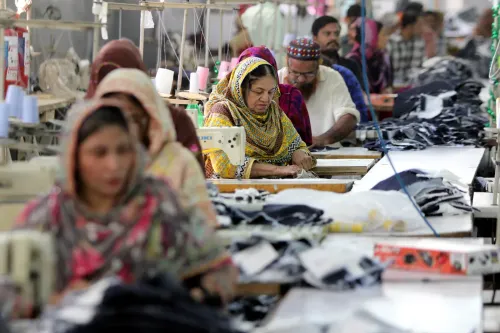
The circular textile ecosystem supports an estimated 40–45 lakh livelihoods, with women from marginalised communities playing a central role in collection, sorting, and redistribution. This social dimension gives the sector's sustainability push an equity dimension that goes beyond environmental metrics.
India's textile and apparel sector directly employs more than 45 million people, including large numbers of women and rural workers. The sector is also the world's sixth-largest exporter of textiles and apparel, holding a 4 per cent share in global exports.
Key Facilities Driving Circular Recovery
India's first Municipal Textile Recovery Facility, located in Belapur, Navi Mumbai, integrates collection, sorting, upcycling, technology, and livelihoods into a single circular ecosystem. It has collected 30 MT of post-consumer textile waste, sorted 25.5 MT, processed over 41,000 items, and developed more than 400 upcycled samples. The facility has reached 1.14 lakh families and supported women artisans through exhibitions and market access.
Panipat has emerged as a major downstream textile recycling hub, handling between 3,500 and 5,250 tonnes per day (TPD) of waste. The cluster supports collection, sorting, processing, knitting, and recycling, and is seen as a strong candidate for higher-value textile-to-textile recycling as material separation technology improves.
In Delhi, the informal Katran Market at Mongolpuri demonstrates how unorganised networks contribute to circularity. Cutting waste collected from trucks arriving from Noida, Gurugram, Manesar, Jaipur, and Delhi is sorted by colour and supplied at over 10 TPD to formal recycling clusters in Panipat, bridging local informal collection with organised downstream recovery.
Policy Push and Global Competitiveness
Policy support is expanding across organic fibres, safer chemicals, eco-labelling, traceability, and waste reduction. The factsheet notes that cleaner technologies and responsible sourcing are critical for Indian textiles to remain competitive as global buyers shift toward environmentally responsible supply chains.
This comes amid rising international scrutiny of textile supply chains, with major markets in the European Union and the United States moving toward mandatory sustainability disclosures. India's existing recycling infrastructure, if formalised and scaled, could position the country as a preferred sourcing destination for circular-economy-aligned brands.
What Comes Next
The government's factsheet signals a push to formalise and scale existing informal networks, expand high-value recycling capacity in hubs like Panipat, and integrate traceability systems. With global demand patterns shifting, sustainability is increasingly a market-access issue — not just an environmental one — for India's textile exporters.
Point of View
But it is driven heavily by pre-consumer (factory scrap) recovery — where the number is 95 per cent — while post-consumer diversion sits at just 55 per cent, meaning nearly half of what consumers discard still ends up in landfills. The real test of India's circular textile ambition is whether it can formalise and scale the informal networks — the Katran Markets and the Panipat sorters — before EU sustainability mandates begin closing market access for exporters who cannot prove circularity. The 40–45 lakh livelihoods figure also deserves scrutiny: without wage and working-condition data, it risks being used as a shield against calls to formalise the sector.
NationPress
11 Oct 2026
Frequently Asked Questions
How much textile waste does India recycle?
India currently recovers and recycles more than 70 per cent of its total textile waste, managing 7.8 million tonnes annually through recycling, upcycling, downcycling, and reuse channels, according to a government factsheet released on 12 July. Pre-consumer recovery is especially high at nearly 95 per cent.
How many jobs does India's textile recycling sector support?
The circular textile ecosystem supports an estimated 40–45 lakh livelihoods, with women from marginalised communities playing a significant role in collection, sorting, and redistribution. The broader textile and apparel sector employs more than 45 million people directly.
What is the Municipal Textile Recovery Facility in Navi Mumbai?
It is India's first Municipal Textile Recovery Facility, located in Belapur, Navi Mumbai, and integrates collection, sorting, upcycling, technology, and livelihoods into a single circular recovery ecosystem. It has collected 30 MT of post-consumer textile waste, processed over 41,000 items, and reached 1.14 lakh families.
Why is Panipat important for textile recycling in India?
Panipat is a major downstream textile recycling hub that handles between 3,500 and 5,250 tonnes per day of waste, covering collection, sorting, processing, knitting, and recycling. It receives a large share of pre-consumer textile waste from clusters across India and is seen as a key site for scaling higher-value textile-to-textile recycling.
Why does textile sustainability matter for India's export competitiveness?
India is the world's sixth-largest exporter of textiles and apparel with a 4 per cent share of global exports, and major markets — particularly in the European Union — are moving toward mandatory sustainability and circular-economy disclosures. Exporters who cannot demonstrate circularity risk losing market access, making India's recycling infrastructure a potential competitive advantage if formalised and scaled.