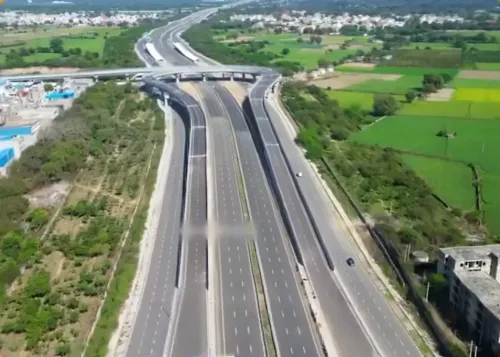
India roads sector in execution-intensive phase in FY27, states key driver: CareEdge
Synopsis
India's road network has crossed 63.73 lakh km, but the boom-era pace is over. CareEdge Ratings flags a clear pivot in FY27 — from record-breaking construction to execution quality and asset monetisation — with state governments, not the Centre, now set to drive the bulk of road capex.
Key Takeaways
India's road network grew from 52.30 lakh km in FY16 to 63.73 lakh km in FY26 , per CareEdge Ratings .
National Highway network expanded from 1.00 lakh km to 1.47 lakh km ; four-laned-and-above stretches rose from 25,854 km to 45,516 km .
Annual road capex more than doubled, from ₹0.94 lakh crore to ₹2.62 lakh crore over the decade.
Construction pace is expected to drop to ~21 km per day in FY27 , down from a peak of 36.8 km per day in FY21.
NH awarding fell from a peak of 12,731 km in FY22 to an estimated 7,000 km in FY26.
State road capex is projected to outpace central capex in FY27, with states emerging as the primary investment driver.
India's overall road network expanded from roughly 52.30 lakh km in FY16 to 63.73 lakh km in FY26, while the National Highway (NH) network grew from 1.00 lakh km to 1.47 lakh km over the same decade, according to a report released on Friday, 25 September 2026 by CareEdge Ratings. Annual government and private road capital expenditure more than doubled, rising from ₹0.94 lakh crore to ₹2.62 lakh crore during the period, reflecting the scale of the infrastructure push.
Decade of Expansion Gives Way to Execution Focus
India's roads sector has entered FY27 at what CareEdge Ratings describes as an inflection point. After a sustained decade of network expansion and rising investment, the sector is now shifting towards a more selective, execution-intensive phase. Four-laning and above NH stretches rose from 25,854 km to 45,516 km between FY16 and FY26, underscoring the volume of assets already created.
However, construction momentum has visibly slowed. The pace of NH construction, which peaked at 36.8 km per day in FY21, fell to 25 km per day in FY26 and is expected to moderate further to approximately 21 km per day — or about 7,750 km for the year — in FY27. The CareEdge report attributes this slowdown to lower award inflows during FY25-FY26 and persistent execution challenges on the ground.
Award Pipeline Moderating from Peak Levels
NH awarding activity has pulled back significantly from its FY22 peak of 12,731 km, with estimates placing FY26 awards at around 7,000 km. CareEdge Ratings notes that FY27 awarding activity may benefit from the revised BOT-Toll framework and a stronger award pipeline, but the overall construction pace is still expected to moderate given the lag effect of reduced awards.
'The Indian roads sector is transitioning from a phase of rapid expansion to one centred on execution quality, operationalisation and asset monetisation. While FY27 awarding activity is expected to benefit from the revised BOT-Toll framework and a stronger award pipeline, construction pace is likely to moderate amid lower award inflows and execution challenges,' said Rajashree Murkute, Senior Director at CareEdge Ratings.
State Governments Emerge as Key Investment Driver
A notable structural shift highlighted in the report is the rising prominence of state governments in road sector investment. CareEdge Ratings expects state road capital expenditure to outpace central capex in FY27, reflecting a sharper focus on regional and intra-state connectivity even as NH award activity moderates at the central level.
This realignment also signals a broader sectoral transition — from rapid asset creation to the execution and completion of the existing project pipeline. State-led capex, combined with a growing pool of operational Hybrid Annuity Model (HAM) and toll assets, is expected to provide resilience through greater cash-flow visibility.
What the Shift Means for Road Sector Stakeholders
For construction firms and infrastructure investors, the changing landscape implies that the era of aggressive contract wins may be tapering off, at least at the central level. The focus on operationalisation and asset monetisation opens opportunities in operations, maintenance, and toll-based revenue models. Notably, the growing HAM and toll asset pool is expected to support more predictable revenue streams for concessionaires.
With state capex stepping up and the Centre consolidating its existing pipeline, the road sector's trajectory in FY27 will hinge on execution efficiency, timely land acquisition, and the pace at which the revised BOT-Toll framework attracts private investment.
Point of View
But it does signal that the headline-chasing era of Indian road-building is over. The harder work of actually completing, operationalising, and monetising a vast asset base is beginning. The structural shift of states stepping ahead of the Centre on capex is significant: it redistributes both risk and accountability to governments that often have weaker financial headroom and execution capacity. Whether the revised BOT-Toll framework can reliably draw in private capital — something earlier iterations struggled with — will be the real test of whether this transition delivers value or simply pushes the completion problem down the road.
NationPress
25 Sept 2026
Frequently Asked Questions
How much has India's road network grown since FY16?
India's overall road network expanded from approximately 52.30 lakh km in FY16 to 63.73 lakh km in FY26, according to a CareEdge Ratings report. The National Highway network alone grew from 1.00 lakh km to 1.47 lakh km over the same period.
Why is India's road construction pace slowing in FY27?
Construction activity is moderating due to lower NH award inflows during FY25-FY26 and ongoing execution challenges. CareEdge Ratings projects the pace will drop to around 21 km per day in FY27, compared to a peak of 36.8 km per day in FY21.
Why are state governments becoming the key driver of road investment?
State road capex is expected to outpace central capex in FY27, reflecting a greater emphasis on regional and intra-state connectivity as NH awarding at the central level moderates. This also reflects the broader sectoral shift from asset creation to execution and completion of existing projects.
What is the significance of the revised BOT-Toll framework for India's roads sector?
The revised Build-Operate-Transfer Toll framework is expected to support FY27 awarding activity by potentially attracting stronger private investment. Earlier BOT rounds faced challenges in attracting adequate private participation, making the revised framework's uptake a key variable to watch.
What does 'execution-intensive phase' mean for the roads sector?
It means the sector's priority has shifted from awarding and building new roads at record pace to ensuring quality completion of existing projects, operationalising assets, and monetising them — including through tolling and HAM concessions — to generate sustainable cash flows.