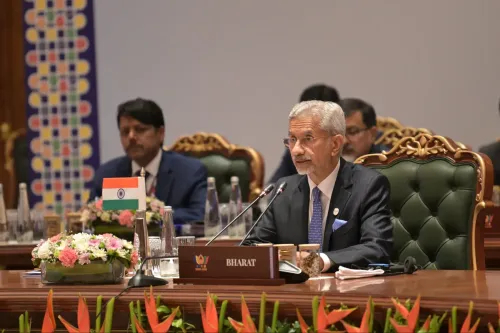
12th BRICS Environment Ministers' Meeting opens in New Delhi today
Synopsis
India's 2026 BRICS Chairship reaches a key milestone as environment ministers from across the expanded bloc — now including Egypt, Ethiopia, Indonesia, Iran, and the UAE — converge in New Delhi. With climate adaptation, afforestation, and the circular economy on the table, the meeting tests whether a more diverse BRICS can move from dialogue to durable environmental cooperation.
Key Takeaways
India is hosting the 12th BRICS Environment Ministers' Meeting in New Delhi on 18 August 2026 under its 2026 BRICS Chairship .
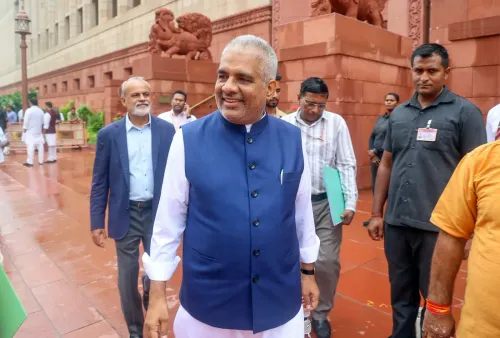
The meeting is chaired by Union Minister Bhupender Yadav and is preceded by senior officials' and contact group meetings.
Key agenda items include afforestation, forest fire management, circular economy, disaster resilience , and climate adaptation .
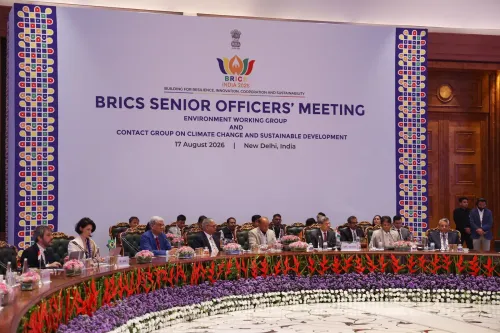
The BRICS Environment Working Group Senior Officers' Meeting at Bharat Mandapam on Monday was chaired by Secretary Tanmay Kumar and included 10 member nations .
India is using the chairship to position BRICS as a Global South voice on pollution, biodiversity loss, and climate change.
India is hosting the 12th BRICS Environment Ministers' Meeting in New Delhi on Tuesday, 18 August 2026, under its 2026 BRICS Chairship, with environmental cooperation, climate resilience, and sustainable development topping the agenda. The ministerial gathering marks one of the most significant multilateral environmental engagements of India's chairship year.
Who Is Chairing and What Precedes It
The meeting is being chaired by Union Minister for Environment, Forest and Climate Change Bhupender Yadav. It is preceded by the BRICS Senior Officers' Meeting of the Environment Working Group and the Contact Group on Climate Change and Sustainable Development, ensuring that ministerial deliberations build on technical groundwork already laid.
Theme and Key Priorities
Discussions are being held under India's overarching BRICS Chairship theme: 'Building for Resilience, Innovation, Cooperation and Sustainability.' According to the Ministry of Environment, Forest and Climate Change, India has identified several focus areas for the Environment Working Group, including promoting sustainable lifestyles, afforestation, forest fire management, disaster resilience, circular economy, and climate adaptation. The priorities reflect India's effort to link environmental protection directly with sustainable development goals.
Broader BRICS Participation
The BRICS Environment Working Group Senior Officers' Meeting, held at Bharat Mandapam on Monday and chaired by Secretary Tanmay Kumar of the Ministry of Environment, Forest and Climate Change, saw participation from Brazil, China, Egypt, Ethiopia, Indonesia, Iran, Russia, South Africa, and the United Arab Emirates (UAE). India used that forum to underscore that the BRICS alliance has evolved well beyond economic dialogue into an influential platform for addressing pressing global challenges including pollution, biodiversity loss, and global warming.
Why This Meeting Matters
India's 2026 BRICS Chairship gives New Delhi a strategic opportunity to shape the bloc's environmental agenda at a time when developing economies face mounting pressure on climate adaptation, ecosystem restoration, and resource efficiency. The meeting is expected to foster greater sharing of policies, technologies, and best practices among member nations. Notably, BRICS now encompasses a wider membership — including Egypt, Ethiopia, Indonesia, Iran, and the UAE — making its environmental consensus increasingly consequential for the Global South.
What Comes Next
The ministerial-level outcomes are expected to feed into BRICS's broader environmental agenda for the remainder of India's chairship. Consensus positions agreed upon here could inform the bloc's collective stance at upcoming global climate forums. All eyes will be on whether BRICS nations can align on binding cooperation frameworks, or whether the communiqué remains aspirational.
Point of View
China, Russia, Iran, and the UAE on anything beyond a communiqué is a diplomatic challenge. The real test is whether the 'Building for Resilience' theme produces binding cooperation frameworks or remains a headline. India's track record at multilateral environmental forums — strong on optics, uneven on follow-through — will be under scrutiny here.
NationPress
18 Aug 2026
Frequently Asked Questions
What is the 12th BRICS Environment Ministers' Meeting?
It is a ministerial-level gathering of BRICS member nations held in New Delhi on 18 August 2026, focused on environmental cooperation, climate resilience, and sustainable development. India is hosting the meeting under its 2026 BRICS Chairship, with Union Minister Bhupender Yadav presiding.
Which countries are participating in the BRICS environment meeting?
The meeting includes all current BRICS member nations: Brazil, China, Egypt, Ethiopia, Indonesia, Iran, Russia, South Africa, and the United Arab Emirates, in addition to India as host and chair.
What are the key topics on the agenda?
The agenda covers sustainable lifestyles, afforestation, forest fire management, disaster resilience, circular economy, and climate adaptation. Discussions are also expected to encourage policy and technology sharing among member nations.
What is India's overarching theme for its 2026 BRICS Chairship?
India's 2026 BRICS Chairship theme is 'Building for Resilience, Innovation, Cooperation and Sustainability.' The environment ministers' meeting is one of the flagship events under this framework.
What preceded the ministers' meeting?
The BRICS Environment Working Group Senior Officers' Meeting and the Contact Group on Climate Change and Sustainable Development were held ahead of the ministerial session, including a gathering at Bharat Mandapam on Monday chaired by Secretary Tanmay Kumar.