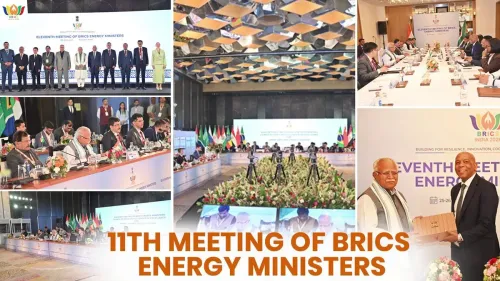
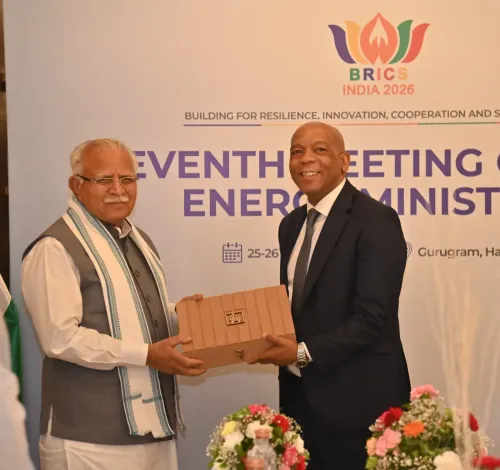
BRICS Energy Ministers' Meeting 2026: India hosts 11th summit in Gurugram on June 25–26
Synopsis
India is set to chair the 11th BRICS Energy Ministers' Meeting in Gurugram on 25–26 June, bringing together officials from 11 nations that collectively represent half the world's population and 40 per cent of global GDP. With solar capacity up 50-fold and an E85 fuel rollout underway, India arrives at the table with more than just a chairmanship — it arrives with a credible energy story to tell.
Key Takeaways
India will host the 11th BRICS Energy Ministers' Meeting on 25–26 June 2026 in Gurugram , under its BRICS Chairship 2026 .
The meeting's theme is 'Energy for All' , covering energy security, access, equity, and technology innovation.
BRICS now has 11 member nations , representing nearly half of the world's population and around 40 per cent of global GDP .
India has expanded solar capacity by more than 50 times in a decade and deployed over 60 million smart meters .
India targets 410 GWh of energy storage capacity by 2032 and has achieved 20 per cent ethanol blending .
India will also use the platform to advance Global South priorities on energy resilience and sustainable development.
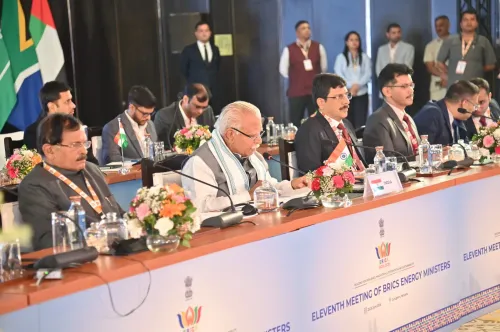
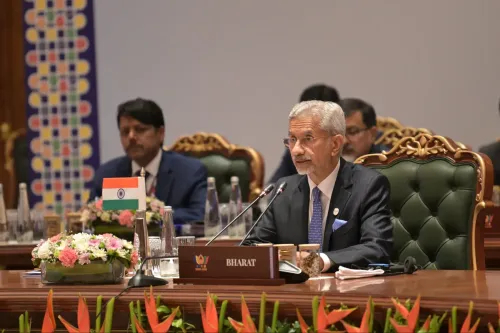
India will host the 11th BRICS Energy Ministers' Meeting on 25–26 June 2026 in Gurugram, on the outskirts of New Delhi, under its BRICS Chairship 2026, according to an official statement released on Sunday, 21 June. The two-day gathering will bring together Energy Ministers and senior officials from all BRICS member nations to advance cooperation on energy security, sustainability, and innovation.
What the Meeting Aims to Achieve
India's BRICS Chairship is anchored to the theme 'Building for Resilience, Innovation, Cooperation and Sustainability'. Within the energy track, the country has adopted the sub-theme 'Energy for All', reflecting a shared commitment among BRICS nations to universal energy access. The agenda is structured around three broad priorities: energy security and sustainability; energy access and equity; and technology and innovation.
The meeting comes at a moment when governments worldwide are navigating the tension between energy security, affordability, and the imperatives of climate action and rising demand — a challenge that is especially acute for fast-growing emerging economies.
The BRICS Bloc and Its Energy Weight
The expanded BRICS grouping now comprises Brazil, China, Egypt, Ethiopia, India, Indonesia, Iran, Russia, Saudi Arabia, South Africa, and the United Arab Emirates — together accounting for nearly half of the world's population and approximately 40 per cent of global GDP. As the world's third-largest producer and consumer of electricity, India occupies a pivotal position within this bloc, and views secure, affordable, and sustainable energy as central to its Viksit Bharat 2047 vision.
India's Energy Credentials on Display
The Gurugram summit will give India a platform to showcase a decade of energy transformation. The country has expanded its solar power capacity by more than 50 times over the past ten years, deployed over 60 million smart meters, and set a target of 410 GWh of energy storage capacity by 2032.
Significant reforms to power transmission and distribution infrastructure have also been undertaken, including the expansion of the national transmission network and the accelerated development of Green Energy Corridors to integrate large-scale renewable energy. In the biofuels sector, India has achieved 20 per cent ethanol blending and recently rolled out E85 fuel — a high-ethanol blend containing 80–85 per cent ethanol.
At the multilateral level, India has positioned itself as a leading advocate for clean energy cooperation through the International Solar Alliance and the Global Biofuels Alliance, both of which reinforce its role in shaping an inclusive global energy transition.
The Global South Dimension
As Chair, India has also indicated it will use the meeting to advance the priorities of the Global South, pushing for practical collaboration on resilient supply chains and sustainable development. In an increasingly volatile global energy environment — shaped by geopolitical disruptions, supply chain fragility, and the energy transition — deeper BRICS cooperation carries particular strategic weight.
The ministers' meeting is expected to produce concrete outcomes on energy security, innovation frameworks, and pathways toward affordable, future-ready energy systems, according to the official statement.
Point of View
China, Saudi Arabia, and Iran all at the table, the geopolitics of energy supply chains will be as present as the sustainability rhetoric. India's credibility as a neutral convener — and as a genuine clean-energy leader — will be on display; how it manages those tensions will matter far beyond the two-day summit.
NationPress
20 Sept 2026
Frequently Asked Questions
Where and when is the 11th BRICS Energy Ministers' Meeting being held?
The 11th BRICS Energy Ministers' Meeting is scheduled for 25–26 June 2026 in Gurugram, on the outskirts of New Delhi. India is hosting the summit under its BRICS Chairship 2026.
What is the theme of India's BRICS energy agenda for 2026?
India has adopted 'Energy for All' as the theme for the BRICS Energy Track under its chairship, reflecting a commitment to universal energy access. The agenda is structured around three priorities: energy security and sustainability; energy access and equity; and technology and innovation.
Which countries are part of BRICS in 2026?
BRICS currently comprises 11 members: Brazil, China, Egypt, Ethiopia, India, Indonesia, Iran, Russia, Saudi Arabia, South Africa, and the United Arab Emirates. Together they represent nearly half of the world's population and around 40 per cent of global GDP.
What energy achievements will India highlight at the BRICS meeting?
India is expected to showcase a more than 50-fold expansion in solar power capacity over the past decade, deployment of over 60 million smart meters, a target of 410 GWh of energy storage by 2032, and the achievement of 20 per cent ethanol blending along with the rollout of E85 fuel.
Why does the BRICS Energy Ministers' Meeting matter for the Global South?
As Chair, India has signalled it will use the meeting to advance Global South priorities, including resilient energy supply chains and sustainable development pathways. With BRICS nations collectively driving a significant share of global energy demand growth, cooperation frameworks agreed here could shape energy access and transition policies for billions of people.