Khattar chairs 11th BRICS Energy Ministers' Meet under India's 2026 Presidency
Synopsis
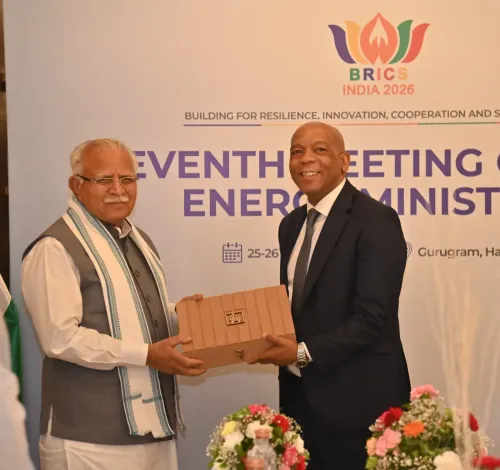
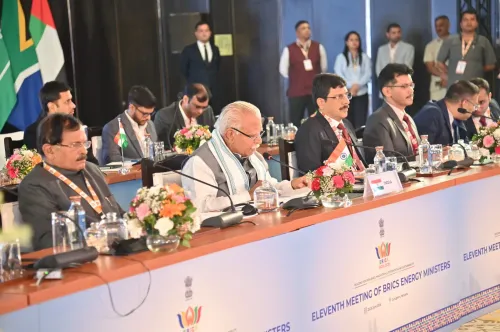
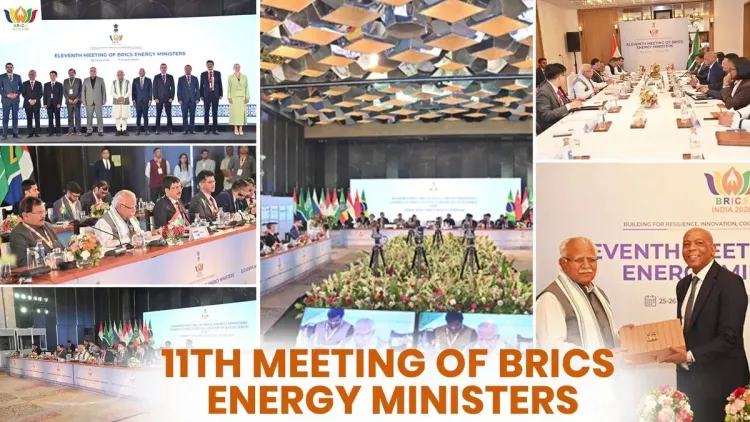
Union Power Minister Manohar Lal Khattar shared highlights from the 11th BRICS Energy Ministers' Meet on June 25, 2026, invoking the Sanskrit motto 'energy for all' to frame India's 2026 BRICS Chairship priority of universal energy access for the Global South.
Key Takeaways
Union Power Minister Manohar Lal Khattar posted highlights from the 11th BRICS Energy Ministers' Meet on June 25, 2026 .
India holds the BRICS Chairship in 2026 , previously holding it in 2021 .
The Sanskrit phrase 'सर्वेषां ऊर्जम्' ('energy for all') was adopted as the thematic motto for India's energy presidency.
The BRICS Energy Working Group , established in 2015 , underpins the ministerial dialogue on access, efficiency, and technology sharing.
Outcomes from the meeting are expected to shape the agenda for the full 2026 BRICS Summit .
India has consistently used BRICS presidencies to champion Global South energy access as a development priority.
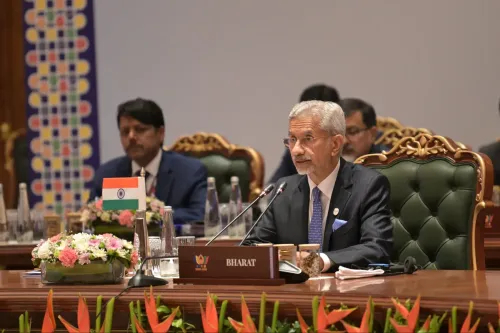
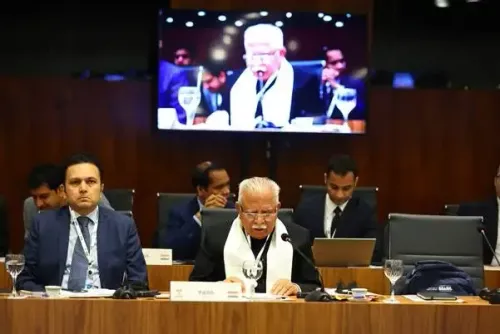
Union Power Minister Manohar Lal Khattar on Thursday, June 25, 2026 shared highlights from the 11th BRICS Energy Ministers' Meet, held under India's BRICS Chairship for 2026, invoking the Sanskrit phrase 'सर्वेषां ऊर्जम्' ('energy for all') to frame the gathering's central purpose of universal energy access.
Context
Khattar's post on X (formerly Twitter) described the ministerial meeting as 'eventful' and anchored it to India's broader BRICS Chairship theme for 2026. The Sanskrit motto — loosely translated as 'energy for all' — signals that New Delhi intends to position universal energy access, rather than just energy security for major economies, as the defining priority of its presidency. India previously held the BRICS chair in 2021, when multilateralism and sustainable development were foregrounded.
The BRICS grouping, which expanded its membership in 2024, brings together major emerging economies with divergent energy profiles — from coal-dependent to renewables-ambitious — making consensus on energy transition language a perennial diplomatic exercise.
Policy Backdrop
BRICS established a dedicated Energy Working Group in 2015 to facilitate dialogue on energy access, efficiency, and technology sharing among member states. Over successive presidencies, the group has rotated its emphasis between energy security, renewables cooperation, and technology transfer, while member states have generally avoided binding commitments that could conflict with domestic coal or hydrocarbon policies.
India has consistently used its BRICS presidencies to highlight energy access as a development imperative for the Global South, framing it alongside — rather than in opposition to — climate goals. The invocation of 'energy for all' in 2026 continues that lineage, reflecting a position that developing nations must not be forced to choose between affordable energy and clean energy.
Stakeholders and Impact
The 11th BRICS Energy Ministers' Meet brings together energy ministries from across the BRICS bloc, whose collective population represents a significant share of the world's energy-poor households. For Global South developing countries, outcomes from such meetings can shape the terms on which technology transfer, grid connectivity, and clean cooking solutions are negotiated in multilateral forums.
For India domestically, the chairship provides Khattar's Ministry of Power a platform to showcase the country's own energy access record — including near-universal household electrification under schemes such as Saubhagya — as a replicable model for peer nations. Any joint statements or working-group deliverables emerging from the meeting could influence the agenda heading into the 2026 BRICS Summit.
What's Next
Attention will now turn to the follow-up implementation of any joint statements or declarations agreed at the 11th Energy Ministers' Meet, as well as possible new working-group deliverables on clean cooking access and cross-border grid connectivity. These outcomes are expected to feed into the full 2026 BRICS Summit agenda later in the year.
India's ability to build consensus on an 'energy for all' framework — bridging the interests of fossil-fuel-reliant and renewables-ambitious members alike — will be a key test of its diplomatic stewardship of the BRICS chair in the months ahead.
Point of View
Who oversees both power and urban affairs, the ministerial meet is also an opportunity to project India's domestic electrification record as a multilateral template. The move fits a broader pattern in which New Delhi uses rotating multilateral chairs to advance a development-first energy narrative that pushes back against prescriptive Western climate timelines. How much of the 'energy for all' rhetoric translates into concrete working-group deliverables before the 2026 BRICS Summit will determine whether India's chairship leaves a lasting institutional mark.
NationPress
24 Sept 2026
Frequently Asked Questions
What is the 11th BRICS Energy Ministers' Meet?
The 11th BRICS Energy Ministers' Meet is an annual forum where energy ministers of BRICS member nations coordinate on energy security, transition, and universal access; the 2026 edition was held under India's BRICS Chairship.
What does 'सर्वेषां ऊर्जम्' mean?
'सर्वेषां ऊर्जम्' is a Sanskrit phrase meaning 'energy for all', adopted by India as the thematic motto for its 2026 BRICS energy presidency to emphasise universal energy access.
When did India last hold the BRICS chairship?
India previously held the BRICS chairship in 2021, when it hosted the 13th BRICS Summit with a focus on multilateralism and sustainable development.
What is the BRICS Energy Working Group?
The BRICS Energy Working Group was established in 2015 to promote dialogue among member states on energy access, efficiency, and technology sharing, and it underpins the annual Energy Ministers' Meet.
What comes after the BRICS Energy Ministers' Meet in 2026?
Outcomes and joint statements from the 11th Energy Ministers' Meet are expected to feed into the agenda for the full 2026 BRICS Summit, the flagship event of India's chairship year.