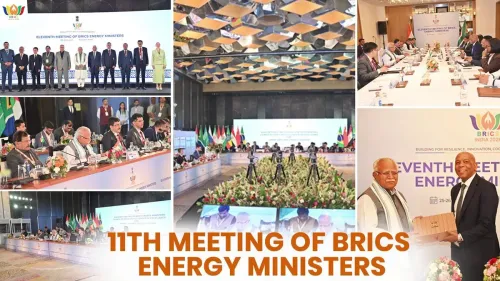
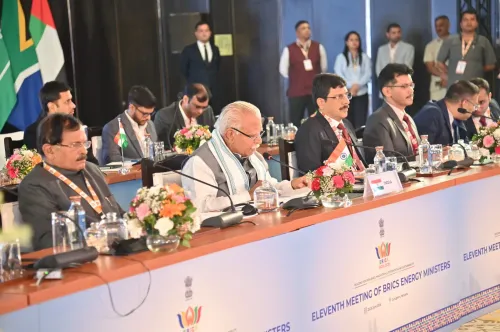
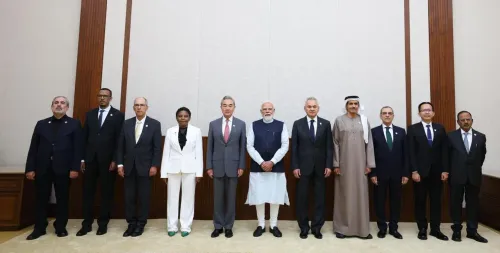
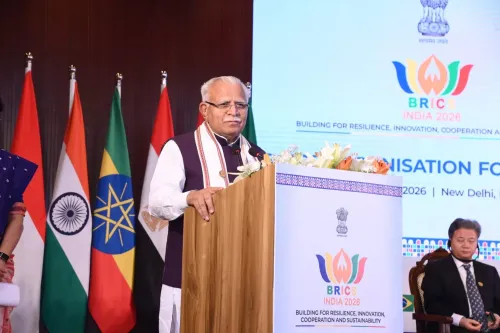
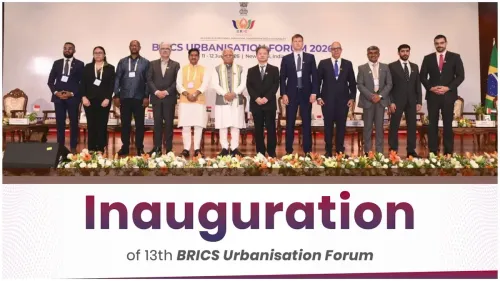
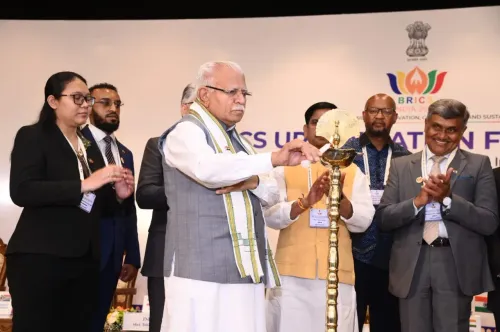
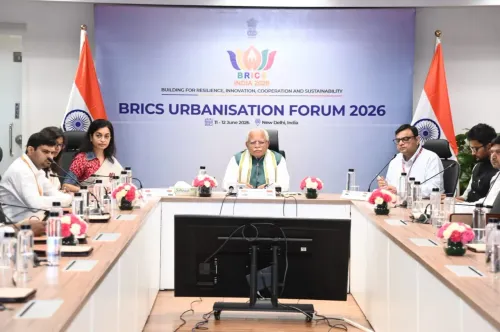
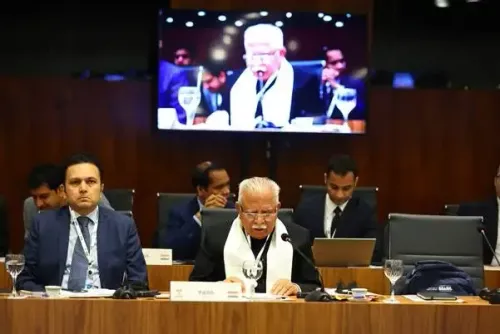
India's BRICS 2026 Chairship: Modi puts Global South at heart of energy agenda
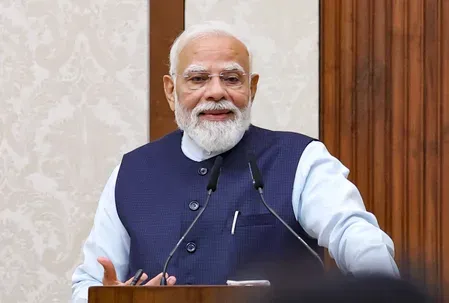
Synopsis
With India holding the BRICS Chairship in 2026, PM Modi is framing the bloc's energy agenda around the Global South — a calculated move that pairs India's milestone of crossing 50 per cent non-fossil fuel installed capacity with a push for green hydrogen, coal gasification and digital power infrastructure. It is less a statement and more a strategic bid to lead the developing world's energy transition on its own terms.
Key Takeaways
PM Modi on 27 June shared an article by Union Minister Manohar Lal Khattar on X , outlining India's BRICS energy vision.
India aims to place the Global South at the centre of a secure, resilient and sustainable global energy future under its BRICS Chairship 2026 .
India has crossed 50 per cent installed electricity capacity from non-fossil fuel sources , ahead of its NDC target.
Key priorities include green hydrogen , coal gasification , electric mobility , smart meters and the India Energy Stack .
BRICS cooperation is envisioned to strengthen energy access, clean energy transition, and technology sharing among emerging economies.
Prime Minister Narendra Modi on Saturday, 27 June articulated India's ambition to position the Global South at the core of a secure, resilient, equitable and sustainable global energy future under India's BRICS Chairship 2026. The statement came as Modi shared an article authored by Union Minister Manohar Lal Khattar on social media platform X, underscoring New Delhi's intent to translate multilateral energy cooperation into concrete outcomes for developing economies.
What Modi Said
'As India takes up the BRICS Chairship in 2026, Union Minister Manohar Lal Khattar writes that India seeks to place the Global South at the centre of a secure, resilient, equitable and sustainable global energy future,' Modi said while sharing the piece. He added that resilient energy systems are built not only through strong domestic policies but also through stronger international partnerships — a framing that positions India as a bridge-builder rather than a rule-taker in global energy governance.
Khattar's Vision for BRICS Energy Cooperation
In his article, Khattar described the global energy landscape as undergoing rapid transformation, making cooperation and innovation critical for developing economies seeking to balance economic growth, energy security and sustainability. He said India would use the BRICS platform to strengthen cooperation among emerging economies in areas including energy access, clean energy transition, and technology and innovation. The minister argued that the complementary strengths of BRICS nations can collectively advance the interests of the Global South through deeper international partnerships.
India's Domestic Energy Milestones
Khattar highlighted several domestic achievements that bolster India's credibility as a BRICS energy leader. Notably, India has crossed 50 per cent installed electricity capacity from non-fossil fuel sources, surpassing its Nationally Determined Contribution (NDC) target ahead of schedule. The country has also expanded electricity access significantly and scaled up renewable energy capacity across solar, wind and hydro segments.
Key Initiatives Underlined
Beyond renewables, the minister pointed to a broader energy security agenda encompassing coal gasification, green hydrogen, electric mobility and expansion of the national transmission network. Digital modernisation — through smart meters and the India Energy Stack — was also highlighted as a driver of efficiency and transparency in the power sector. This comes amid growing global pressure on emerging economies to accelerate decarbonisation without compromising energy access or economic momentum.
What This Means for BRICS and the Global South
India's BRICS Chairship offers New Delhi a strategic window to shape the multilateral energy narrative at a time when the Global South is increasingly asserting its right to a just energy transition — one that does not impose the same timelines or trade-offs that developed nations, which industrialised on fossil fuels, now demand. Analysts note that India's record on renewable scale-up lends it unusual credibility in this space. The outcomes of the BRICS energy agenda under India's stewardship are expected to inform India's positions at upcoming multilateral climate and energy forums.
Point of View
New Delhi is carving out a leadership lane that suits its own development stage. The 50 per cent non-fossil fuel milestone is real and significant, but the harder test is whether BRICS can produce binding energy cooperation outcomes — the bloc's track record on translating summits into implementation is mixed at best. Khattar's article is also a signal that India's energy diplomacy is being elevated from a technical to a political priority. Whether that translates into measurable outcomes for the Global South, or remains aspirational framing, will depend on what India tables at the BRICS energy ministerials that follow.
NationPress
25 Sept 2026
Frequently Asked Questions
What is India's energy vision for BRICS Chairship 2026?
India aims to place the Global South at the centre of a secure, resilient, equitable and sustainable global energy future during its BRICS Chairship in 2026. The agenda focuses on energy access, clean energy transition, technology sharing and stronger international partnerships among emerging economies.
What did PM Modi say about India's BRICS energy agenda?
PM Modi said India believes resilient energy systems are built not only through strong domestic policies but also through stronger international partnerships. He shared an article by Union Minister Manohar Lal Khattar on X that outlines this vision in detail.
What energy milestone has India achieved ahead of its NDC target?
India has crossed 50 per cent installed electricity capacity from non-fossil fuel sources, surpassing its Nationally Determined Contribution (NDC) target ahead of schedule. This includes expanded solar, wind and hydro capacity.
Which sectors does India's BRICS energy cooperation cover?
India's BRICS energy cooperation agenda covers energy access, clean energy transition, green hydrogen, coal gasification, electric mobility, expansion of the transmission network, and digital modernisation through smart meters and the India Energy Stack.
Why does India's BRICS Chairship matter for the Global South?
India's chairship offers developing nations a platform to assert their right to a just energy transition — one that balances decarbonisation with economic growth and energy security. India's own scale-up in renewables lends credibility to its advocacy for Global South-centric energy governance.