SCO Civilisation Dialogue a milestone for India: Shekhawat
Synopsis
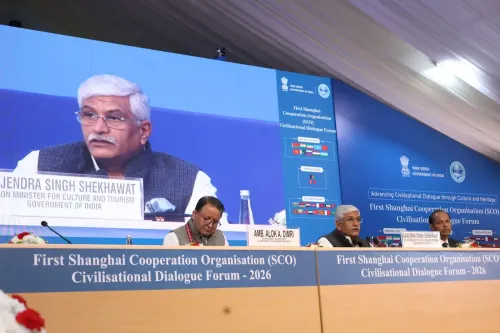
Delegations from 22 countries joined the first SCO Civilisation Dialogue hosted by India, Union Minister Gajendra Singh Shekhawat said. The event adopted the Indraprastha Communiqué and discussed cooperation on Buddhist heritage, manuscripts, historic routes and representation at UNESCO.
Key Takeaways
Union Minister Gajendra Singh Shekhawat described the inaugural SCO Civilisation Dialogue as a cultural diplomacy milestone.
India hosted delegations from 22 countries at the two-day event, Shekhawat said.
Prime Minister Narendra Modi proposed the cultural initiative at the 2025 SCO Heads of State meeting , according to the minister.
The discussions concluded with the adoption of the Indraprastha Communiqué .
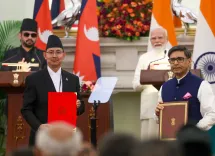
Shekhawat highlighted Janakpur rail connectivity and a meeting with Nepal’s Minister for Tourism and Culture .
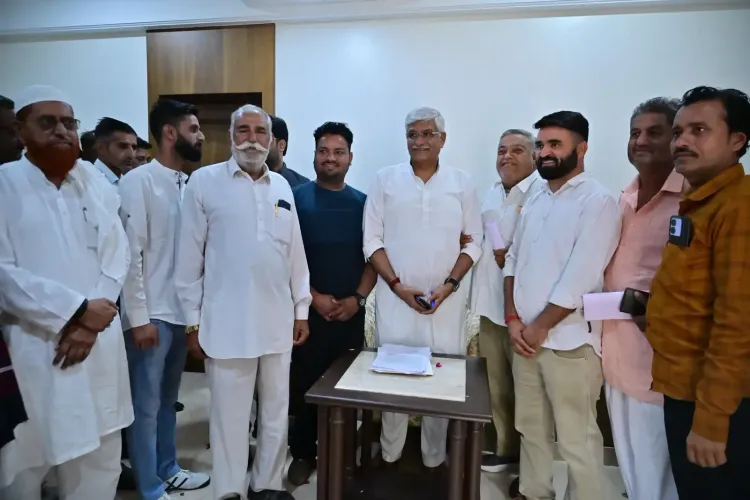
The SCO Civilisation Dialogue marked a significant step in India’s cultural diplomacy, Union Minister for Culture and Tourism Gajendra Singh Shekhawat said while speaking to the media in Jodhpur on 23 November. The inaugural event, hosted by India, brought together delegations from 22 countries and concluded with the adoption of the Indraprastha Communiqué, he said.
Shekhawat said the initiative followed a proposal by Prime Minister Narendra Modi to use the Shanghai Cooperation Organisation (SCO) platform to preserve and promote the shared cultural heritage of member nations. He described the dialogue as a step towards positioning India as a leader in cultural diplomacy.
From SCO proposal to cultural dialogue
According to Shekhawat, Modi raised the idea at the 2025 SCO Heads of State meeting, proposing that the organisation look beyond economic and geopolitical issues and the protection of national interests. The minister said all participating countries supported the proposal.
India subsequently hosted the first dialogue, with representatives attending at ministerial, secretarial and diplomatic levels. The event lasted two days, and Modi addressed its inaugural session on 20 November, Shekhawat said.
The minister said Modi had called for discussions on shared heritage to move beyond academic deliberations and lead to a concrete action plan for the next decade. He said the Prime Minister also sought to institutionalise cultural cooperation among member nations.
Four areas of cultural cooperation
Shekhawat said ministerial discussions and bilateral meetings focused on four areas. These included the preservation of shared Buddhist traditions, monasteries and viharas, as well as the documentation and conservation of ancient manuscripts.
Participants also discussed research into historical cultural routes and traditional trade links, and the representation of member nations’ shared cultural identity on the UNESCO platform, he said. These subjects connect heritage preservation with the study of exchanges across national boundaries.
The minister said the level of enthusiasm and consensus among participating countries exceeded expectations. He described the Indraprastha Communiqué as a foundation for stronger cultural ties and the protection of shared heritage; details of specific commitments were not provided in his reported remarks.
India and Nepal cultural links
Shekhawat also highlighted rail connectivity with Janakpur in Nepal as important to the two countries’ religious and cultural ties. He noted the city’s significance as the birthplace of Sita, the consort of Lord Rama.
He said a bilateral meeting with Nepal’s Minister for Tourism and Culture on the sidelines of the dialogue would help expand cultural exchanges and tourism cooperation. Shekhawat also pointed to interest in expanded rail connectivity, new airports and the growth of Nepal’s railway network as potential opportunities for religious and cultural tourism, including destinations linked to the Ramayana Circuit.
Next steps for shared heritage
Shekhawat said India should present its heritage to the world while working with other nations to protect the cultural legacy they share. He also argued that cultural cooperation could strengthen trust and dialogue between countries.
The next stage will be to develop the cooperation envisaged at the dialogue, including the decade-long action plan called for by Modi; the reported remarks did not set out a timetable for implementation.
Point of View
Not simply by the number of delegations at the table. The proposed decade-long action plan offers a way to turn shared heritage into practical work, but its priorities, funding and accountability need clarity. Partnerships with neighbours such as Nepal will also depend on making cultural exchange and travel more accessible in practice.
NationPress
23 Nov 2026
Frequently Asked Questions
What is the SCO Civilisation Dialogue?
The SCO Civilisation Dialogue is an India-hosted initiative focused on the shared cultural heritage of participating nations. Union Minister Gajendra Singh Shekhawat said delegations from 22 countries attended its inaugural edition.
What was agreed at the SCO Civilisation Dialogue?
The deliberations concluded with the adoption of the Indraprastha Communiqué, according to Shekhawat. His reported remarks did not provide details of its specific commitments.
Which heritage issues were discussed at the dialogue?
Participants discussed Buddhist heritage, ancient manuscripts, historical cultural and trade routes, and representation of shared cultural identity at UNESCO. Shekhawat said these topics were covered in ministerial deliberations and bilateral meetings.
What did Modi propose for SCO cultural cooperation?
Modi proposed using the SCO platform to preserve and promote shared cultural heritage, Shekhawat said. At the dialogue’s inaugural session, the Prime Minister also called for a concrete action plan for the next decade, according to the minister.
What did Shekhawat say about India and Nepal connectivity?
Shekhawat highlighted rail connectivity with Janakpur as important for India and Nepal’s religious and cultural ties. He said expanded transport infrastructure could support tourism, including travel to places linked to the Ramayana Circuit.