India-UAE 7th Consular Meet: Both sides vow deeper ties on mobility, extradition
Synopsis
India and the UAE wrapped up their 7th Joint Consular Affairs meeting in New Delhi, agreeing to tighten frameworks on mobility, extradition and mutual legal assistance. With three Modi-Sheikh Mohamed summits already in 2026 and a BRICS invitation on the table, this consular upgrade is the institutional backbone of one of India's fastest-moving strategic partnerships.
Key Takeaways
India and the UAE held the 7th Joint Committee on Consular Affairs meeting in New Delhi on 22 July 2026 .
Both sides agreed to deepen cooperation on mobility , extradition , and mutual legal assistance under the Comprehensive Strategic Partnership .
The meeting was co-chaired by Secretary Sripriya Ranganathan (India) and Under Secretary Omar Obaid Mohammed Al Hesan Al Shamsi (UAE).
India formally appreciated UAE's measures to ensure the welfare of the Indian community in the Gulf nation.
PM Modi and UAE President Sheikh Mohamed bin Zayed Al Nahyan have met three times in 2026, most recently at the G7 Summit in Evian, France on 16 June .
PM Modi has invited the UAE President to attend the BRICS Summit to be hosted by India later in 2026.
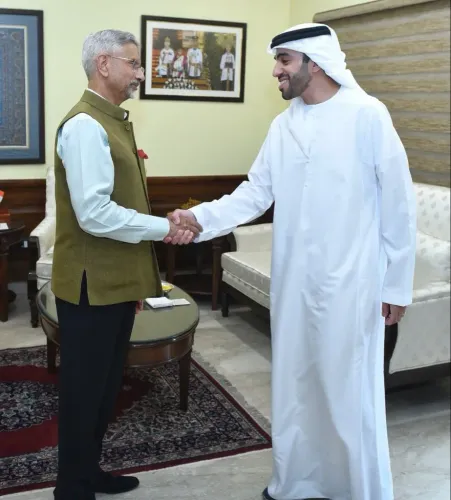
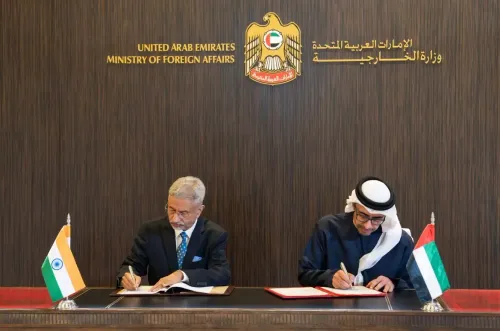
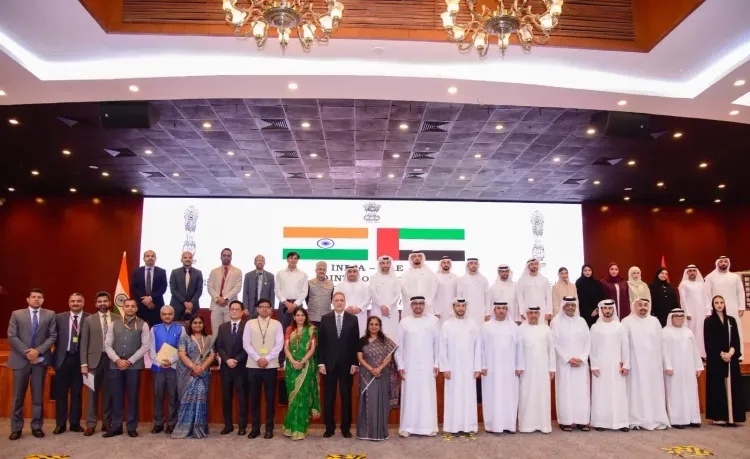
India and the United Arab Emirates (UAE) on Wednesday, 22 July 2026 held the 7th Joint Committee on Consular Affairs meeting in New Delhi, with both sides committing to deepen bilateral cooperation across all consular matters — including mobility, extradition, and mutual legal assistance. The meeting reinforces the two countries' Comprehensive Strategic Partnership, which has gained significant momentum through three high-level summits in 2026 alone.
What Was Discussed
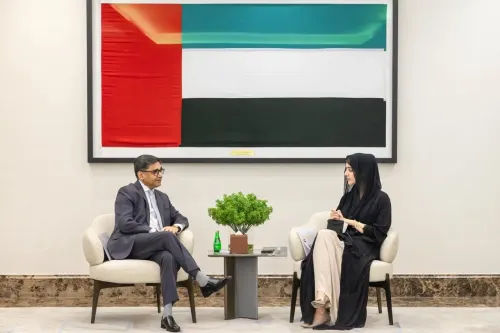
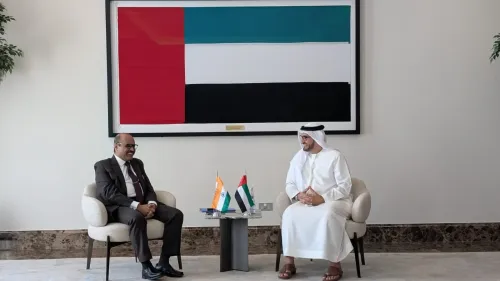
The joint committee meeting was co-chaired by Secretary (CPV and OIA) Sripriya Ranganathan on the Indian side and Under Secretary Omar Obaid Mohammed Al Hesan Al Shamsi of the UAE Ministry of Foreign Affairs. Both delegations reviewed the full spectrum of consular cooperation, with a particular focus on frameworks governing the movement of people, legal extradition protocols, and mechanisms for mutual legal assistance.
The Indian delegation formally acknowledged the steps taken by UAE authorities to safeguard the welfare and well-being of the Indian community residing in the UAE — one of the largest expatriate populations in the Gulf region.
High-Level Political Context
The consular meeting comes on the heels of intensifying leader-level engagement between the two nations. On 16 June 2026, Prime Minister Narendra Modi and UAE President Sheikh Mohamed bin Zayed Al Nahyan met on the sidelines of the G7 Summit in Evian, France, where they discussed ways to further energise their strategic partnership.
In a post on X following that meeting, Prime Minister Modi wrote: 'Had a very good meeting with my brother, Sheikh Mohamed bin Zayed Al Nahyan. We discussed India-UAE ties across sectors and ways to further energise our Comprehensive Strategic Partnership. Once again expressed gratitude to him and the UAE government for the care and concern for the Indian community living in the UAE.'
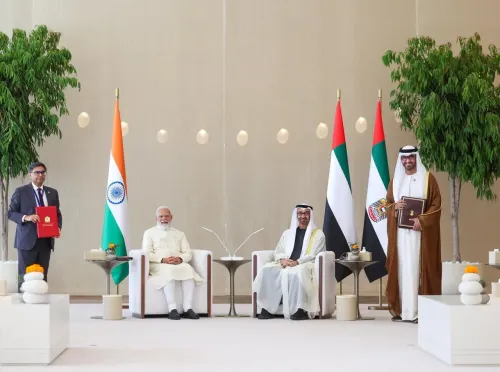
Notably, the G7 meeting was the third encounter between the two leaders in 2026 — following Prime Minister Modi's visit to the UAE in May and President Sheikh Mohamed bin Zayed Al Nahyan's visit to India in January.
Bilateral Cooperation: Scope and Priorities
At the June summit, both leaders reviewed progress across technology, trade, investment, energy, and defence, according to a statement from the Ministry of External Affairs (MEA). They also exchanged views on regional and global developments of mutual interest.
On the question of West Asia's security, Prime Minister Modi underscored the importance of dialogue, diplomacy, and respect for international law, sovereignty, and territorial integrity. Both sides called for continued free, safe, and unimpeded navigation and commerce through the Strait of Hormuz, a critical global shipping artery.
BRICS Invitation and What Comes Next
In a significant diplomatic signal, Prime Minister Modi has invited President Sheikh Mohamed bin Zayed Al Nahyan to attend the BRICS Summit to be hosted by India later in 2026. The invitation underlines India's intent to deepen the UAE's engagement with multilateral frameworks that New Delhi is anchoring.
With the 7th consular committee meeting now concluded, both governments are expected to operationalise the agreed frameworks on mobility and extradition in the months ahead — adding institutional depth to what has become one of India's most active bilateral relationships.
Point of View
But its timing is anything but. Three leader-level meetings in six months — including a G7 sidebar and a BRICS invitation — signal that India is deliberately institutionalising the UAE relationship at every tier, from head-of-state summits down to extradition frameworks. The focus on mobility and mutual legal assistance also carries a practical edge: with millions of Indians in the UAE, any friction in consular mechanisms has direct human consequences. What mainstream coverage often misses is that the extradition and legal assistance agenda is as much about accountability — ensuring bad actors cannot use the UAE as a safe harbour — as it is about diplomatic warmth.
NationPress
22 Jul 2026
Frequently Asked Questions
What was decided at the 7th India-UAE Joint Committee on Consular Affairs meeting?
Both India and the UAE agreed to deepen bilateral cooperation in all consular matters, including mobility, extradition, and mutual legal assistance, in keeping with their Comprehensive Strategic Partnership. The meeting was held in New Delhi on 22 July 2026.
Who co-chaired the India-UAE consular committee meeting?
The meeting was co-chaired by Secretary (CPV and OIA) Sripriya Ranganathan from the Indian side and Under Secretary Omar Obaid Mohammed Al Hesan Al Shamsi from the UAE Ministry of Foreign Affairs.
How many times have PM Modi and UAE President Sheikh Mohamed bin Zayed Al Nahyan met in 2026?
The two leaders have met three times in 2026 — during President Sheikh Mohamed bin Zayed Al Nahyan's visit to India in January, PM Modi's visit to the UAE in May, and on the sidelines of the G7 Summit in Evian, France, on 16 June 2026.
Has India invited the UAE to the BRICS Summit?
Yes, Prime Minister Narendra Modi has invited UAE President Sheikh Mohamed bin Zayed Al Nahyan to attend the BRICS Summit to be hosted by India later in 2026, signalling a deepening of multilateral engagement between the two countries.
Why does the Indian community in the UAE matter in this diplomatic context?
The Indian community in the UAE is one of the largest expatriate groups in the Gulf region. India formally appreciated UAE's welfare measures for this community at the consular meeting, and consular frameworks on mobility and legal assistance directly affect millions of Indian nationals living and working there.