India pitches community-led rangeland restoration at UNCCD CoP17 in Ulaanbaatar
Synopsis
At the UNCCD CoP17 in Ulaanbaatar, India made a pointed case that pastoralists must be treated as custodians — not recipients — of rangeland restoration. With 25,000 sacred groves, 10 million hectares of grazing land, and a cheetah reintroduction programme as evidence, India is positioning its community-science model as a blueprint for developing nations, while pressing for dedicated global financing.
Key Takeaways
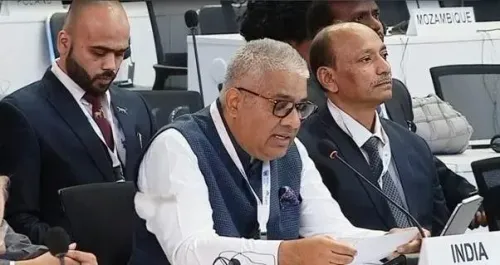
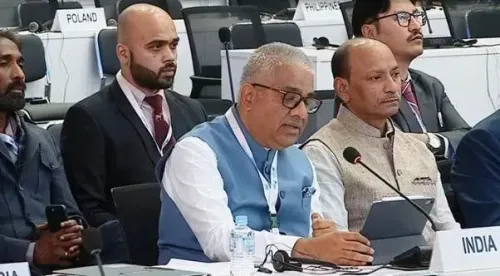
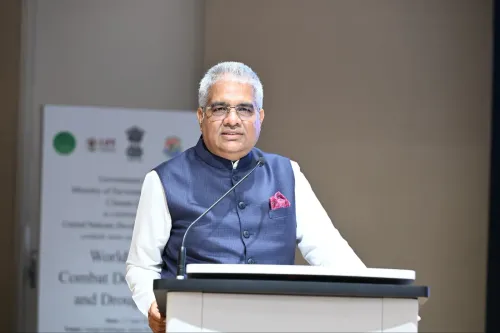
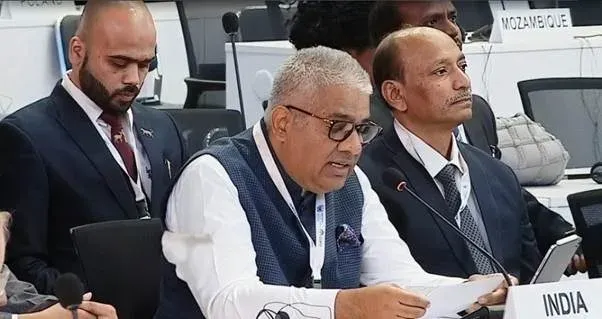
Bhupender Yadav represented India at the UNCCD CoP17 Ministerial Dialogue in Ulaanbaatar, Mongolia on 26 August .
India called for pastoralists to be recognised as custodians of rangelands, not merely beneficiaries of restoration programmes.
Approximately 25,000 community-protected sacred groves (Orans and similar) cover around 0.6 million hectares across India.
India's permanent pastures and grazing lands span roughly 10 million hectares , supporting biodiversity, water cycles, and carbon storage.
Yadav cited satellite-based Desertification and Land Degradation Atlases and the cheetah reintroduction programme as part of India's science-backed approach.
India called for dedicated, accessible global financing for rangeland restoration and offered to share its model through South-South cooperation .
Union Minister for Environment, Forest and Climate Change Bhupender Yadav on 26 August called for placing pastoralists at the centre of rangeland restoration efforts at the 17th Conference of Parties (CoP17) of the UN Convention to Combat Desertification (UNCCD) in Ulaanbaatar, Mongolia. Speaking at the Ministerial Dialogue on 'Restoration of Rangelands and the Well-being of Pastoralist Communities', Yadav outlined India's model of combining traditional knowledge with modern science to restore degraded grasslands and rangelands.
India's Rangeland Landscape
Yadav described India's rangelands as spanning a wide range of ecosystems — from Himalayan pastures and Central Indian savannas to the arid Thar and Kachchh regions and the southern sholas. These landscapes support the country's livestock and human populations while contributing to biodiversity conservation and the regulation of water and carbon cycles. India maintains approximately 10 million hectares of permanent pastures and grazing lands, where deep-rooted grasses aid soil carbon storage, water infiltration, and groundwater recharge.
Community Stewardship at the Core
'Successful restoration begins with pastoralists as custodians, not merely beneficiaries,' Yadav said, stressing that traditional knowledge complemented by modern scientific approaches can make restoration efforts ecologically sound, economically viable, and socially inclusive. He cited the Orans of Rajasthan — sacred groves protected by local communities for their cultural and ecological value — as a model of community-led conservation. According to the Ministry of Environment, Forest and Climate Change, around 25,000 such community-protected sacred groves cover approximately 0.6 million hectares across India. Many are protected under statutory provisions and contribute to securing pastoral land rights and conserving critical habitats, including those of the Great Indian Bustard.
Science-Backed Tools and Policy Measures
Yadav pointed to satellite-based Desertification and Land Degradation Atlases as a scientific foundation for mapping grasslands and guiding restoration planning. He also highlighted the recognition of grazing rights and community forest resource rights as policy levers that strengthen local communities' role in sustainable land management. India's broader approach, he said, integrates landscape management, watershed development, sustainable grazing, fodder development, and livelihood support — all anchored in community participation.
Cheetah Reintroduction and Grassland Expansion
The Minister also referenced India's efforts to restore open forest and grassland ecosystems, citing the reintroduction of the cheetah and its proposed expansion into grasslands such as Banni in Gujarat as part of a wider ecological restoration push.
Call for Global Finance and South-South Cooperation
Yadav called for greater access to finance, technology, and knowledge for rangeland restoration as developing countries advance towards Land Degradation Neutrality. 'India welcomes dedicated, accessible financing for rangeland restoration, and stands ready to share its experience and solutions through South-South cooperation,' he said. The appeal signals India's intent to position itself as a knowledge partner for other developing nations navigating similar land degradation challenges.
Point of View
Science-backed restoration tool. The invocation of Orans and satellite atlases in the same breath is deliberate: it signals that India's model is neither purely traditional nor purely technocratic. What the statement leaves unaddressed is the persistent tension between grazing rights on paper and enforcement on the ground, where pastoralist communities in Rajasthan and Gujarat continue to face displacement pressures. The call for South-South cooperation also carries a geopolitical subtext — India is increasingly seeking to lead the Global South narrative on climate and land governance, and CoP17 is a visible stage for that positioning.
NationPress
10 Oct 2026
Frequently Asked Questions
What did India propose at UNCCD CoP17 on rangeland restoration?
India called for community-led and science-based restoration of rangelands at the UNCCD CoP17 in Ulaanbaatar, arguing that pastoralists must be treated as custodians of these ecosystems rather than passive beneficiaries. Minister Bhupender Yadav outlined India's integrated approach combining traditional knowledge, satellite mapping, and community forest rights.
What are the Orans of Rajasthan mentioned at CoP17?
Orans are sacred groves in Rajasthan that local communities have revered and protected for generations due to their cultural and ecological significance. According to the Ministry of Environment, around 25,000 such community-protected groves cover approximately 0.6 million hectares across India and serve as models of community stewardship.
How large are India's rangelands and why do they matter?
India maintains approximately 10 million hectares of permanent pastures and grazing lands spanning diverse ecosystems from Himalayan pastures to the Thar desert. These landscapes support livestock, aid soil carbon storage, improve water infiltration, and contribute to groundwater recharge and biodiversity conservation.
What is Land Degradation Neutrality and why did India raise it at CoP17?
Land Degradation Neutrality is a global target under the UNCCD that aims to ensure degraded land is restored at the same rate it is lost. India raised it to argue that developing countries advancing towards this goal need greater access to finance, technology, and knowledge — and called for dedicated, accessible global financing for rangeland restoration.
What role does the cheetah reintroduction play in India's rangeland strategy?
India cited the reintroduction of the cheetah and its proposed expansion into grasslands such as Banni in Gujarat as part of its broader effort to restore open forest and grassland ecosystems. The programme is presented as evidence that wildlife recovery and rangeland restoration can be pursued together.