India-Uzbekistan agree to double bilateral trade to $2.6bn in 3 years
Synopsis
India and Uzbekistan's bilateral trade hit $1.3 billion in 2025 — up 33% in a single year — and both sides have now committed to doubling it within three years. The 14th Intergovernmental Commission session in Tashkent went beyond goods to tackle digital payments, critical minerals, and the non-tariff barriers that have long capped the relationship's ceiling.
Key Takeaways
India and Uzbekistan agreed on 19 June 2025 to double bilateral trade within the next three years .
Bilateral trade turnover reached $1.3 billion in 2025 , up 33.3% year-on-year, according to Uzbek figures.
Indian exports to Uzbekistan have grown at a CAGR of 12.9% over the last decade; services exports stood at $372.2 million in 2024 .
Both sides agreed to establish a time-bound mechanism to resolve non-tariff barriers covering standards, certification, and customs procedures.
Cooperation areas include digital public infrastructure , fintech , critical minerals , and transport connectivity .
The 15th session of the Intergovernmental Commission will be held in India on a mutually convenient date.
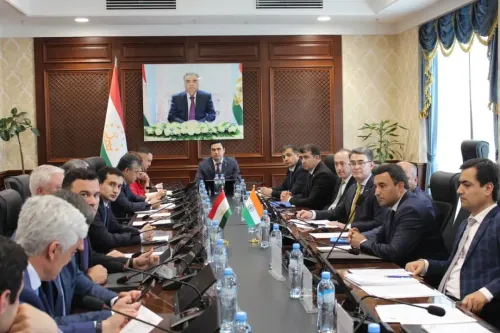
India and Uzbekistan on Friday, 19 June agreed to work towards doubling bilateral trade within the next three years, address persistent non-tariff barriers, and deepen cooperation across sectors ranging from pharmaceuticals to digital infrastructure, according to a statement issued by India's Ministry of Commerce and Industry. The commitment emerged from the 14th Session of the India-Uzbekistan Intergovernmental Commission on Trade, Economic, Scientific and Technological Cooperation, held in Tashkent.
Key Developments at the Commission Meeting
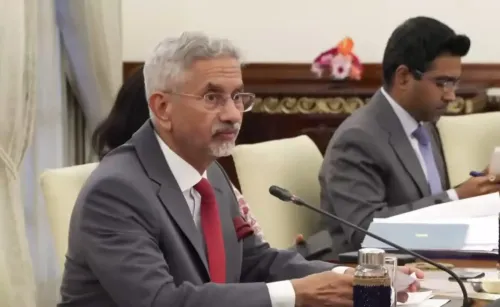
The session was co-chaired by Rajesh Agrawal, Secretary, Department of Commerce, and Shokhrukh Gulamov, Deputy Minister of Investment, Industry and Trade of Uzbekistan. The Indian co-chair participated via video conference. Both sides reviewed product categories where Indian exports to Uzbekistan can be scaled up, including pharmaceuticals, medical devices, agricultural products, processed foods, engineering goods, electronics, smartphones, automobiles and auto components, textiles, chemicals, and a range of services spanning healthcare, education, tourism, and logistics.
Non-Tariff Barriers in Focus
Commerce Secretary Agrawal underscored that non-tariff barriers — covering approvals, standards, testing, certification, customs procedures, and market-access requirements — require regular review. He called for a time-bound mechanism to resolve such barriers, arguing that 'businesses need predictability, regulators need dialogue and standards bodies need direct contact.' The two sides agreed that converting diplomatic goodwill into measurable trade outcomes depends on dismantling these structural friction points.
Digital, Energy and Connectivity Cooperation
Beyond goods trade, both delegations discussed ICT and digital cooperation. India highlighted strengths in IT, digital public infrastructure, fintech, cybersecurity, and digital logistics. The Indian side proposed cooperating on customs data exchange and exploring the interlinking of payment infrastructure to support tourism and commerce. On energy, India noted its fast-growing demand from artificial intelligence, data centres, and advanced computing, and identified critical minerals supply as a strategic priority for bilateral energy cooperation. Uzbekistan offered to share experience on digital logistics platforms and customs facilitation.
Trade Numbers: Where the Relationship Stands
According to figures cited by the Uzbek side, bilateral trade turnover reached $1.3 billion in 2025, reflecting growth of 33.3% over the previous year. Uzbekistan's exports to India stood at $164.6 million (up 25.4%), while its imports from India reached $1.15 billion, growing 34.6%. Indian exports to Uzbekistan have expanded at a compound annual growth rate of 12.9% over the last decade. India's services exports to Uzbekistan were recorded at $372.2 million in 2024.
What Comes Next
Both sides agreed to encourage closer engagement between Chambers of Commerce, Export Promotion Councils, enterprises, and sectoral bodies. Commerce Secretary Agrawal invited Uzbek businesses to participate in Indian trade fairs, buyer-seller meets, and investment forums. The Commission also agreed to hold its 15th session in India on a mutually convenient date. This comes amid India's broader push to deepen Central Asian trade linkages as part of its Connect Central Asia policy, making the Uzbekistan partnership a bellwether for the region.
Point of View
But the doubling target in three years demands structural fixes — not just diplomatic intent. The persistent focus on non-tariff barriers is telling: India's goods are competitive, but regulatory friction at the Uzbek border has repeatedly capped realised volumes. The push on digital payments interlinking and customs data exchange reflects a smarter playbook than earlier commissions, but execution will depend on whether standards bodies on both sides engage at the working level, not just at ministerial sessions. Critically, the critical minerals angle is the most strategically significant element here — and the one most likely to be underreported.
NationPress
23 Sept 2026
Frequently Asked Questions
What did India and Uzbekistan agree to at the 14th Intergovernmental Commission session?
India and Uzbekistan agreed to work towards doubling bilateral trade within three years, establish a time-bound mechanism to resolve non-tariff barriers, and deepen cooperation in digital infrastructure, energy, and critical minerals. The session was held in Tashkent on 19 June 2025.
What is the current level of India-Uzbekistan bilateral trade?
According to figures cited by the Uzbek side, bilateral trade turnover reached $1.3 billion in 2025, a growth of 33.3% over the previous year. Uzbekistan's imports from India accounted for $1.15 billion of that total, growing 34.6%.
What are non-tariff barriers and why are they a concern for India-Uzbekistan trade?
Non-tariff barriers are regulatory obstacles — such as differing standards, certification requirements, customs procedures, and market-access rules — that restrict trade without using tariffs. Commerce Secretary Rajesh Agrawal highlighted these as a key bottleneck that needs a structured, time-bound resolution mechanism to convert diplomatic goodwill into actual trade growth.
Which sectors are priorities for expanding Indian exports to Uzbekistan?
The Commission identified pharmaceuticals, medical devices, agricultural products, processed foods, engineering goods, electronics, smartphones, automobiles, textiles, chemicals, and services including IT, healthcare, education, and logistics as priority sectors for expanding Indian exports.
When will the next India-Uzbekistan Intergovernmental Commission session be held?
Both sides agreed that the 15th session of the India-Uzbekistan Intergovernmental Commission will be held in India on a mutually convenient date, though no specific timeline was announced.