Russia sanctions Bill: India won't be intimidated, MEA must summon US envoy, says ex-diplomat
Synopsis
Trump has signed a law that could hit India — the world's second-largest buyer of Russian energy at 37% of exports — with tariffs of up to 100%. Former diplomat K.P. Fabian's blunt prescription: don't blink, and summon the US Ambassador. The real play, he argues, is Trump using this as leverage to force India's hand on a bilateral trade deal.
Key Takeaways
US President Donald Trump signed the Lindsey O.
Graham Sanctioning Russia and Iran Act of 2026 into law on Friday , authorising tariffs of up to 500% on Russian goods and up to 100% on major Russian energy importers.
The law passed the US House 262-159 and the US Senate 86-11 on 7 August .
Former diplomat K.P.
Fabian said India , which accounts for 37% of Russian energy exports, should not be intimidated and that the MEA should summon the US envoy .
Fabian argued Trump may use the tariff threat as leverage to push India toward signing an interim trade deal .
China , at 50% of Russian exports, is the largest exposed importer but is seen as unlikely to face immediate enforcement given Trump-Xi Jinping talks.
The US Trade Representative can expand the country list every 180 days under the new law.
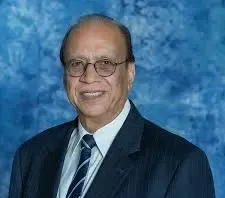
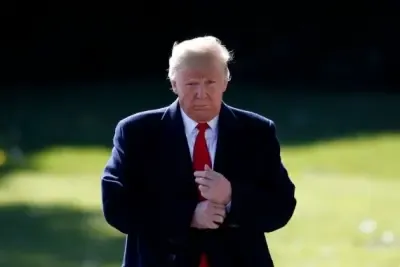
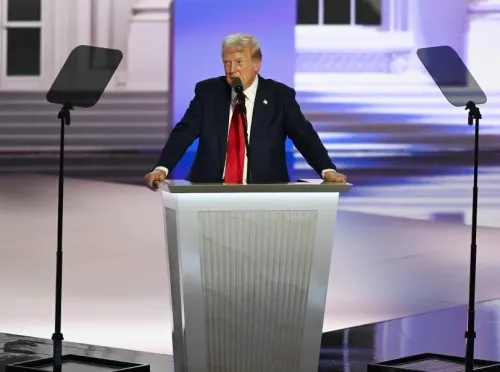
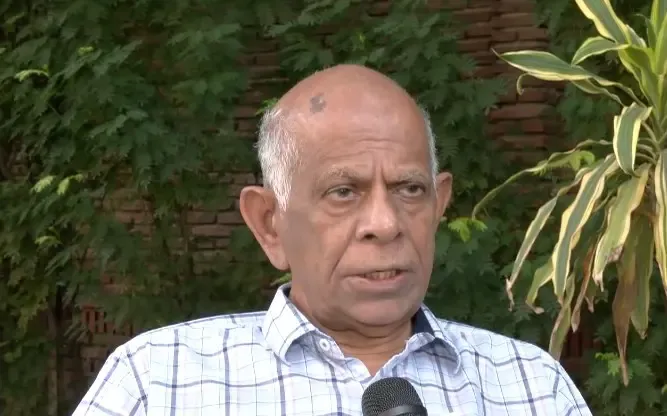
Former diplomat K.P. Fabian on Saturday, 19 September 2026, said India should not be intimidated by the sweeping Russia sanctions legislation signed into law by US President Donald Trump, and called on the Ministry of External Affairs (MEA) to summon the US Ambassador to New Delhi in protest. His remarks came hours after Trump formally signed the bill, which grants his administration broad authority to impose punitive tariffs on major importers of Russian energy.
What the Law Does
The Lindsey O. Graham Sanctioning Russia and Iran Act of 2026 was passed by the US House of Representatives by 262-159 on Wednesday and had earlier cleared the US Senate by 86-11 on 7 August. The legislation empowers the US President to impose tariffs of up to 500 per cent on Russian goods and up to 100 per cent on imports from countries identified as major buyers of Russian oil and gas. The House Ways and Means Committee confirmed that additional countries could be added to the list following reviews by the US Trade Representative every 180 days.
The package broadly targets Russian officials, banks, energy interests, and foreign entities supporting Moscow's military operations against Ukraine, with the stated aim of draining the financial resources sustaining Russia's war effort.
India in the Crosshairs
According to Fabian, the five largest importers of Russian exports are the primary targets of the new tariff provisions. He cited figures showing China accounts for 50 per cent of Russian exports, India for 37 per cent, Turkey for 5 per cent, the European Union for 5 per cent, and Azerbaijan and Hungary together for another 3 per cent.
On India's position specifically, Fabian said, 'As far as India is concerned, it is my reckoning that, given Trump's style of functioning, he would use this as a threat to make India sign on the dotted line on the interim trade deal. How will India react? I don't think India will be intimidated. The External Affairs Ministry should summon the US envoy over this.'
Notably, the law hands President Trump significant discretionary power — meaning tariffs need not be automatic. As Fabian explained, 'It gives the President discretion. If he assesses that imposing these higher tariffs on a particular country is not in the national interest of the United States, he can decide not to impose them. So, it gives him a lot of spare cards to play.' Critics argue this discretion could be weaponised as leverage in bilateral negotiations, including the ongoing India-US trade deal talks.
The China Calculation
Fabian also weighed in on the bill's implications for China, the single largest importer of Russian energy. He suggested that the timing of an expected meeting between Trump and Chinese President Xi Jinping — reportedly at the airport tarmac in the United States within days — makes full tariff enforcement against Beijing unlikely in the near term.
'I do not think that he will dare to impose 100 per cent tariffs on China. It's very clear. Another thing is that China can retaliate as well. Unless the Chinese have some assurance, why would Xi Jinping go there and waste his time?' Fabian said. The remark points to a broader diplomatic asymmetry: while India may face tariff pressure as a negotiating chip, China's economic scale and retaliatory capacity likely afford it greater insulation — at least for now.
What Happens Next
With the law now in force, all eyes turn to how the Trump administration operationalises the discretionary provisions. For India, the immediate question is whether New Delhi will formally register its objection — a step Fabian advocates through the summoning of the US envoy. Analysts note this is not the first time Washington has used energy-trade leverage as part of broader economic pressure, but the explicit statutory authority now at Trump's disposal gives the threat sharper teeth. The next US Trade Representative review, which could expand the country list, is due within 180 days.
Point of View
Congress has handed him a bespoke diplomatic cudgel rather than a blanket trade measure. For India, which has carefully balanced its Russian energy imports against its Washington relationship, this converts an abstract geopolitical risk into a concrete negotiating variable ahead of any India-US trade deal. Fabian's call to summon the US envoy is politically symbolic, but the deeper question is whether New Delhi has a credible economic alternative to Russian energy at current price levels — and the answer, for now, is not obviously yes.
NationPress
19 Sept 2026
Frequently Asked Questions
What is the Lindsey O. Graham Sanctioning Russia and Iran Act of 2026?
It is a US law signed by President Trump that authorises tariffs of up to 500% on Russian goods and up to 100% on imports from countries identified as major buyers of Russian oil and gas. It passed the US House 262-159 and the Senate 86-11 on 7 August 2026, and is designed to cut the financial flows sustaining Russia's war in Ukraine.
How does the Russia sanctions Bill affect India?
India, which accounts for 37% of Russian energy exports, is among the five largest importers targeted by the law's tariff provisions. Former diplomat K.P. Fabian has suggested Trump could use the tariff threat as leverage to pressure India into signing an interim bilateral trade deal.
Why did K.P. Fabian say the MEA should summon the US envoy?
Fabian argued that India should not be intimidated by the legislation and that summoning the US Ambassador would signal New Delhi's formal objection to the use of tariff threats as diplomatic coercion. He stressed that India has the standing to push back.
Will the 100% tariffs automatically apply to India?
Not necessarily. The law grants President Trump significant discretionary power to decide whether imposing tariffs on a specific country serves US national interests. Fabian noted this gives Trump 'a lot of spare cards to play,' meaning tariffs could be held back as negotiating leverage rather than enforced outright.
Why is China seen as less vulnerable to enforcement of the tariffs despite being Russia's top energy buyer?
Fabian suggested that the imminent Trump-Xi Jinping meeting and China's capacity to retaliate economically make full tariff enforcement against Beijing unlikely in the near term. He argued Xi Jinping would not travel for talks without some assurance that the most punitive measures would not be triggered.