Indian startups threaten SpaceX in low-cost rockets, says Zoho's Sridhar Vembu
Synopsis
Zoho's Sridhar Vembu, responding to an Elon Musk post on X, declared that Indian startups — driven by Modi government policy — are building low-cost rockets that threaten SpaceX the way Chinese EVs threaten Tesla. The claim puts India's fast-growing private space sector in the same disruptive bracket as China's industrial policy machine — and it comes from one of India's most credible tech voices.
Key Takeaways
Zoho Co-founder Sridhar Vembu said on 10 October 2026 that Indian startups pose a threat to SpaceX in low-cost rockets, crediting PM Modi 's government policy.
Vembu drew a direct parallel with Chinese EV competition threatening Tesla .
He also highlighted India's globally low drug prices , UPI infrastructure, and mobile data costs as evidence of a competitive, affordable economy.
Vembu credited Modi's government with promoting startups and not tolerating monopolies.
In a separate Friday post, Vembu warned that Indian professionals on US visas risk having their lives uprooted, saying 'a big part of America no longer wants us.'
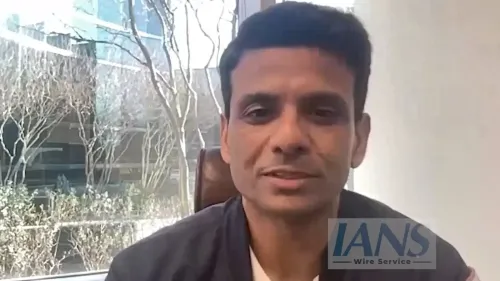
Zoho Co-founder and Chief Scientist Sridhar Vembu on Saturday, 10 October 2026, said Indian startups are making significant advances in low-cost rocket technology that pose a direct competitive threat to SpaceX, attributing the progress to policy decisions by Prime Minister Narendra Modi's government. Vembu made the remarks in a post on X in response to a post by Starlink founder Elon Musk.
The Rocket Rivalry Claim
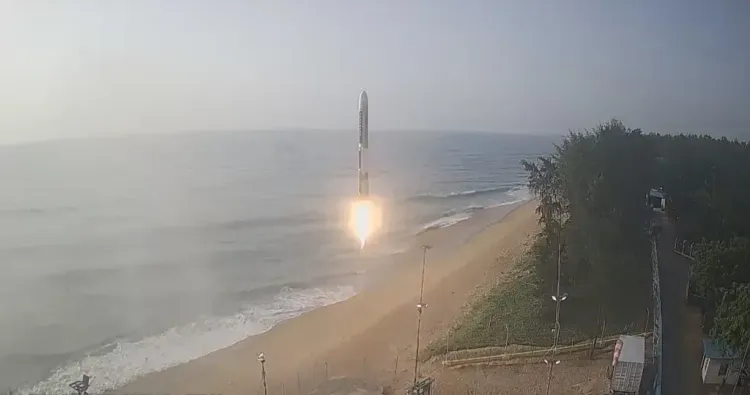
'Directly due to Prime Minister Narendra Modi's government policy, Indian startups are making major advances in low-cost rockets and that poses a threat to SpaceX in the same way the Chinese EVs threaten Tesla,' Vembu wrote. The comparison to the Chinese electric vehicle challenge to Tesla is pointed — it frames India's emerging launch sector not as a distant aspirant but as a near-term disruptive force in a market currently dominated by Musk's company.
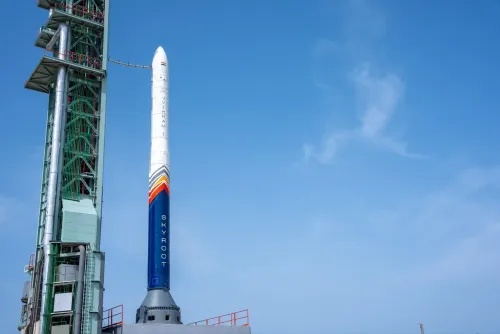
India's private space sector has expanded rapidly since the government opened the sector to private players. Several startups — including Agnikul Cosmos, Skyroot Aerospace, and others — have been working on low-cost launch vehicles, with some already completing test flights. The policy scaffolding, including the establishment of IN-SPACe (Indian National Space Promotion and Authorisation Centre), has been central to this push.
India's Low-Cost Economy Argument
Vembu extended his argument beyond aerospace, pointing to multiple sectors where India has built globally competitive low-cost infrastructure. 'India has among the lowest drug prices in the world (and is still going lower). People who visit India buy medicines to take home quite regularly now,' he wrote in the same post. He also cited the Unified Payments Interface (UPI) as a model of affordable digital payments infrastructure, and noted that India offers some of the world's lowest mobile data prices. 'It is so good that I don't even bother to connect to local Wi-Fi when I travel in India and just tether my phone to work on my computer,' he said.
Vembu argued that this pattern of affordable, competitive services reflects a deliberate policy orientation. 'Prime Minister Narendra Modi has worked hard to create a competitive economy where the benefits flow to the average Indian,' he wrote, adding that the government 'does not tolerate monopolies.' He further credited the startup surge as 'the best signal of a highly competitive economy.'
Separate Remarks on Indian Talent in the US
In a separate post on Friday, Vembu struck a more sombre note on the situation facing Indian professionals in the United States. He acknowledged that Indians have made major contributions to American technology but warned that many on US visas now face the prospect of uprooting lives built over years of hard work. 'A big part of America no longer wants us,' the Zoho Co-founder said, in remarks that resonated widely given ongoing US immigration debates around H-1B visa holders.
Context and Significance
Vembu's commentary carries weight beyond individual opinion. As the co-founder of Zoho — a bootstrapped, Chennai-headquartered software company that has built a global enterprise products suite without venture capital — he is widely regarded as a credible voice on technology, policy, and India's competitive positioning. His remarks come at a time when India's private space sector is being closely watched by global investors and governments alike, and when comparisons between India's industrial policy and China's state-led economic model are increasingly common in strategic circles. Notably, the comparison to Chinese EV competition — which has rattled Tesla in multiple markets — signals that Vembu views India's challenge to SpaceX as a structural, policy-backed threat rather than a one-off milestone.
Point of View
But the framing deserves scrutiny. India's private launch startups have achieved impressive milestones, yet none has yet matched the cadence, payload capacity, or commercial scale that made SpaceX dominant — the analogy with Chinese EVs, which already outsell rivals in multiple global markets, may be premature. What the remarks do capture accurately is the structural shift: India's open-space policy has created a credible pipeline where none existed five years ago. The more durable signal in Vembu's thread, however, may be the US immigration warning — a tech leader of his standing publicly saying 'a big part of America no longer wants us' reflects a sentiment shift that could, over time, redirect high-skilled Indian talent toward building at home rather than abroad.
NationPress
10 Oct 2026
Frequently Asked Questions
What did Sridhar Vembu say about Indian startups and SpaceX?
Vembu said that Indian startups, driven by PM Modi's government policy, are making major advances in low-cost rocket technology that pose a competitive threat to SpaceX — comparable to how Chinese EVs threaten Tesla. He made the claim in an X post on 10 October 2026, responding to a post by Elon Musk.
Why did Vembu compare India's rocket startups to Chinese EV makers?
The comparison highlights a policy-backed, low-cost manufacturing challenge to an established market leader. Just as Chinese EV companies have used state-aligned industrial policy to undercut Tesla on price and scale, Vembu argues Indian rocket startups are using government-enabled frameworks to compete with SpaceX on launch costs.
Which Indian space startups are active in the private launch sector?
Companies such as Agnikul Cosmos and Skyroot Aerospace are among the prominent Indian private launch vehicle startups. India's IN-SPACe regulatory body has provided the policy framework enabling these ventures, following the government's decision to open the space sector to private players.
What else did Vembu highlight about India's competitive economy?
Vembu pointed to India's low medicine prices, the UPI digital payments platform, and some of the world's cheapest mobile data rates as evidence that Modi's government has built a broadly competitive, affordable economy that benefits ordinary citizens rather than entrenched monopolies.
What did Vembu say about Indian professionals in the United States?
In a separate Friday post, Vembu warned that Indian professionals on US visas face the prospect of uprooting lives they built through hard work, stating that 'a big part of America no longer wants us.' The remarks reflect growing anxiety among Indian tech workers amid ongoing US immigration debates.