Legal education in Hindi: India's 10-year action plan takes shape
Synopsis
India's Ministry of Law and Justice has moved beyond rhetoric on multilingual legal education — a formal Ten-Year Perspective Action Plan is now on the table, backed by the Bar Council of India and a proposed National Steering Committee. The push to bring Hindi and regional languages into law schools and district courts could reshape how a generation of lawyers is trained — and how justice reaches ordinary citizens.
Key Takeaways
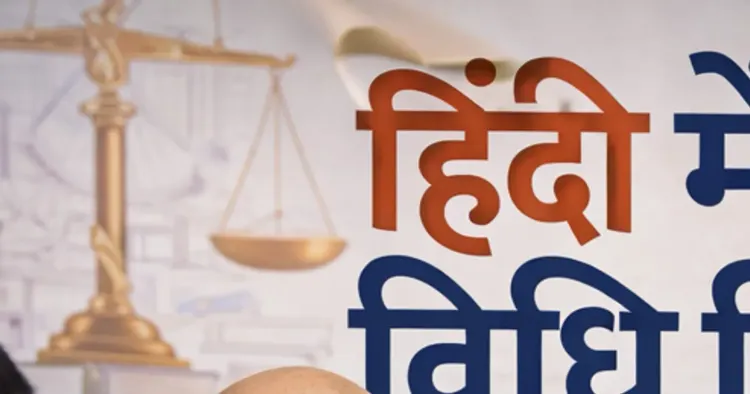
The Department of Legal Affairs, Ministry of Law and Justice organised a conference on 11 July in New Delhi to draft a Ten-Year Perspective Action Plan for legal education in Indian languages.
Justice Rajendra Menon , Chairperson of the Armed Forces Tribunal , chaired the conference; Manan Kumar Mishra , Chairman of the Bar Council of India , and Rajiv Mani , Secretary of the Department of Legal Affairs , also participated.
The proposed framework envisions a bilingual and progressively multilingual legal education model while retaining English as a link language.
AI-enabled translation tools , digital legal repositories, and standardised legal glossaries were identified as key technology enablers.
The conference resolved to establish a National Steering Committee jointly anchored by the Department of Legal Affairs and the Bar Council of India to oversee implementation.
The initiative is aligned with the Viksit Bharat @2047 vision of equitable access to justice.
Legal experts, senior academicians, and government officials on Saturday, 11 July convened in New Delhi to deliberate on a Ten-Year Perspective Action Plan for integrating Hindi and other Indian languages into legal education and the justice delivery system. The conference was organised by the Department of Legal Affairs, Ministry of Law and Justice, in collaboration with the Bar Council of India (BCI).
Key Developments
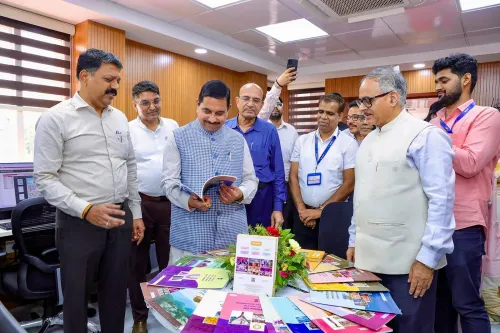
The conference, titled 'Strengthening Legal Education through Integration of Regional Languages', was chaired by Justice Rajendra Menon, Chairperson of the Armed Forces Tribunal and Co-Chairperson of the Standing Committee on Legal Education. Also present were Manan Kumar Mishra, Member of Parliament (Rajya Sabha) and Chairman of the Bar Council of India, and Rajiv Mani, Secretary of the Department of Legal Affairs, along with Vice-Chancellors of leading law schools, members of the Bar, and representatives of the judiciary.
The gathering reaffirmed a shared commitment to promoting inclusive, accessible, and high-quality legal education by integrating Indian languages in a calibrated manner, according to an official statement.
What the Framework Proposes
The proposed framework envisions a bilingual and progressively multilingual legal education model — one that enhances legal comprehension, improves access to justice, strengthens legal aid and clinical legal education, and better prepares future lawyers for practice before district and subordinate courts. Crucially, the framework explicitly preserves English as an important national and international link language, signalling a complementary rather than replacement approach.
Participants also deliberated on the role of technology in accelerating language integration. Emerging tools — including Artificial Intelligence-enabled translation platforms, digital legal repositories, standardised legal glossaries, and terminology databases — were identified as key enablers, subject to rigorous validation by legal and linguistic experts to ensure accuracy and reliability.
The Viksit Bharat Connection
Organisers framed the initiative within the broader national vision of Viksit Bharat @2047, positioning multilingual legal education as a structural reform necessary for equitable access to justice. This comes amid a wider push by the Centre to indigenise institutional processes across sectors, from the judiciary to higher education. Notably, the National Education Policy 2020 had already flagged mother-tongue instruction as a priority — this conference signals that legal education is now formally entering that conversation.
Way Forward
As an outcome of the deliberations, the conference resolved to work towards a National Declaration on Indian Languages in Legal Education, finalise the broad framework of the Ten-Year Perspective Action Plan for phased implementation, and establish a National Steering Committee jointly anchored by the Department of Legal Affairs and the Bar Council of India to oversee, guide, and monitor implementation. A phased, structured, measurable, and quality-assured rollout is envisaged, with the Steering Committee serving as the principal accountability mechanism.
The specifics of timelines and milestones for the action plan are expected to be formalised in subsequent rounds of consultation.
Point of View
But the execution risk is substantial. Integrating regional languages into legal education requires more than glossaries and AI translation — it demands a parallel overhaul of textbooks, examination systems, and judicial record-keeping, none of which were addressed in detail at this conference. The retention of English as a 'link language' is a pragmatic hedge, but it also risks creating a two-tier system where regional-language graduates are implicitly steered toward lower courts while English-trained peers dominate higher judiciary and corporate law. The National Steering Committee's mandate will be the real test: without binding timelines, independent audits, and law school accreditation linked to language integration, this risks becoming another well-intentioned declaration that stalls at the pilot stage.
NationPress
10 Oct 2026
Frequently Asked Questions
What is India's Ten-Year Perspective Action Plan for legal education in Indian languages?
It is a proposed decade-long roadmap, currently being drafted, to integrate Hindi and other Indian languages into legal education and the justice delivery system. The plan was deliberated at a conference organised by the Department of Legal Affairs on 11 July in New Delhi, in collaboration with the Bar Council of India.
Who chaired the legal education conference on 11 July?
Justice Rajendra Menon, Chairperson of the Armed Forces Tribunal and Co-Chairperson of the Standing Committee on Legal Education, chaired the conference. Manan Kumar Mishra, Chairman of the Bar Council of India, and Rajiv Mani, Secretary of the Department of Legal Affairs, were among the key participants.
Will English be removed from legal education under this plan?
No. The proposed framework explicitly preserves English as an important national and international link language. The model envisions a bilingual and progressively multilingual approach, complementing rather than replacing English-medium legal instruction.
What role will technology play in multilingual legal education?
The conference identified AI-enabled translation tools, digital legal repositories, standardised legal glossaries, and terminology databases as key enablers of language integration. Their use is proposed subject to rigorous validation by legal and linguistic experts to ensure accuracy.
What is the National Steering Committee proposed at the conference?
It is a proposed oversight body to be jointly anchored by the Department of Legal Affairs and the Bar Council of India, tasked with guiding and monitoring the phased implementation of multilingual legal education reforms under the Ten-Year Perspective Action Plan.