Is Multilingual India a Testament to Civilizational Strength? Delhi Speaker Vijender Gupta Thinks So
Synopsis
Delhi Assembly Speaker Vijender Gupta emphasizes the profound connection between language, culture, and democracy during the Third International Indian Language Conference, highlighting how India's linguistic diversity fosters unity and understanding among its people. This remarkable event drew scholars from over 70 countries, underscoring India's linguistic relevance on the global stage.
Key Takeaways
Language is a critical link between India's civilizational past and democratic future.
Linguistic diversity promotes dialogue and coexistence among various communities.
India's multilingual practices foster listening and accommodation .
Both written and unwritten languages play a role in preserving knowledge.
The conference highlighted the global relevance of Indian languages.
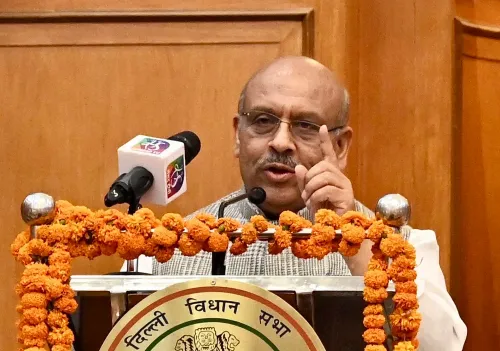
New Delhi, Jan 11 (NationPress) Delhi Assembly Speaker Vijender Gupta stated on Sunday that language transcends being just a communication tool; it serves as a vital link connecting our civilizational heritage with our democratic aspirations.
During his address at the Valedictory Session of the Third International Indian Language Conference, Gupta noted that the legacy of Indian languages reflects a narrative of continuity amidst diversity.
He highlighted that languages in India have developed through ongoing interactions among various communities, religious beliefs, and knowledge systems. Even languages that have fallen into disuse, he pointed out, have contributed rich intellectual legacies that continue to influence current languages.
“Our linguistic heritage is multifaceted; it is not about loss but about lasting memories,” he remarked.
The conference, themed ‘Languages, Literature, Youth and Technology’, convened distinguished scholars, authors, linguists, and cultural intellectuals from both India and abroad.
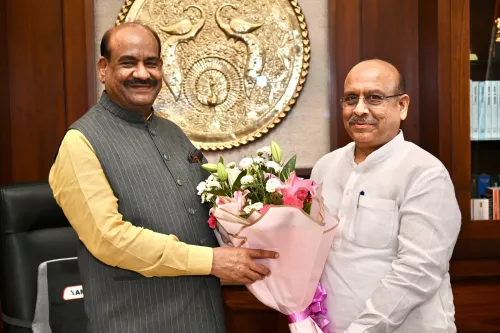
Lok Sabha Speaker Om Birla attended the valedictory ceremony, delivering a keynote address.
The event was chaired by Ram Bahadur Rai, President of the Indira Gandhi National Centre for the Arts (IGNCA).
Speaker Gupta emphasized that Indians naturally navigate through various languages in their daily lives, each suited for distinct contexts.
This multilingual experience, he explained, fosters habits of listening and acceptance, enabling diverse linguistic families—Indo-European, Dravidian, Austro-Asiatic, and Tibeto-Burman—to coexist harmoniously.
“In India, linguistic diversity signifies dialogue, not division,” Gupta noted.
He also reflected on the development of writing systems and oral traditions in Indian languages.
From ancient scripts to tribal oral traditions, he underscored that both written and unwritten languages have preserved knowledge through stories, songs, and rituals.
He emphasized that assessing a language's value extends beyond literary records to include lived experiences and the cultural memories of communities.
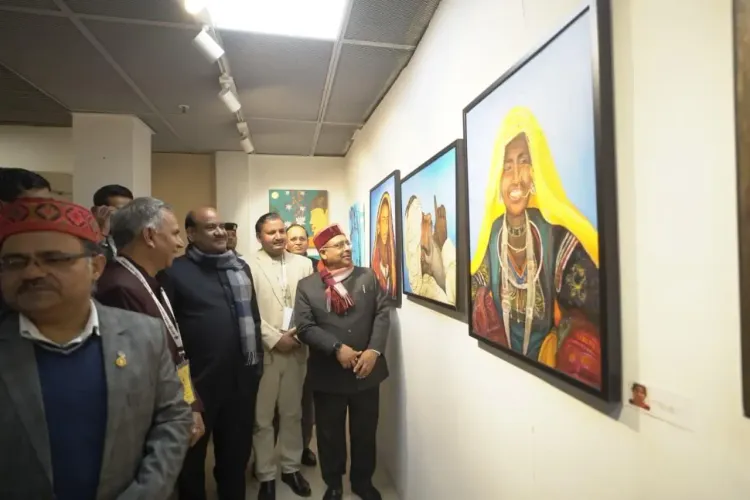
Gupta praised the organizers for establishing a truly global scholarly platform. Over the three days, the conference featured 43 sessions, including book and art exhibitions, film presentations, theatrical performances, and cultural showcases, providing a holistic understanding of language as thought, art, and expression.
With participation from scholars and delegates from more than 70 countries, he stated that the conference reaffirmed the global significance of Indian languages in modern intellectual discourse.
Notable attendees included Ramesh C. Gaur, Dean (Administration) at the Indira Gandhi National Centre for the Arts; Anil Joshi, President of Vaishvik Hindi Parivar and Director of the International Indian Language Conference; Ravi Prakash Tekchandani, Dean of the Department of Indian Languages at the University of Delhi; Shyam Parande, General Secretary of Antar-Rashtriya Sahayog Parishad; A. Vinod, Coordinator of Shiksha Sanskriti Utthan Nyas; and Vinaysheel Chaturvedi, Director of Vaishvik Hindi Parivar.
Point of View
We recognize the significance of Vijender Gupta's perspectives on the role of language in India's cultural fabric. This multifaceted exploration of linguistic heritage not only reinforces the importance of dialogue and coexistence but also positions India prominently on the global linguistic map. Such discussions are vital for fostering understanding and unity within a diverse nation.
NationPress
3 Oct 2026
Frequently Asked Questions
What was the theme of the Third International Indian Language Conference?
The theme was 'Languages, Literature, Youth and Technology'.
Who delivered the keynote address at the conference?
Lok Sabha Speaker Om Birla delivered the keynote address.
How many countries participated in the conference?
Scholars and delegates from over 70 countries participated in the conference.
What did Gupta say about India's linguistic diversity?
Gupta remarked that linguistic diversity in India signifies dialogue rather than division.
What kind of sessions were held during the conference?
The conference hosted 43 sessions including art exhibitions, film screenings, and cultural presentations.