India's Green Revolution: Expanding Forests and Biodiversity
Synopsis
India's environmental narrative is not just about pollution; it's also about an inspiring tale of expanding forests, vibrant biodiversity, and community-driven conservation efforts. Discover how these elements are shaping India's environmental landscape.
Key Takeaways
India is witnessing a remarkable increase in forest cover.
Community-driven conservation efforts are pivotal to these gains.
Madhya Pradesh is the leader in forest coverage.
Indigenous communities play a key role in preserving biodiversity.
Forests are crucial for meeting climate commitments.
New Delhi, March 22 (NationPress) While India’s environmental performance often faces criticism due to pollution and climate-related issues, a more optimistic narrative is emerging—one characterized by increasing forest cover, vibrant biodiversity, and enhanced conservation efforts throughout the nation.
Recent statistics and environmental evaluations reveal that India is consistently enhancing its forest and tree cover, a reflection of both continuous policy measures and grassroots conservation initiatives. Unfortunately, these advancements seldom receive the attention they deserve in global conversations about climate and environmental sustainability.
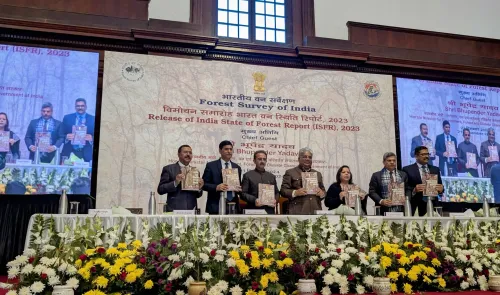
As noted in the India State of Forest Report, India’s tree cover has expanded recently by 2,261 square kilometers over the last two years, as reported by Salil Gewali in India Narrative.
The report highlights that 17 states and Union Territories now boast over one-third of their total land area covered by forests—indicative of the nation’s growing green spaces and conservation efforts, which include diverse ecosystems that sustain both biodiversity and local communities.
Madhya Pradesh emerges as the state with the most extensive forest cover in India, featuring a network of national parks, wildlife sanctuaries, and tiger reserves that are pivotal for wildlife conservation. Rivers like the Narmada and Chambal traverse these woodlands, supporting both the ecosystems and the communities reliant on forest resources.
The ecological diversity of India’s northeastern region is also noteworthy, particularly in Arunachal Pradesh, which showcases a range of ecosystems from tropical forests to alpine meadows. Indigenous communities in this area have historically served as guardians of the forests, maintaining biodiversity through sustainable practices.
States such as Chhattisgarh, Karnataka, Uttarakhand, and Assam also present robust forest ecosystems and wildlife habitats, which are vital for iconic species like the one-horned rhinoceros and Asian elephants.
India’s strategy for environmental stewardship merges conservation, economic progress, and community involvement—a model that could provide valuable insights for other nations striving to balance development with sustainability.
Furthermore, the article emphasizes that forests are crucial for India in meeting its climate commitments, including reducing carbon emissions and working towards long-term net-zero objectives.
Point of View
I believe it’s crucial to spotlight the positive strides India is making in environmental conservation. The growth in forest cover and biodiversity is a testament to both policy efforts and community engagement, showcasing a balanced approach to development and sustainability.
NationPress
23 Sept 2026
Frequently Asked Questions
How much has India's tree cover increased recently?
India's tree cover increased by 2,261 square kilometers over the past two years, according to the India State of Forest Report.
Which state has the largest forest cover in India?
Madhya Pradesh holds the largest forest cover in India, featuring numerous national parks and wildlife sanctuaries.
What role do indigenous communities play in forest conservation?
Indigenous communities in regions like Arunachal Pradesh act as custodians of forests, preserving biodiversity through sustainable practices.
How do forests contribute to India's climate goals?
Forests are essential for India to achieve its climate commitments, including reducing carbon emissions and reaching net-zero targets.
What states in India showcase strong forest ecosystems?
States such as Chhattisgarh, Karnataka, Uttarakhand, and Assam feature robust forest ecosystems and wildlife habitats.