India's Environment Ministry Reveals Biodiversity Progress Under Kunming-Montreal Framework
Synopsis
On March 16, the Environment Ministry presented India's NR-7, showcasing a commitment to global biodiversity goals by 2030. This comprehensive report highlights the collaborative efforts across government sectors and significant achievements in conservation, reflecting India's dedication to ecological preservation.
Key Takeaways
India's NR-7 emphasizes biodiversity commitments under the Kunming-Montreal framework.
All 23 National Biodiversity Targets are on track for achievement.
Collaboration involves 33 Central Ministries and local communities.
Forest cover statistics indicate significant conservation progress.
India's conservation network includes extensive protected areas and species populations.
New Delhi, March 16 (NationPress) Emphasizing a comprehensive and inclusive strategy, the Environment Ministry has officially submitted India's Seventh National Report (NR-7) to the Convention on Biological Diversity (CBD), as stated by an official on Monday.
This submission, made on February 26, fulfills a legal requirement and reinforces India's unwavering commitment to the goals of the Convention on Biological Diversity, aiming for significant biodiversity achievements by 2030 under the Kunming–Montreal Global Biodiversity Framework, according to the official statement.
The report indicates that all 23 National Biodiversity Targets (NBTs) are presently on track for achievement, showcasing a robust synchronization between national objectives and global biodiversity pledges.
The report underscores a whole-of-government and whole-of-society approach, which has been a hallmark of India’s biodiversity conservation initiatives. It notes the involvement of 33 Central Ministries and Departments, which have integrated biodiversity considerations across various sectors, including infrastructure, agriculture, forestry, and coastal policies.
Significant progress has been made in biodiversity-focused land and seascape planning. The recorded Forest Area is now 775,377 square kilometers, accounting for 23.59% of the country's total geographical area, with the forest cover being 520,365 square kilometers (15.83%).
The overall Forest and Tree Cover has reached 827,356.95 square kilometers, representing 25.17% of the area, reflecting the ongoing integration of spatial planning. The number of Ramsar wetlands designated as internationally important has increased from 26 in 2014 to 98 as of 2026, as detailed in the report.
NR-7 offers a thorough, indicator-based national evaluation aligned with India's revised National Biodiversity Strategy and Action Plan (NBSAP 2024-2030) and the Kunming-Montreal Global Biodiversity Framework (KMGBF).
This report is grounded in 142 national indicators that correspond to the 23 National Biodiversity Targets (NBTs) and includes collaborative contributions from 33 Central Ministries/Departments, State Governments, Statutory Authorities, Research Institutions, and various stakeholders, as stated by the Ministry of Environment, Forest and Climate Change.
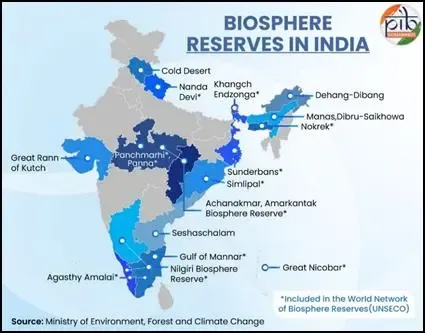
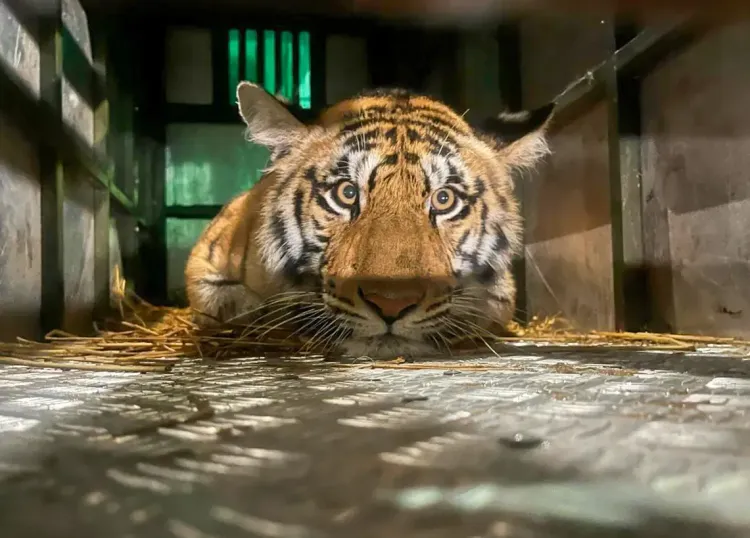
India's conservation framework now includes 58 Tiger Reserves, 33 Elephant Reserves, 18 Biosphere Reserves, 106 National Parks, and 574 Wildlife Sanctuaries. The country is home to 3,682 tigers (over 70% of the global tiger population), 4,014 greater one-horned rhinoceroses, 22,446 wild elephants, 891 Asiatic lions, and approximately 718 snow leopards, based on the inaugural Snow Leopard Population Assessment (SLPAI). The 'Dolphin Project' has also reported a population of 6,327 river dolphins, following the first comprehensive estimate.
India has identified 22 agrobiodiversity hotspots and prioritized the conservation of 769 Crop Wild Relatives (CWRs) across 171 native crops and 230 native animal breeds, emphasizing diversity, uniqueness, and agricultural heritage, the report reveals.
The National Biodiversity Authority of India has processed over 5,600 access and benefit-sharing (ABS) agreements, distributing Rs 140 crore, while facilitating the establishment of 276,653 Biodiversity Management Committees (BMCs) and 272,648 People’s Biodiversity Registers (PBRs) to engage local communities and traditional knowledge in biodiversity-friendly practices, according to the report.
Point of View
India is setting a strong precedent in biodiversity conservation and demonstrating its commitment to global ecological goals.
NationPress
26 Sept 2026
Frequently Asked Questions
What is the significance of India's Seventh National Report?
The report highlights India's commitment to the Convention on Biological Diversity and outlines progress towards achieving 23 National Biodiversity Targets by 2030.
How does India engage with biodiversity conservation?
India employs a whole-of-government and whole-of-society approach, involving multiple ministries and local communities in biodiversity efforts.
What are the current statistics on India's forest cover?
India's recorded Forest Area is 775,377 sq km, with a total Forest and Tree Cover reaching 827,356.95 sq km.
How many Ramsar wetlands does India have?
As of 2026, India has 98 Ramsar wetlands designated as sites of international importance.
What initiatives support local community engagement in biodiversity?
The National Biodiversity Authority has established numerous Biodiversity Management Committees and People’s Biodiversity Registers to promote local involvement.