Defence Ministry signs ₹586 crore deal for tank APUs under Atmanirbhar push
Synopsis
India's Defence Ministry has signed a ₹586 crore contract for indigenous Auxiliary Power Units for its T-72 and T-90 main battle tanks — a deal that does more than upgrade the Army's armoured fleet. With export potential flagged for markets in Iran, Iraq, Egypt, and former Soviet bloc nations, it could be the foundation of a new Indian defence export product line.
Key Takeaways
The Ministry of Defence signed a ₹586 crore contract on 21 September 2026 to procure Auxiliary Power Units (APUs) for T-72 and T-90 main battle tanks.
The contract was awarded to Accurate Industrial Controls Private Ltd , an Indian company, in line with the Atmanirbhar Bharat initiative.
APUs power critical tank systems — including fire control and gun stabilisation — without running the main engine, extending engine life during surveillance and training.
The deal is expected to cover future requirements for Arjun tanks and BMPs as well.
Export potential includes countries operating Russian-origin T-72 and T-90 fleets, such as Iran, Iraq, and Egypt , which could generate orders 'many times more' than the current contract.
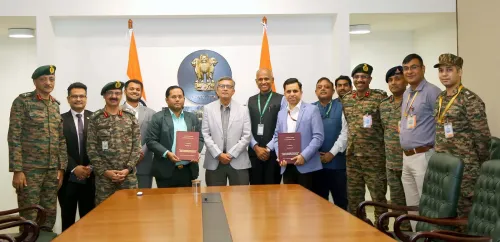
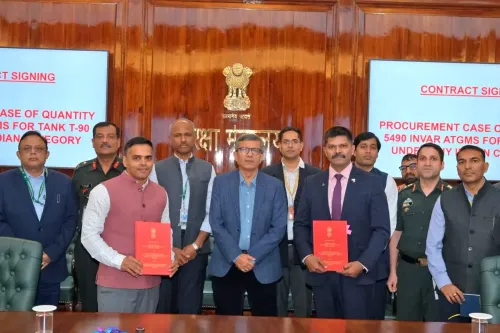
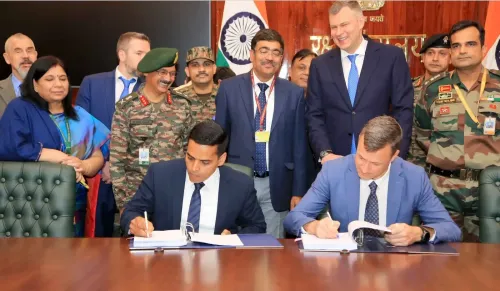
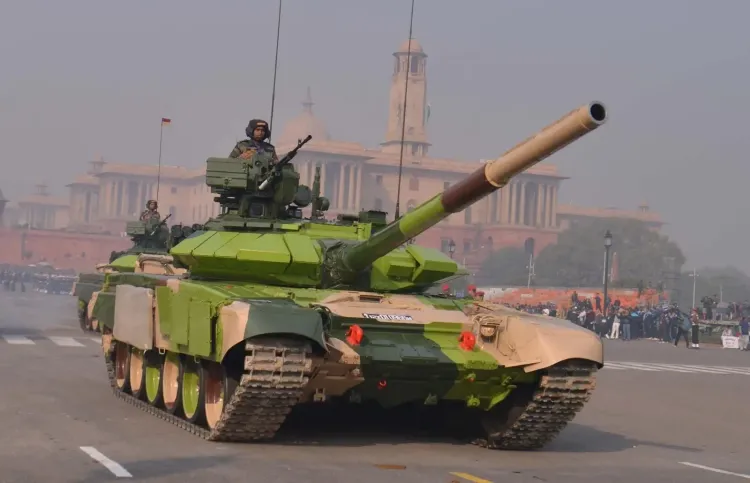
The Ministry of Defence on Monday, 21 September 2026, signed a ₹586 crore contract to procure indigenously developed Auxiliary Power Units (APUs) for the Indian Army's T-72 and T-90 main battle tanks, according to an official statement. The deal, inked in New Delhi in the presence of Defence Secretary Rajesh Kumar Singh, marks a significant step toward self-reliance in armoured vehicle technology under the Atmanirbhar Bharat initiative.
What the APU Does
An Auxiliary Power Unit serves as an independent source of electrical power for a tank's critical onboard systems — including the fire control system, firing circuit, gun stabilisation system, and other ancillaries — without running the vehicle's main engine. This capability is especially valuable when a tank is deployed in surveillance mode during a lull in combat, or during training exercises, as it conserves the operational life of the primary engine.
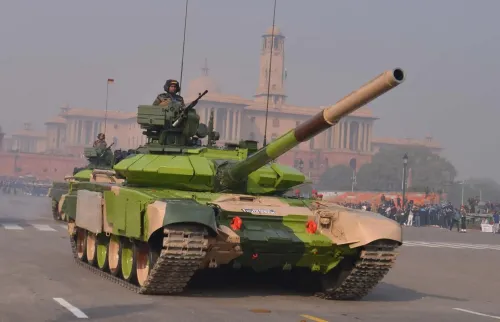
The induction of these indigenously developed APUs is expected to strengthen the operational readiness, reliability, and sustainability of the Army's mechanised formations, which rely heavily on the T-72 and T-90 as their principal combat platforms.
The Contract and the Company
The agreement was signed with Accurate Industrial Controls Private Ltd, an Indian firm, making it a fully domestic procurement. T-72 and T-90 tanks are the backbone of India's mechanised forces, and this contract directly addresses a long-standing requirement for an indigenous power-management solution in place of imported alternatives.
Notably, the contract also covers future potential for Arjun tanks and BMPs (infantry fighting vehicles) held by the armed forces, as APUs are a continuous operational requirement across the armoured fleet.
Strategic and Export Significance
Beyond the immediate procurement, officials highlighted that the project carries substantial export potential. Countries operating Russian-origin T-72 and T-90 fleets — including several former Soviet bloc nations as well as Iran, Iraq, and Egypt — could represent a significant overseas market for India-made APUs. Officials indicated that future domestic and export business could be 'many times more' than the current order, given the scale of the global T-72 and T-90 inventory.
This procurement aligns with the government's broader push to reduce dependence on foreign defence suppliers and to position India as a credible defence exporter. India has set an ambitious defence export target, and indigenised tank sub-systems are considered a viable product category for emerging markets.
Broader Context
The deal comes as India continues to accelerate indigenous defence production, with the Ministry of Defence having reserved several categories of equipment for domestic procurement under successive Positive Indigenisation Lists. APUs for tanks had previously been sourced from foreign vendors, making this contract a concrete example of import substitution at the platform level. The project is expected to generate manufacturing employment and build a domestic technology base that can be scaled up as new tank supplies enter service in the coming years.
Point of View
And indigenising the APU — a continuous-requirement item — breaks that dependency at scale. The export angle is the more interesting story: if Accurate Industrial Controls can certify its product for third-country T-72 and T-90 operators, India gains a defence export revenue stream with recurring demand. The real test will be whether the government builds on this with a coherent tank-sub-system export strategy, or treats this as an isolated procurement win.
NationPress
21 Sept 2026
Frequently Asked Questions
What is the ₹586 crore defence contract signed on 21 September 2026?
The Ministry of Defence signed a ₹586 crore contract with Accurate Industrial Controls Private Ltd to supply indigenously developed Auxiliary Power Units (APUs) for the Indian Army's T-72 and T-90 main battle tanks. The deal was formalised in New Delhi in the presence of Defence Secretary Rajesh Kumar Singh.
What does an Auxiliary Power Unit (APU) do in a tank?
An APU provides independent electrical power to a tank's critical systems — including the fire control system, firing circuit, and gun stabilisation system — without running the main engine. This extends the operational life of the primary engine, particularly during surveillance deployments and training.
Which company won the APU contract and why does it matter?
Accurate Industrial Controls Private Ltd, an Indian private-sector firm, won the contract. The award is significant because APUs for Indian tanks were previously sourced from foreign suppliers; this deal marks a concrete step in import substitution for a continuous-requirement defence item.
What is the export potential of this deal?
Officials indicated that future domestic and export business could be many times the value of the current order. Countries operating Russian-origin T-72 and T-90 tanks — including Iran, Iraq, Egypt, and former Soviet bloc nations — represent a potential overseas market for India-made APUs.
Which other Indian armoured platforms could benefit from this technology?
Beyond the T-72 and T-90, the indigenised APU technology is also applicable to Arjun tanks and BMPs (infantry fighting vehicles) held by the Indian armed forces, as well as any new tank platforms expected to enter service in the coming years.