Delimitation debate: Indian MP represents 26.3 lakh vs US 8 lakh
Synopsis
One Indian MP speaks for 26.3 lakh people. A US lawmaker represents 8 lakh, a UK MP about 1 lakh, and an Icelandic MP just 6,390. As the delimitation fight heats up, these numbers show how stretched India's democracy is and why redrawing the map is so contested.
Key Takeaways
Each Indian MP represents about 26.3 lakh people, against 8.02 lakh per US House member.
A UK House of Commons member represents roughly 1.08 lakh people.
Iceland has the lightest load at 6.39 thousand people per MP, followed by Luxembourg at 11.46 thousand .
Japan ( 2.63 lakh ) and Taiwan ( 2.04 lakh ) are well below India's ratio.
The data comes amid a heated delimitation debate, with the Opposition reportedly seeking to defeat the delimitation bill.
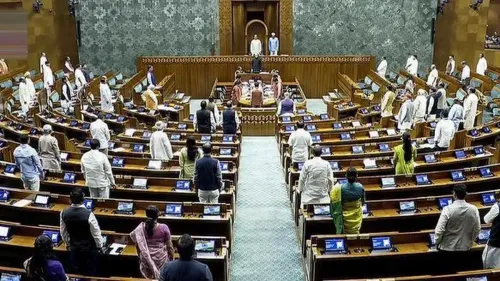
An Indian Member of Parliament represents roughly 26.3 lakh people, compared with about 8.02 lakh per member of the US House of Representatives and around 1.08 lakh per member of the UK House of Commons. The comparison, compiled in New Delhi on 29 November 2026, comes as the debate over delimitation intensifies. It shows that India's parliamentary representation is among the most stretched of any major democracy.
The data suggests India is an outlier in the global trend. Its representation load is described as too ‘huge and complex’ to manage, at roughly three times that of the United States.
How India Compares With the US and UK
Each US lawmaker in the House of Representatives represents about 8.02 lakh people. In India, the figure is about 26.3 lakh per Parliamentarian.
The gap with the United Kingdom is wider still. There, each elected member of the House of Commons answers to roughly 1.08 lakh people. These figures place India among the democracies with the highest population-to-representative ratios in the world.
Europe and Other Democracies Keep Constituencies Small
In many of Europe's advanced economies, a Parliamentarian represents barely 1 lakh people. Smaller constituencies are generally seen as making it easier for a legislator to understand and respond to local needs.
Countries with a per-MP load just above the 1 lakh mark include the following:
- UK: 1.08 lakh
- Canada: 1.18 lakh
- France: 1.20 lakh
- Netherlands: 1.23 lakh
- Germany: 1.33 lakh
- Italy: 1.47 lakh
- South Africa: 1.64 lakh
- Australia: 1.82 lakh
Europe's smaller nations go further. Iceland has the lightest constituency load, at about 6.39 thousand people per MP. Luxembourg follows at 11.46 thousand.
In the Nordic region, one MP in Finland represents 28.11 thousand citizens. In Sweden, which has 349 elected seats, the figure is 30.66 thousand. Each MP in Ireland represents 30.79 thousand citizens, and in Norway the figure is 33.45 thousand.
Asian Democracies Sit in Between
Closer to home, Taiwan and Japan have loads above 2 lakh per MP, at 2.04 lakh and 2.63 lakh respectively. Even these figures are only about a tenth of India's.
Notably, no other major democracy in the comparison comes close to India's ratio. The scale of the gap explains why representation has become central to the national conversation.
Why the Numbers Matter for Delimitation
The figures carry weight as India debates whether to redraw its electoral constituencies. Supporters argue that delimitation would ease the strain on India's electoral system. They say it would allow greater representation in the Lok Sabha and state Assemblies.
The Opposition has strongly resisted the move and has reportedly sought to defeat the delimitation bill, as it did earlier this year. The disagreement goes beyond arithmetic. It raises questions about how seats would be redistributed among states, and with them, political power.
What Lies Ahead
As the delimitation debate moves forward, the per-MP comparison is likely to feature prominently on both sides. The core issue is how India can bring its lawmakers closer to the people they represent while preserving the balance of its federal structure.
Point of View
But treating delimitation as a simple fix misses the point. Redrawing constituencies means redistributing power among states, and that is the real source of the Opposition's resistance. A legislator answering to 26 lakh people cannot provide meaningful constituency service, so the case for more representation is strong. However, any expansion that rewards population growth while penalising states that stabilised their numbers will deepen federal distrust. The country needs a formula that fixes representation without punishing states for good governance.
NationPress
29 Nov 2026
Frequently Asked Questions
How many people does one MP represent in India?
One Indian Member of Parliament represents about 26.3 lakh people. This is among the highest population-to-representative ratios of any major democracy.
How does India's MP ratio compare with the US and UK?
India's ratio is much higher than both. A US House member represents about 8.02 lakh people, and a UK House of Commons member represents roughly 1.08 lakh.
Which country has the fewest people per MP?
Iceland has the smallest constituency load, at about 6.39 thousand people per MP. Luxembourg follows at around 11.46 thousand.
Why are these figures relevant to the delimitation debate?
They highlight how stretched India's parliamentary representation is. Supporters say delimitation could allow greater representation in the Lok Sabha and state Assemblies.
What is the Opposition's stand on delimitation?
The Opposition has strongly opposed the exercise. It has reportedly sought to defeat the delimitation bill, as it did earlier this year.