Delimitation row: Parameshwara slams 50% Lok Sabha seat hike
Synopsis
Proportions stay the same, but the gap grows. Under the Centre's 50% Lok Sabha expansion, Uttar Pradesh would rise to 120 seats and Karnataka to 42, widening their gap from 52 to 78. Karnataka Deputy CM G. Parameshwara says the 2051 freeze only delays the reckoning for southern States.
Key Takeaways
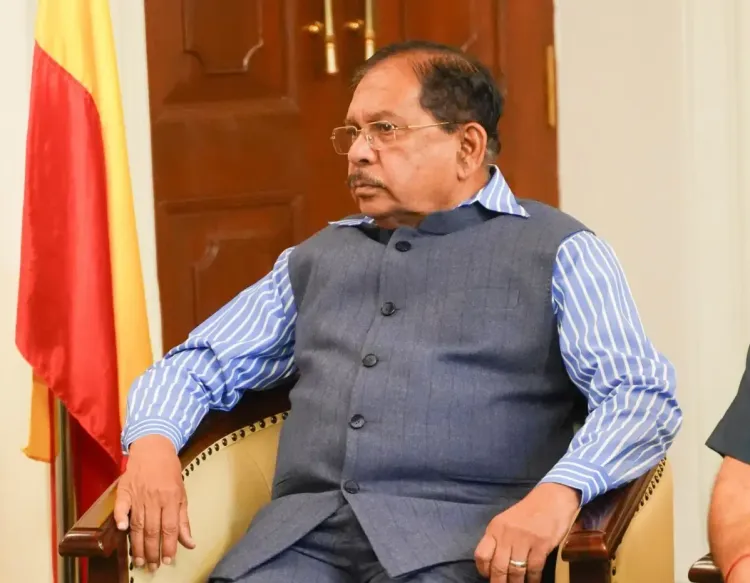
Karnataka Deputy CM G.
Parameshwara criticised the Union Cabinet's approval of a 50 per cent uniform increase in Lok Sabha seats on 28 November 2026 .
Uttar Pradesh would go from 80 to 120 seats and Karnataka from 28 to 42 , widening the gap from 52 to 78 .
He said freezing the representation ratio until 2051 postpones, rather than resolves, the constitutional challenge.
He questioned the lack of an all-party meeting or consultation through the Inter-State Council .
He endorsed Rahul Gandhi's view that the exercise seeks to redraw India's political map.
Karnataka Deputy Chief Minister G. Parameshwara on Saturday sharply questioned the Union Cabinet's approval of a delimitation proposal that would raise Lok Sabha seats by a uniform 50 per cent. In a statement issued from Bengaluru on 28 November 2026, he said the move raises serious concerns about India's democracy, federalism and equitable political representation. He also asked whether the Bharatiya Janata Party (BJP) was seeking electoral advantage by altering the country's electoral architecture.
Key Questions Raised by Parameshwara
Parameshwara asked why the increase had been fixed at exactly 50 per cent, and what scientific, demographic or constitutional justification supported that figure. He also asked why the Union Government was rushing a constitutional reform of this scale without convening an all-party meeting or consulting States through the Inter-State Council.
According to the Deputy Chief Minister, the timing and method of the exercise raise legitimate concerns. He said the question is whether the BJP is seeking an advantage through changes to India's electoral architecture rather than securing a renewed mandate through governance and performance.
How the Numbers Change for States
Under the proposed formula, Uttar Pradesh would go from 80 to 120 seats, while Karnataka would rise from 28 to 42. Parameshwara noted that proportional representation stays the same. However, the numerical gap between the two States would widen from 52 to 78 seats.
He argued that the proposal carries existing disparities forward. He added that freezing the representation ratio until 2051 only postpones the larger constitutional challenge.
“The reported decision to protect the existing proportional representation of States until 2051 is a recognition of the legitimate concerns raised by southern States. However, postponing a constitutional challenge is not the same as resolving it,” Parameshwara said.
He added: “India needs a durable and principled framework that safeguards federal equity beyond arbitrary deadlines and ensures that States are not disadvantaged for successfully implementing national development objectives.”
Backing for Rahul Gandhi's Position
The Karnataka leader explicitly aligned himself with Congress leader Rahul Gandhi. “I endorse Rahul Gandhi's concern that the BJP's proposed delimitation exercise is an attempt to redraw India's political and electoral map, with far-reaching implications for the political representation and identity of States like Karnataka,” he said.
This comes amid long-standing unease among southern States about delimitation. Lok Sabha seat allocation across States has stayed frozen on the basis of the 1971 Census. Southern leaders have repeatedly argued that States which successfully controlled population growth should not lose political weight as a result.
Wider Concerns Beyond Seat Distribution
Parameshwara said the effects of the proposal go well beyond how seats are shared among States. He warned that it could deepen existing divides between:
- urban and rural areas
- tribal and non-tribal regions
- developed and backward regions
He asked whether the BJP-led Union Government had assessed these consequences. He also asked whether the exercise was being driven by electoral considerations and the consolidation of the party's traditional vote base.
The Deputy Chief Minister urged the Centre to show that the new framework will not marginalise historically underrepresented communities or weaken their political voice.
What Comes Next
A change to Lok Sabha strength requires constitutional amendment. That means the proposal will face scrutiny in Parliament and pushback from Opposition-ruled States. With Karnataka's leadership now formally on record, the debate over federal equity in delimitation is likely to intensify in the weeks ahead.
Point of View
Not rhetoric: a uniform 50% hike keeps every State's share intact but turns relative parity into larger absolute gaps in the House. The 2051 freeze is a concession to southern anxieties, but it pushes the same fight onto a future generation without a settled principle. The Centre's case would be far stronger if it explained the 50% figure and opened the Inter-State Council route. Without that, a reform of this scale risks being read as partisan rather than constitutional, whatever its merits.
NationPress
28 Nov 2026
Frequently Asked Questions
What did G. Parameshwara say about the delimitation proposal?
Karnataka Deputy CM G. Parameshwara said the Union Cabinet's approval of a uniform 50% increase in Lok Sabha seats raises serious concerns about democracy, federalism and equitable representation. He questioned the justification for the 50% figure and the absence of consultation with States.
How many Lok Sabha seats would Karnataka get under the proposal?
Karnataka's representation would rise from 28 to 42 seats. Uttar Pradesh would go from 80 to 120 seats, widening the numerical gap between the two States from 52 to 78.
What is the 2051 freeze in the delimitation proposal?
The proposal reportedly protects the existing proportional representation of States until 2051. Parameshwara said this recognises southern States' concerns but only postpones, rather than resolves, the constitutional challenge.
Why are southern States worried about delimitation?
Southern States fear losing political weight after successfully controlling population growth, a national development objective. Parameshwara called for a durable framework so that States are not disadvantaged for meeting such goals.
Did Parameshwara support Rahul Gandhi's stand on delimitation?
Yes, Parameshwara endorsed Rahul Gandhi's concern that the BJP's delimitation exercise is an attempt to redraw India's political and electoral map. He said it could affect the representation and identity of States like Karnataka.