What Drives India's Growing Engagements in the Indian Ocean Region?
Synopsis
Explore how India's strategic engagements in the Indian Ocean Region are reshaping its maritime security and diplomatic relations. With key partnerships and military exercises, India is reinforcing its position as a regional leader while safeguarding vital trade routes.
Key Takeaways
Indian Ocean Region is crucial for global trade.
India's role as a security provider is vital.
Strengthening ties with regional nations enhances maritime security.
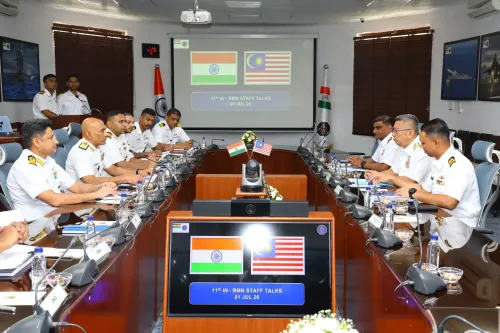
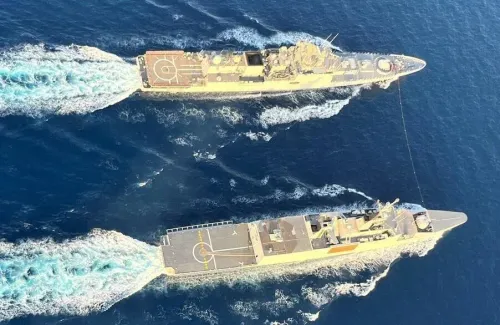
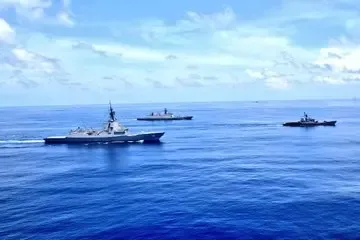
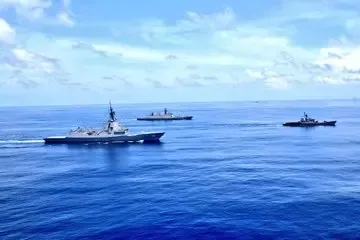
Joint exercises like Samudra Laksamana highlight cooperative efforts.
India's SAGAR doctrine guides its regional engagements.
New Delhi, Feb 15 (NationPress) The Indian Ocean Region (IOR) is a crucial maritime area connecting three continents—Asia, Africa, and Australia—and facilitates over 70 to 75 percent of international trade through this essential sea route, making it one of the most significant and vulnerable assets of the 21st century.
India's central location amplifies its role as a security provider for its extensive 7,500-km coastline.
The government's emphasis on strengthening relationships with key regional stakeholders through diplomatic efforts reflects its priorities and commitment to safeguarding this vital maritime route.
India has recently intensified its diplomatic initiatives in the region, aiming to foster robust partnerships.
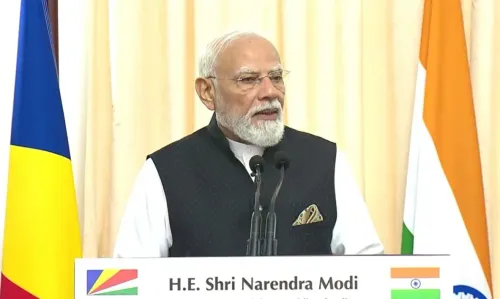
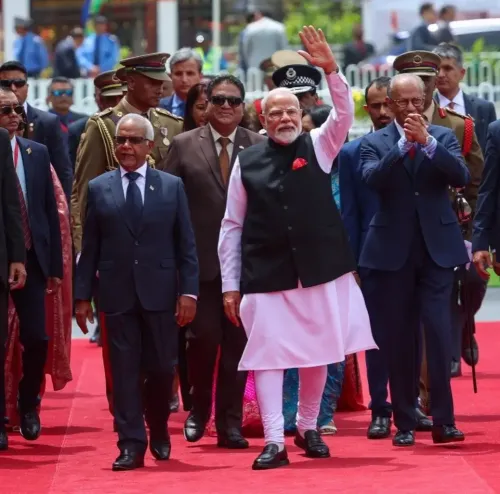
Prime Minister Narendra Modi's visit to Malaysia on February 8 is a notable example of this strategic direction.
India is actively working to enhance ties with nations like Malaysia, Seychelles, Sri Lanka, and Oman, all recognized as essential players in the IOR.
A report from Eurasia Review highlights that "India's naval diplomacy has established a solid foundation through humanitarian efforts, port access discussions, and discreet diplomatic relationship-building."
This strategic engagement is not a sudden rush of activity, but rather the culmination of a long-term strategy. At the core of this effort lies Kuala Lumpur—the starting point for a series of interactions encompassing the entire breadth of the IOR.
India and Malaysia have demonstrated a mutual commitment to enhancing maritime cooperation, which is evident in their intensified engagement in the region.
Malaysia's strategic position at the Strait of Malacca, a critical chokepoint for global trade, adds significant value to joint military exercises like Samudra Laksamana, as both nations advocate for an open, rules-based maritime framework.
Oman, described as "the anchor of the West," consistently offers India a rare quality: strategic predictability.
Joint naval exercises, particularly Naseem Al Bahr, have evolved into broader defense-industrial partnerships under a Vision Document set to be adopted in 2025, emphasizing the importance of Oman for India's western strategic posture.
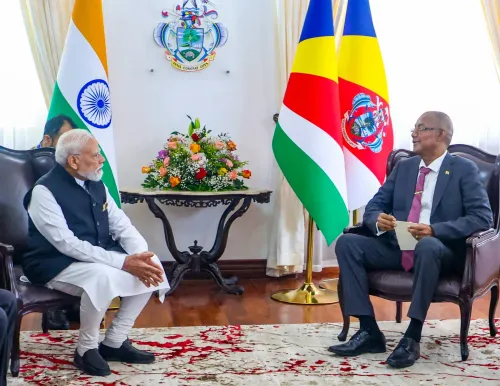
Furthermore, on February 9, the Indian government unveiled a $175 million special economic initiative for Seychelles, reinforcing its resolve to prevent the southern Indian Ocean from falling under the influence of predatory external forces.
Over the years, India has emerged as Sri Lanka's primary collaborator in naval training and equipment, ensuring the neutrality of Sri Lankan waters amid various nations vying for geopolitical advantage.
The ongoing engagement with diverse nations is guided by India's overarching doctrine of SAGAR (Security and Growth for All in the Region).
The forthcoming MILAN 2026 naval exercises, expected to be the largest hosted by India, will likely serve as a key platform to showcase the evolution of this strategic vision.
Point of View
I emphasize that India’s strategic engagements in the Indian Ocean Region reflect a calculated approach to ensuring national security while fostering collaborative relationships with key regional partners. This aligns with our commitment to a stable maritime environment essential for international trade and regional growth.
NationPress
22 Sept 2026
Frequently Asked Questions
Why is the Indian Ocean Region important?
The Indian Ocean Region is significant for global trade, with over 70 to 75 percent of international trade passing through its waters, making it a vital maritime domain.
What role does India play in the IOR?
India acts as a security provider for its extensive 7,500-km coastline and strengthens ties with regional stakeholders to ensure maritime security.
How does India engage with countries in the IOR?
India engages through diplomatic outreach, joint military exercises, and economic partnerships with countries like Malaysia , Seychelles , Sri Lanka , and Oman .
What is the significance of the Strait of Malacca?
The Strait of Malacca is a crucial chokepoint for global trade, and its strategic importance is underscored by India's military exercises with Malaysia .
What is the SAGAR doctrine?
The SAGAR doctrine stands for Security and Growth for All in the Region, guiding India's collaborative engagements and maritime security efforts.