India's UPI leads world's largest digital payments network, says Gujarat BJP
Synopsis
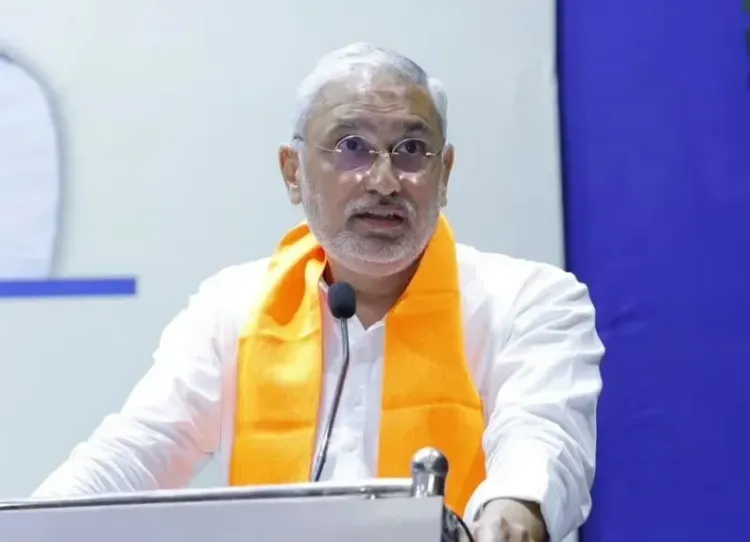
At a Rajkot rally marking 12 years of the Modi government, Gujarat BJP president Jagdish Vishwakarma positioned India's UPI-powered digital payments network as the world's largest — and as proof that once-mocked schemes like Jan Dhan and Digital India have fundamentally reshaped financial access for hundreds of millions of Indians.
Key Takeaways
Gujarat BJP president Jagdish Vishwakarma addressed the 'Viksit Bharat Sankalp Sammelan' in Rajkot on 16 June , marking 12 years of the Modi-led Union government.
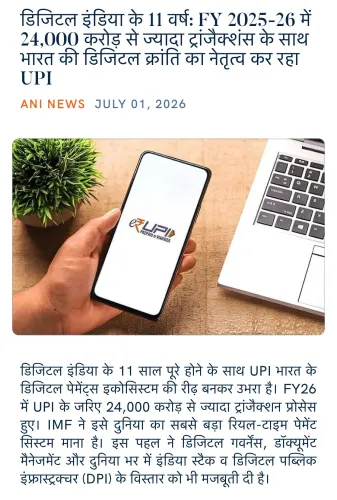
India's UPI -driven ecosystem is claimed to be the world's largest digital payments network , with crores transacting daily.
More than 58 crore bank accounts opened under Jan Dhan Yojana , bringing over ₹2 lakh crore into the formal banking system.
Over ₹4 lakh crore transferred directly to farmers under PM-Kisan Samman Nidhi ; cumulative farm procurement cited at ₹26 lakh crore .
AIIMS count reportedly rose from 8 to 23+ since 2014; medical seats from 51,000 to 1.28 lakh .
India described as having moved from the 11th to 4th largest economy globally under PM Modi.
India has built the world's largest digital payments ecosystem, Gujarat Bharatiya Janata Party (BJP) president Jagdish Vishwakarma said on Tuesday, 16 June, crediting the achievement to initiatives launched under Prime Minister Narendra Modi's government over the past 12 years. Speaking at the 'Viksit Bharat Sankalp Sammelan' in Rajkot, Vishwakarma said India was now setting the direction for the global digital economy.
Digital India and Jan Dhan at the Centre
Vishwakarma described the Jan Dhan Yojana and the Digital India Mission as 'key pillars of financial inclusion and economic modernisation.' He said that when these programmes were first launched, political opponents had publicly questioned their viability — a scepticism he argued had since been proved wrong.
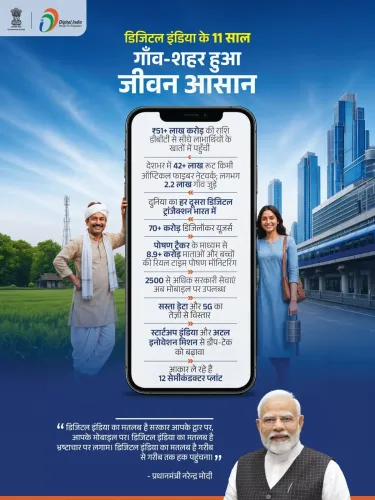
'Today, India has the world's largest digital payment ecosystem, and crores of people are carrying out online transactions every day through UPI. India is giving direction to the world in the digital economy,' Vishwakarma said.
He stated that more than 58 crore bank accounts had been opened under the Jan Dhan programme, channelling over ₹2 lakh crore into the formal banking system.
Key Welfare and Infrastructure Claims
The event was organised under the BJP's campaign titled '12 Years of Trust, Development and Public Welfare', marking the completion of a dozen years of the Modi-led Union government. Vishwakarma outlined a series of figures he attributed to the period:
More than 25 crore people had reportedly been lifted above the poverty line; over 12 crore toilets had been built under the Swachh Bharat Mission; and more than 4 crore families had received homes through the Pradhan Mantri Awas Yojana.
On agriculture, he said more than ₹4 lakh crore had been transferred directly to farmers under the PM-Kisan Samman Nidhi scheme, while cumulative farm procurement over the past 12 years had reached approximately ₹26 lakh crore.
Health Sector and Economic Standing
Vishwakarma said the number of AIIMS institutions had grown from 8 before 2014 to more than 23 at present, and that medical education seats had risen from around 51,000 to over 1.28 lakh. He specifically noted that the establishment of AIIMS Rajkot was 'a matter of pride for the Saurashtra region.'
He also claimed India had advanced from the 11th position to become the world's fourth-largest economy under Modi's leadership, citing growth across industrial, rural, digital, tourism, and green economy sectors.
Gujarat's Development Highlighted
On the state front, Vishwakarma said Gujarat had emerged as a national leader in solar energy and that Rajkot had grown into a significant industrial hub. He cited projects including the Ahmedabad-Mumbai Bullet Train, GIFT City, the Global Centre for Traditional Medicine in Jamnagar, the PM MITRA Park in Navsari, and the Statue of Unity as markers of infrastructure scale.
Former Union minister and Rajya Sabha MP Parshottam Rupala also addressed the gathering, outlining what he described as landmark initiatives of the Modi government. State minister Jitu Vaghani, BJP state general secretaries Aniruddh Dave and Dr Prashant Korat, and Rajkot City BJP president Madhav Dave were among those present.
As the BJP's 12-year commemoration campaign continues across the country, the party's messaging is increasingly anchored around digital infrastructure and financial inclusion as defining legacies — a framing that opposition parties are expected to contest in the months ahead.
Point of View
And the digital payments narrative is its strongest card — UPI's global footprint is a verifiable, widely acknowledged success. But several of the other figures cited, including poverty reduction and economic rank, draw on contested methodologies and are disputed by independent economists. Framing party-event speeches as a national 'report card' without independent verification risks conflating political messaging with policy audit. The real question is whether the government will subject these claims to third-party scrutiny — something that has been conspicuously absent from the campaign's design.
NationPress
19 Sept 2026
Frequently Asked Questions
Why is India called the world's largest digital payments network?
India's UPI platform processes billions of transactions monthly, surpassing other national digital payment systems in volume, which has led to the claim of being the world's largest digital payments ecosystem. Gujarat BJP president Jagdish Vishwakarma reiterated this at a Rajkot event on 16 June, citing Jan Dhan and Digital India as the foundational drivers.
What is the 'Viksit Bharat Sankalp Sammelan' held in Rajkot?
It is a public event organised by the BJP under its campaign '12 Years of Trust, Development and Public Welfare,' marking 12 years of the Modi-led Union government. The Rajkot edition on 16 June featured senior party leaders outlining government achievements across digital, welfare, health, and infrastructure sectors.
How many bank accounts have been opened under Jan Dhan Yojana?
According to Jagdish Vishwakarma's address, more than 58 crore bank accounts have been opened under the Jan Dhan Yojana, bringing over ₹2 lakh crore into the formal banking system since the programme's launch.
What welfare figures did Gujarat BJP cite for the Modi government's 12 years?
The party claimed more than 25 crore people lifted above the poverty line, over 12 crore toilets built under Swachh Bharat Mission, and more than 4 crore families housed under Pradhan Mantri Awas Yojana. These figures were presented at the Rajkot event but have not been independently verified in this report.
What is India's current global economic ranking according to the BJP?
Vishwakarma claimed India has risen from the 11th position to become the world's fourth-largest economy under PM Modi's leadership over 12 years, citing growth across industrial, digital, rural, and green economy sectors.