Indore-Pithampur Economic Corridor: Farmers to get 60% land back as premium plots
Synopsis
Madhya Pradesh is attempting something rare in Indian infrastructure: making farmers co-owners, not just compensatees. The ₹2,360 crore Indore-Pithampur Economic Corridor offers landowners 60% of their land back as developed premium plots — a voluntary land-pooling model that, if it delivers, could reshape how India builds its industrial corridors.
Key Takeaways
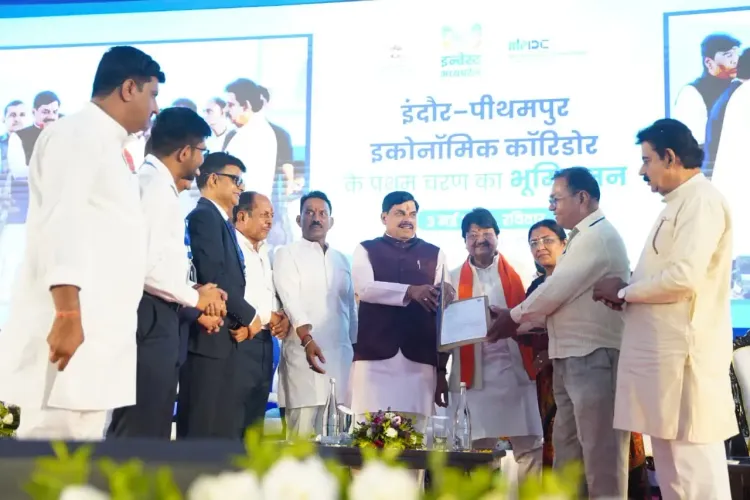
CM Mohan Yadav performed the Bhoomi Pujan for the Indore-Pithampur Economic Corridor on 3 May 2025 at Nainod, Indore .
The first phase carries a cost of ₹2,360 crore and spans six districts including Indore, Ujjain, Dhar, Dewas, Shajapur, and Ratlam .
Farmers will receive 60% of their land back as developed premium plots — above the standard 50% norm.
Land pooling is based on voluntary consent , covering landowners from 17 villages .
The corridor includes an eight-lane super expressway connecting to the Delhi-Mumbai Industrial Corridor .
Employment is projected across agro-processing, automobiles, textiles, engineering, and warehousing sectors.
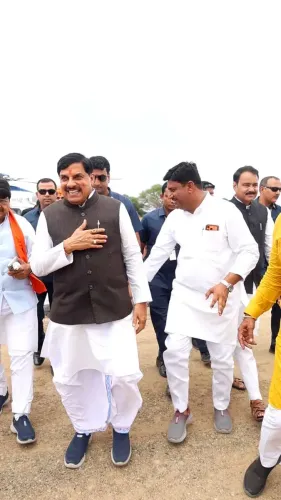
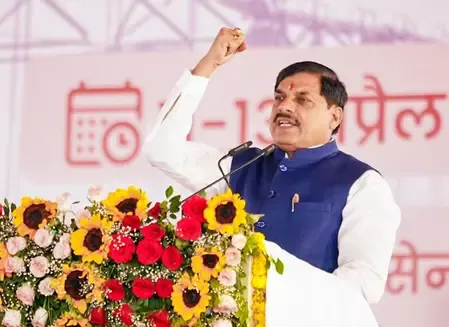
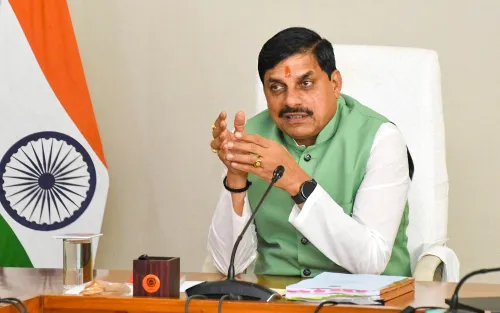
Madhya Pradesh Chief Minister Mohan Yadav on 3 May 2025 announced that farmers will be direct stakeholders in the Indore-Pithampur Economic Corridor, describing the model as the first of its kind in India. Performing the Bhoomi Pujan for the project's first phase at Nainod, Indore, Yadav said the initiative treats landowners as partners rather than passive beneficiaries — a structural departure from conventional land acquisition frameworks.
What the Project Covers
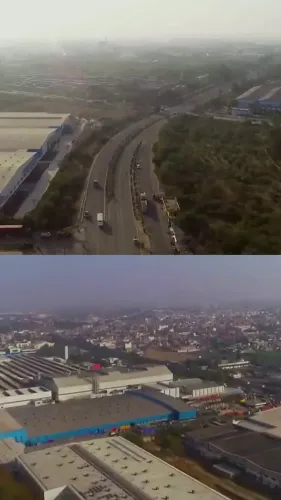
The first phase of the corridor is being executed at a cost of ₹2,360 crore. The corridor spans six districts — Indore, Ujjain, Dhar, Dewas, Shajapur, and Ratlam — and is envisioned as a metropolitan zone with wide-ranging connectivity. The road network includes an eight-lane super expressway linking Indore to Ujjain and Garoth, which will connect to the Delhi-Mumbai Industrial Corridor.
The Farmer Stakeholder Model
Under the arrangement, farmers involved in the project will receive 60 per cent of their land back as developed premium plots — higher than the standard 50 per cent provision. Chief Minister Yadav emphasised that land pooling is being conducted on the basis of voluntary consent, with active participation from landowners across 17 villages, including Kodiabardi, Nainod, Rinjlay, Bisanawda, Sindoda, Shivkheda, and Tihi.
Farmers can also collaborate with developers for residential colonies and commercial establishments such as shops and offices, capitalising on rising infrastructure demand near the corridor. Yadav thanked all participating farmers for their cooperation.
Employment and Industrial Opportunities
The Chief Minister projected that diverse employment opportunities would emerge across sectors including agro-processing, automobiles, textiles, engineering, and warehousing. He described the project as a convergence of modern infrastructure, enhanced connectivity, and industrial growth — with farmers at the centre of the process.
National Infrastructure Context
Yadav credited Prime Minister Narendra Modi with transforming India's infrastructure landscape, noting that the national highway network now exceeds 1,16,000 kilometres, ranking as the second-largest in the world. He said India was entering a golden era of infrastructure under the PM GatiShakti National Master Plan, with economic corridors, highways, expressways, and logistics parks being built at unprecedented speed.
The Chief Minister cited the Chenab railway bridge in Kashmir as an example of transformative national progress, adding that similar momentum was now visible in Madhya Pradesh with new four-lane highways. He also recalled that Prime Minister Modi had pioneered a farmer-centric development approach in Gujarat, where prosperity was achieved by prioritising landowners' interests in infrastructure projects.
Point of View
Most notably in Andhra Pradesh's Amaravati capital project, where it unravelled amid political change and farmer dissatisfaction. The 60% premium plot return sounds generous, but its real value depends entirely on whether the corridor generates the commercial demand that makes those plots worth holding. If industrial investment lags, farmers could find themselves holding developed land in an underperforming zone. The model deserves scrutiny on timelines, grievance mechanisms, and what happens if a farmer opts out mid-process.
NationPress
24 Sept 2026
Frequently Asked Questions
What is the Indore-Pithampur Economic Corridor?
The Indore-Pithampur Economic Corridor is a ₹2,360 crore infrastructure project in Madhya Pradesh spanning six districts — Indore, Ujjain, Dhar, Dewas, Shajapur, and Ratlam. It includes an eight-lane super expressway and will connect to the Delhi-Mumbai Industrial Corridor.
How will farmers benefit from the Indore-Pithampur Economic Corridor?
Farmers will receive 60% of their land back as developed premium plots, higher than the standard 50% norm. They can also partner with developers for residential and commercial projects near the corridor, potentially generating long-term income.
Is land acquisition compulsory for the Indore-Pithampur Corridor?
No. Chief Minister Mohan Yadav stated that land pooling is being done on the basis of voluntary consent, with active participation from landowners across 17 villages rather than compulsory acquisition.
Which villages are directly involved in the corridor project?
The project directly involves landowners from 17 villages, including Kodiabardi, Nainod, Rinjlay, Bisanawda, Sindoda, Shivkheda, and Tihi.
What employment sectors will the corridor support?
The corridor is expected to generate employment in agro-processing, automobiles, textiles, engineering, and warehousing, according to Chief Minister Mohan Yadav.