Is Indore Facing a Crisis Over Contaminated Drinking Water?
Click to start listening

Synopsis
The Madhya Pradesh High Court criticizes the government's inadequate response to the drinking water crisis in Indore. The court's demands highlight the need for immediate action and accountability to protect residents' fundamental right to safe drinking water.
Key Takeaways
- Madhya Pradesh High Court criticized the state for inadequate response to water contamination.
- Safe drinking water is recognized as a fundamental right under Article 21.
- The court has mandated immediate supply of clean water at government cost.
- Long-term measures include pipeline replacement and water quality monitoring.
- Public health concerns necessitate accountability from authorities.
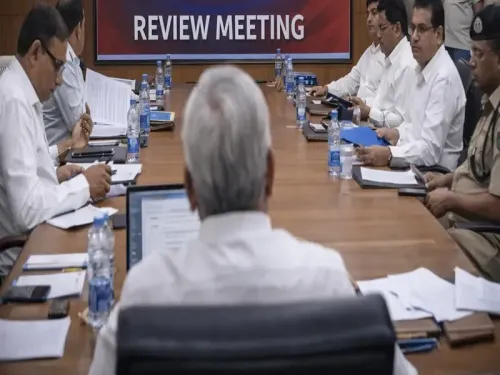
Indore, Jan 6 (NationPress) The Madhya Pradesh High Court (Indore Bench) on Monday sharply condemned the state's handling of the contaminated drinking water crisis in Indore's Bhagirathpura region, labeling the situation as a grave concern that has tarnished the reputation of India's cleanest city.
A bench consisting of Justice Vijay Shukla and Alok Awasthi noted that the authorities seem indifferent to the issue, especially since similar water quality challenges affect substantial parts of both the city and the state.
During the hearing of public interest litigations related to the outbreak, which has resulted in multiple fatalities and widespread illness, the bench ordered the Chief Secretary of Madhya Pradesh to appear virtually on January 15 to explain the actions taken, as safe drinking water is a fundamental right (right to life) under Article 21 of the Indian Constitution.
The petitioners called for the establishment of civil and criminal liabilities, the formation of a high-level inquiry committee, and various forms of relief.
Emphasizing that the fundamental right to life under Article 21 includes access to clean drinking water, the court categorized potential reliefs into immediate measures, preventive and corrective actions, inquiry and accountability, disciplinary and penal proceedings, compensation for victims, directives to local authorities, and public awareness and transparency initiatives.
As interim measures, the court instructed the state and municipal corporation to ensure the provision of clean water at government cost, halt the use of contaminated sources (including identified pipelines), and offer free treatment in government and empaneled private hospitals.
For long-term prevention, authorities were tasked with engaging NABL-accredited laboratories for testing, replacing pipelines that run parallel to sewer lines, and implementing online water quality monitoring systems.
The state and corporation have been directed to submit a new, comprehensive status report and response ahead of the next hearing.
The Municipal Corporation updated the court on ongoing tanker supplies and commitments to provide optimal medical care for hospitalized patients.
The court expressed disappointment over the crisis in a city known for its cleanliness, where residents received contaminated water, leading to a serious public health emergency.
Petitioners argued that the water supply in Bhagirathpura is still unfit for consumption despite interventions, noting that residents' earlier complaints were overlooked; they asserted that timely action and preventive measures could have averted the crisis.
Counsel for the petitioners further noted that a request for laying a new pipeline dates back to 2022, but lack of fund disbursement has resulted in continued dependence on outdated infrastructure.
References were made to water samples tested in 2017-18, where 59 out of 60 locations in the city were found non-potable by the Madhya Pradesh Pollution Control Board, with minimal follow-up by the Indore Municipal Corporation.
Senior counsel for petitioners highlighted that the quality of supplied water has not seen significant improvement.
The proceedings are ongoing, with the court emphasizing accountability and robust safeguards to prevent future incidents amidst ongoing public health concerns.
Point of View
I believe this situation in Indore demands urgent attention. The High Court's intervention underscores the importance of accountability in governance, particularly regarding fundamental rights. It is crucial for authorities to act swiftly to ensure the health and safety of residents, restoring faith in public services.
NationPress
07/01/2026
Frequently Asked Questions
What prompted the Madhya Pradesh High Court's intervention?
The court intervened due to the serious health risks posed by contaminated drinking water in Indore's Bhagirathpura area, leading to fatalities and widespread illness.
What are the immediate measures ordered by the court?
The court directed the provision of clean water at government expense, cessation of contaminated supply, and free medical treatment for affected residents.
What is the significance of Article 21 in this context?
Article 21 of the Indian Constitution guarantees the right to life, which includes access to safe drinking water as a fundamental right.
How has the municipal corporation responded to the crisis?
The Municipal Corporation reported ongoing tanker supplies and assured top-notch medical care for hospitalized patients.
What long-term solutions were suggested by the court?
The court recommended engaging accredited laboratories for testing, replacing old pipelines, and implementing online water quality monitoring systems.