Gujarat CM Bhupendra Patel pushes industry-academia tie-ups for Viksit Gujarat 2047
Synopsis
Gujarat CM Bhupendra Patel used a state-level education conference to deliver a pointed message: industry-academia coordination is no longer optional — it is central to Gujarat's 2047 ambitions. With AI, semiconductors, and NEP-2020 reforms on the agenda, the Ahmedabad gathering signals a push to convert India's demographic dividend from a slogan into a measurable outcome.
Key Takeaways
Gujarat CM Bhupendra Patel addressed the valedictory session of the 'Viksit Gujarat@2047: Higher Education for Future Workforce Readiness' conference in Ahmedabad on 3 November 2026 .
Patel stressed that bridging the industry-academia gap is key to Gujarat's and India's competitiveness by 2047 .
The conference was organised by Gujarat State Institution for Transformation (GRIT) in collaboration with the state's Higher Education Department .
Minister of State Trikam Chhanga called for integrating AI, data analytics, semiconductors, and automation into curricula across all disciplines.
NITI Aayog Programme Director Dr Sonia Pant presented on aligning higher education with future workforce requirements under the Viksit Bharat framework.
Follow-up reviews proposed every three to six months to track implementation of the state's education roadmap.
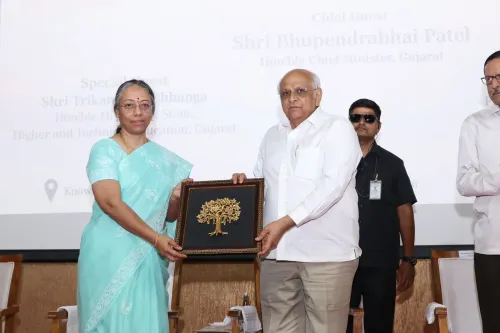
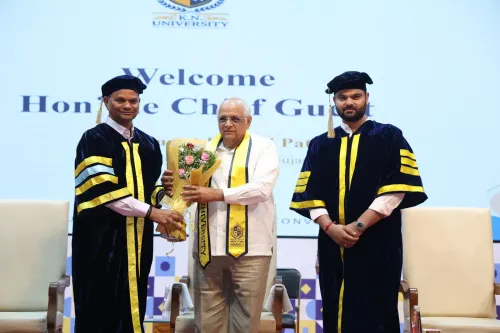
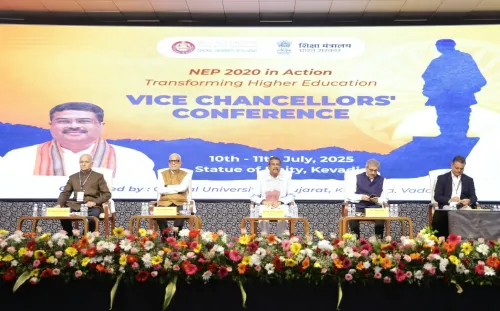
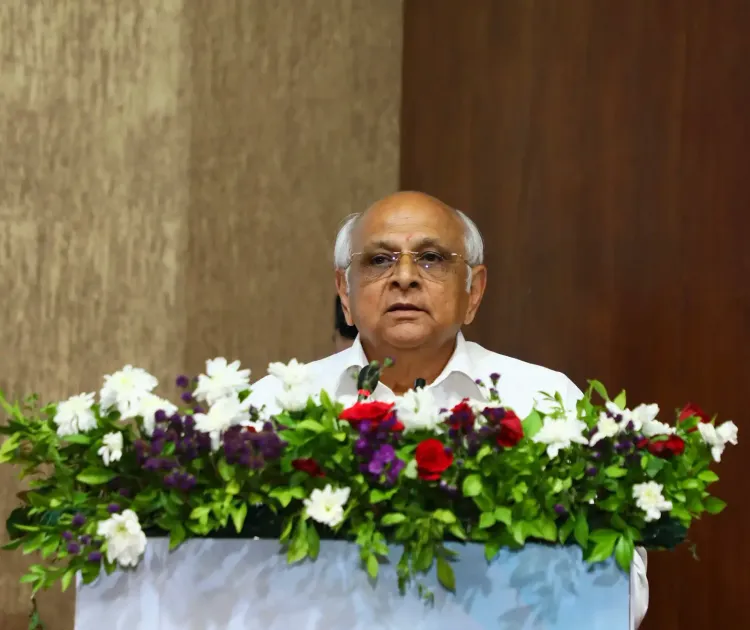
Gujarat Chief Minister Bhupendra Patel on Tuesday, 3 November 2026, called for deeper collaboration between universities and industries to equip the state's youth with future-ready skills, warning that Gujarat's competitiveness by 2047 would hinge on the quality of education and training imparted today. Patel was addressing the valedictory session of a one-day conference titled 'Viksit Gujarat@2047: Higher Education for Future Workforce Readiness' held in Ahmedabad.
The Conference and Its Mandate
The event was organised by the Gujarat State Institution for Transformation (GRIT) in collaboration with the state government's Higher Education Department. Discussions centred on aligning higher education with emerging employment needs, expanding skill development opportunities, and forging stronger partnerships between academic institutions and the private sector.
The conference also featured a presentation by NITI Aayog Programme Director Dr Sonia Pant on 'Higher Education for Viksit Bharat', which stressed the importance of an employment-oriented learning ecosystem aligned with future workforce requirements.
What the Chief Minister Said
Patel described the initiative as 'timely', emphasising that future-oriented education and preparedness were essential to empowering young people. He called on the state government to implement its roadmap with an open approach, welcoming inputs from all stakeholders.
'The government is flexible in implementing this roadmap and remains open to adopting suitable approaches based on valuable suggestions from stakeholders,' he said.
He noted that today's youth would form a critical segment of the workforce needed to realise the vision of both Viksit Gujarat and Viksit Bharat by 2047. 'Their development through relevant education and skills suited to changing requirements would determine Gujarat's competitiveness in the coming years,' he added.
Patel also proposed that similar seminars and discussions be held every three to six months to review progress and provide a clear direction to the development roadmap.
Push for AI, Digital Literacy, and NEP-2020 Alignment
Minister of State for Higher and Technical Education Trikam Chhanga, who also attended the conference, called for mainstreaming digital literacy and technology-based education across all academic disciplines. He said students should be equipped to use emerging technologies — including artificial intelligence, data analytics, semiconductor manufacturing, electronics, and automation — regardless of their field of study.
Chhanga urged universities to regularly revise their curricula in collaboration with industries, in line with the multidisciplinary and experiential learning framework outlined in the National Education Policy-2020 (NEP-2020). He also called for greater emphasis on internships and research to strengthen students' practical exposure and employability.
He highlighted the need to align skill development with the requirements of key sectors of the local economy, particularly manufacturing, agriculture, the marine industry, tourism, and logistics.
Broader Context: Viksit Bharat 2047
The conference sits within the framework of Prime Minister Narendra Modi's national vision of a developed India by 2047, when the country marks its centenary of independence. Gujarat's state-level iteration — Viksit Gujarat 2047 — attempts to translate that national ambition into targeted education and employment reform at the grassroots level. This comes amid growing concerns across Indian states about graduate employability, with several surveys pointing to a persistent mismatch between university output and industry requirements.
Going forward, the outcomes of Tuesday's conference are expected to feed into the state's higher education policy, with follow-up reviews slated at regular intervals to track implementation progress.
Point of View
But the real challenge lies beyond the seminar room. India has repeatedly convened high-profile education-industry dialogues — and graduate employability has stubbornly remained a structural problem. The proposal to hold reviews every three to six months is a useful accountability mechanism, but only if those reviews are tied to measurable outcomes rather than further consultations. The emphasis on AI and semiconductor skills is timely given India's industrial ambitions, yet the state's rural and semi-urban colleges — where the bulk of Gujarat's youth study — remain far from equipped to deliver such curricula. The gap between Gandhinagar's policy language and the classroom reality of a first-generation college student is the real metric to watch.
NationPress
3 Nov 2026
Frequently Asked Questions
What is the Viksit Gujarat@2047 higher education conference about?
The conference, held on 3 November 2026 in Ahmedabad, focused on aligning Gujarat's higher education system with future workforce needs to support the state's 2047 development goals. It was organised by GRIT in collaboration with the state's Higher Education Department and brought together government officials, academics, and industry representatives.
What did Gujarat CM Bhupendra Patel say at the conference?
Patel called for closer coordination between educational institutions and industries, saying the quality of education and skills imparted to youth would determine Gujarat's competitiveness by 2047. He also proposed follow-up seminars every three to six months to review progress on the state's education roadmap.
How does this initiative connect to Viksit Bharat 2047?
Viksit Gujarat 2047 is Gujarat's state-level articulation of Prime Minister Narendra Modi's national vision of a developed India by the country's centenary of independence in 2047. The conference aimed to align the state's higher education reforms with that broader national ambition.
What specific skills did officials highlight for Gujarat's youth?
Minister of State Trikam Chhanga emphasised artificial intelligence, data analytics, semiconductor manufacturing, electronics, and automation as priority areas for all students, regardless of their field of study. He also called for stronger internship programmes and curriculum revisions aligned with NEP-2020 principles.
Who else participated in the conference?
NITI Aayog Programme Director Dr Sonia Pant delivered a presentation on higher education for Viksit Bharat, highlighting the need for employment-oriented learning. Minister of State for Higher and Technical Education Trikam Chhanga also addressed the gathering alongside Chief Minister Bhupendra Patel.