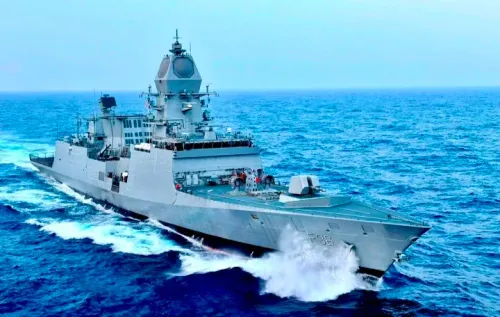
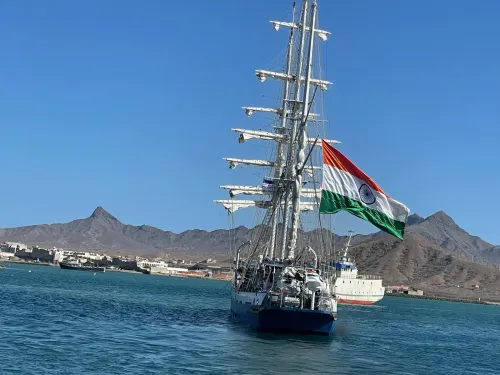
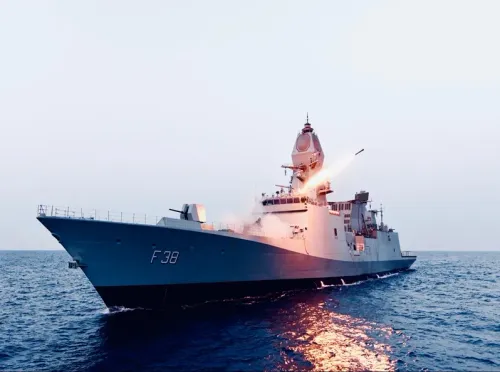
INS Mahendragiri inducted as Navy's 200-warship plan faces scrutiny
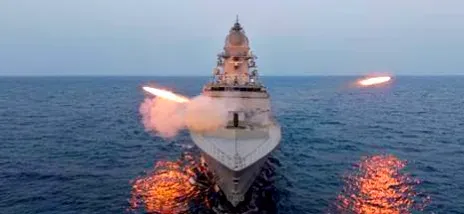
Synopsis
Even as INS Mahendragiri joins the fleet as the Navy's sixth stealth frigate, the service's 200-warship-by-2035 ambition is under strain — the CCS is reportedly questioning the need for eight new missile corvettes, a three-year order drought persists, and Pakistan's China-built AIP submarine fleet is reshaping the threat calculus in both the Arabian Sea and the Bay of Bengal.
Key Takeaways
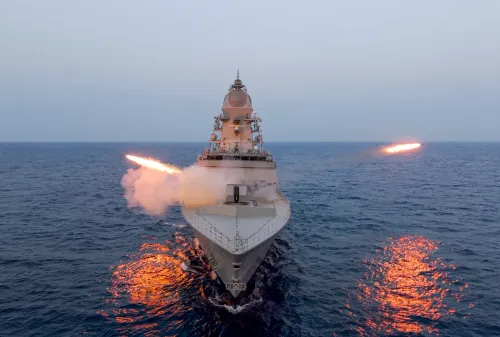
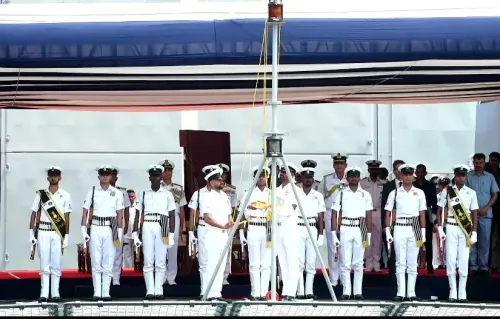
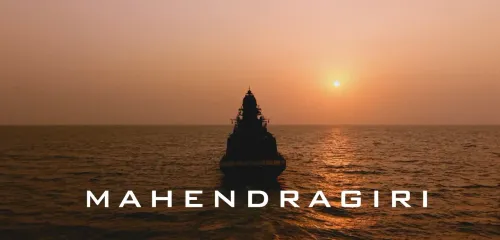
INS Mahendragiri , the sixth advanced stealth frigate, was inducted into the Indian Navy on 11 July .
The Cabinet Committee on Security (CCS) has reportedly raised questions over the Navy's plan to acquire eight Next Generation Corvettes (NGCs) under Project 28A .
China is helping Pakistan build eight AIP-equipped submarines , with the first already delivered, raising deep-water ASW concerns for India.
No major naval order has been placed since 30 March 2023 , when contracts were signed for 11 Next Generation Offshore Patrol Vessels (NGOPVs) .
Upcoming programmes include ₹80,000 crore Next-Generation Destroyers, ₹70,000 crore P-17B Frigates, Project 75(I) submarines, and four 32,000-tonne LPDs .
The Indian Navy inducted INS Mahendragiri, its sixth advanced stealth frigate, on Saturday, 11 July, even as serious questions mount over the service's broader ambition to grow its fleet to 200 warships by 2035. The induction marks a milestone in the Project 17A frigate programme, but strategic and budgetary headwinds are complicating the Navy's next round of acquisitions.
NGC Project 28A Hits a Wall
The Navy's proposal to procure eight Next Generation Corvettes (NGCs) under Project 28A has reportedly stalled at the final approval stage. Despite the bidding process having been completed, a green light from the Cabinet Committee on Security (CCS) is still awaited. According to reports, the CCS has questioned the rationale for acquiring these missile corvettes at a time when advanced frigates — armed with comparable surface-to-surface and surface-to-air missiles — are already being inducted into service.
Critics argue that the overlap in capabilities between the NGCs and the new frigates makes the corvette programme difficult to justify on cost-effectiveness grounds alone.
The Submarine Threat Driving a Rethink
Underpinning the strategic debate is a rapidly shifting undersea threat landscape. China is helping Pakistan build eight advanced diesel-electric attack submarines equipped with Air Independent Propulsion (AIP) technology — with the first vessel already delivered. Once Islamabad receives the full complement, analysts believe these submarines will be deployed in both the Arabian Sea and the Bay of Bengal, significantly raising the pressure on Indian naval planners.
China has itself been sending submarines into the Bay of Bengal for some time, a pattern that has not gone unnoticed in New Delhi. The Indian Navy currently operates four Kamorta-class anti-submarine warfare (ASW) corvettes and is receiving 16 shallow-water ASW crafts — the latter designed primarily to protect coastal zones, island territories, and harbour approaches from underwater threats. Analysts note, however, that these platforms are insufficient for deep-water ASW operations, and there is a growing belief that the Navy requires additional large ASW vessels capable of operating in open-ocean conditions.
A Three-Year Order Drought
The acquisition pipeline has effectively been dry for nearly three years. The last major order placed by the Navy was for 11 Next Generation Offshore Patrol Vessels (NGOPVs), concluded on 30 March 2023. Of these, seven are being built by Goa Shipyard Limited, with the remaining vessels under construction at Garden Reach Shipbuilders and Engineers Limited (GRSE) in Kolkata. First deliveries are expected to begin within the next two to three years.
'If the Navy needs to change plans, it should do it now,' a source familiar with the matter said. 'Even if fresh orders are placed soon, there is little possibility of deliveries before 2030.'
What Else Is in the Pipeline
Beyond the NGC dispute, the Navy has several large-ticket programmes in various stages of planning and approval. These include:
Next-Generation Destroyers (NGDs) — estimated at ₹80,000 crore, these heavily armed stealth warships are intended as successors to the Visakhapatnam-class.
Project 75(I) — the Navy is targeting delivery of AIP-equipped next-generation conventional submarines by 2033.
Project 17 Bravo (P-17B) Frigates — a ₹70,000 crore programme for next-generation frigates featuring advanced structural stealth, integrated electric propulsion, and enhanced Vertical Launching System (VLS) missile cells.
Initial clearance has also been granted for four Landing Platform Docks (LPDs) of approximately 32,000 tonnes each — among the largest vessels the Navy has ever ordered.
What Comes Next
With no fresh major orders placed since March 2023 and the NGC programme in limbo, the Navy faces a critical window to reorient its acquisition strategy toward the most pressing threat — undersea warfare. Whether the CCS approves, redirects, or shelves the NGC proposal is likely to set the tone for Indian naval procurement through the rest of this decade.
Point of View
Backed by Chinese technology, represents a qualitative leap that India's four Kamorta-class corvettes are not designed to absorb at scale. The Navy's three-year order drought is the more alarming signal: procurement timelines in warship-building are unforgiving, and any platform ordered today cannot realistically arrive before 2030. If New Delhi is serious about the 200-warship target, the window to course-correct is closing faster than the acquisition calendar suggests.
NationPress
10 Oct 2026
Frequently Asked Questions
What is INS Mahendragiri and why is its induction significant?
INS Mahendragiri is the sixth advanced stealth frigate inducted into the Indian Navy, part of the Project 17A programme. Its induction strengthens India's surface warfare capability, though it has also intensified the debate over whether additional missile corvettes under Project 28A are necessary given the overlap in armament.
Why is the Cabinet Committee on Security (CCS) holding up the Next Generation Corvette programme?
The CCS has reportedly questioned the justification for acquiring eight NGCs under Project 28A at a time when advanced frigates with similar missile armaments are already being inducted. The bidding process is complete but final approval remains pending, leaving the programme in uncertainty.
What is the submarine threat that is reshaping Indian Navy planning?
China is assisting Pakistan in building eight AIP-equipped diesel-electric attack submarines, with the first already delivered. Once fully operational, these submarines are expected to be deployed in both the Arabian Sea and the Bay of Bengal, areas critical to Indian maritime security.
How long has it been since the Indian Navy placed a major warship order?
Nearly three years. The last major order was for 11 Next Generation Offshore Patrol Vessels (NGOPVs), signed on 30 March 2023. Seven are being built by Goa Shipyard Limited and the rest at Garden Reach Shipbuilders and Engineers Limited in Kolkata, with first deliveries expected in two to three years.
What other major naval programmes are in the pipeline?
The Indian Navy has plans for Next-Generation Destroyers (estimated at ₹80,000 crore), Project 17 Bravo next-generation frigates (₹70,000 crore), AIP-equipped submarines under Project 75(I) targeted for delivery by 2033, and four 32,000-tonne Landing Platform Docks that have received initial government clearance.