IPRD 2026: Regional navies, deep-ocean tech in focus at Indian Navy dialogue
Synopsis
IPRD-2026, the Indian Navy's flagship strategic dialogue, is not just a talking shop — it has drawn four former Navy chiefs onto one stage to debate regional maritime resilience, while a Union minister revealed India can now probe the ocean floor at 5,000 to 6,000 metres. The conference signals India's intent to lead both the security and science conversation in the Indo-Pacific.
Key Takeaways
IPRD-2026 is a three-day conference running 3–5 November 2026 in New Delhi , organised by the Indian Navy with the National Maritime Foundation (NMF) .
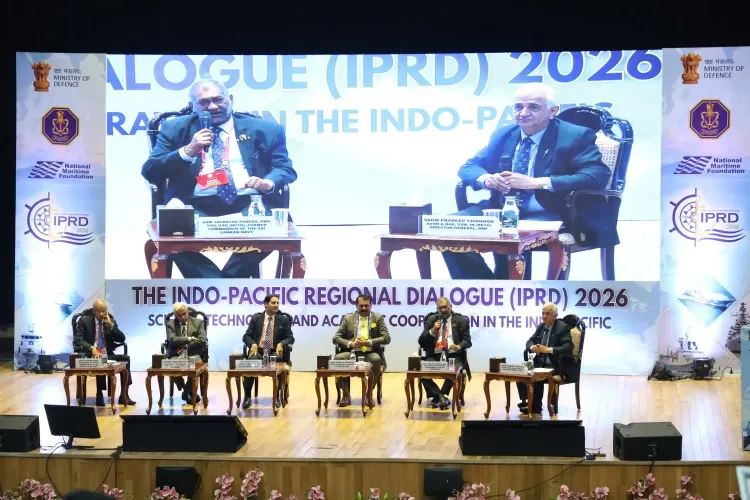
A 'Perspectives from the Flag Bridge' session featured four former Chiefs of the Indian Navy and a former Commander of the Sri Lanka Navy discussing maritime security.
Minister of State Jitendra Singh said India aims for global competitiveness in ocean research through indigenous capabilities and international cooperation.
The National Institute of Ocean Technology (NIOT), Chennai has developed capability to conduct trials at depths of 5,000 to 6,000 metres in the Central Indian Ocean Basin.
The dialogue's theme is 'Science, Technology and Academic Cooperation in the Indo-Pacific', with Day 1 perspectives from France, Indonesia, Japan, and Maldives .
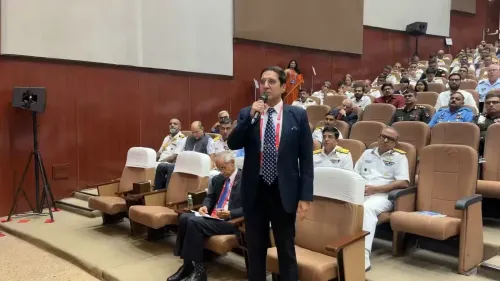
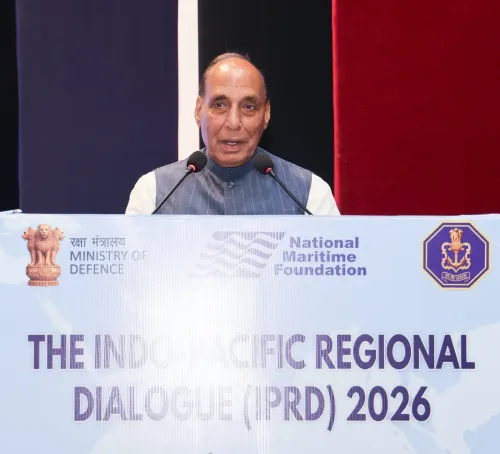
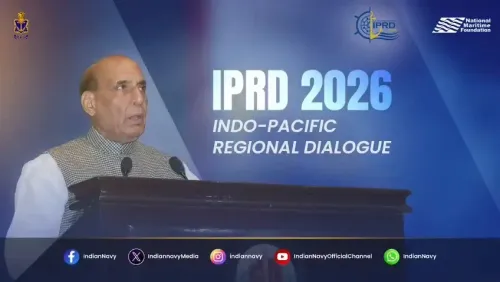
The Indo-Pacific Regional Dialogue 2026 (IPRD-2026), the Indian Navy's annual apex-level international strategic dialogue, placed the role of regional navies in enhancing maritime security at the centre of discussion on Thursday, 5 November 2026, during a dedicated session in New Delhi. The three-day conference, organised in partnership with the National Maritime Foundation (NMF), is examining how scientific advancement and institutional partnerships can be translated into practical regional cooperation across the Indo-Pacific.
Flag Bridge Session: Former Navy Chiefs Share Insights
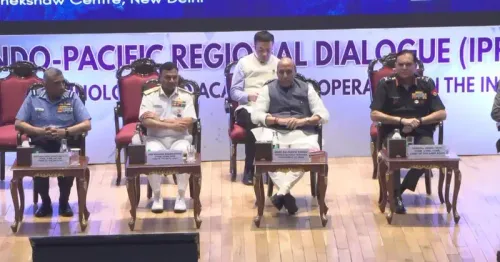
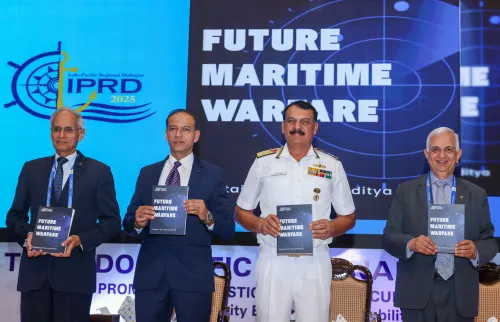
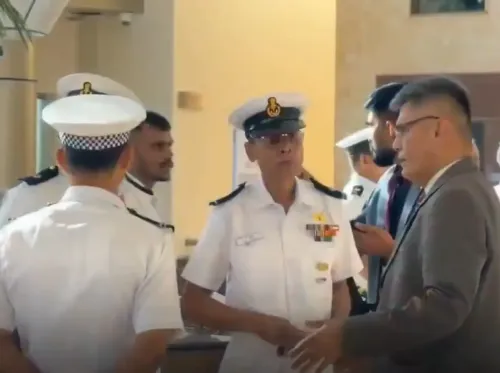
A special session titled 'Perspectives from the Flag Bridge' brought together four former Chiefs of the Indian Navy and a former Commander of the Sri Lanka Navy to deliberate on the role of regional navies in strengthening maritime security and resilience. According to the Indian Navy Spokesperson, the session 'offered valuable insights into the role of regional navies in strengthening maritime security,' with the remarks shared on social media platform X.
The session underscored the growing importance of multilateral naval engagement at a time when the Indo-Pacific has emerged as a focal point of geopolitical competition, evolving security architectures, and contested maritime commons.
India's Deep-Ocean and Science Ambitions
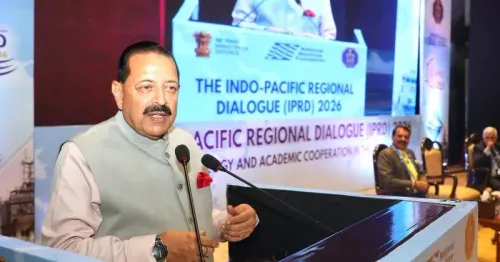
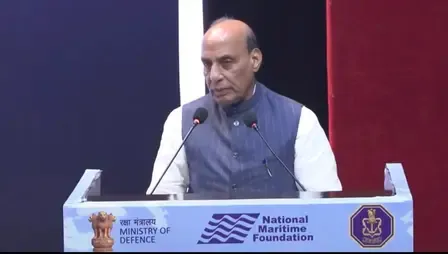
On the second day of the conference, Minister of State (Independent Charge) for Science and Technology and Earth Sciences Jitendra Singh said India is targeting global competitiveness in ocean research and exploration through indigenous capabilities, international cooperation, and global co-creation. He noted that India's scientific missions have increasingly adopted a mission-mode framework, pooling multiple departments and institutions rather than siloing research within individual ministries.
Singh highlighted what he described as the growing convergence of ocean sciences, space technology, nuclear science, geology, electronics, and robotics in advancing India's maritime and deep-ocean capabilities. He specifically pointed to the National Institute of Ocean Technology (NIOT) at Chennai, which has reportedly developed the capability to conduct trials at depths of 5,000 to 6,000 metres in the Central Indian Ocean Basin — a significant benchmark for indigenous deep-sea exploration.
Conference Theme and Opening Day
The dialogue, which began on 3 November, is built around the central question: how the Indo-Pacific can turn scientific knowledge and technological innovation into enduring institutional cooperation, stronger maritime capabilities, and shared regional resilience. The inaugural address was delivered by Admiral Dinesh K. Tripathi (Retd), NMF Chairman and former Chief of the Naval Staff, followed by a special address from Vice-Admiral Biswajit Dasgupta (Retd), National Maritime Security Coordinator.
The opening session focused on 'Academic Networks, Research, and Human Capital Development', moderated by Vice-Admiral Sanjay Mahindru (Retd), former Deputy Chief of the Naval Staff, with perspectives contributed by representatives from France, Indonesia, Japan, and Maldives. This is a notable expansion of the dialogue's geographic footprint, reflecting India's intent to position IPRD as a credible multilateral forum rather than a bilateral exercise.
Why IPRD-2026 Matters
This comes amid sustained strategic attention on the Indo-Pacific from major powers, with India seeking to consolidate its role as a net security provider in the region. IPRD-2026's emphasis on science and technology cooperation signals a shift from pure security discourse toward the institutional and research infrastructure that underpins long-term maritime capability. The involvement of academics, former naval commanders, and ministers in a single forum reflects the dialogue's ambition to bridge policy, strategy, and science.
The conference concludes on 5 November 2026, with outcomes expected to feed into India's broader Indo-Pacific engagement framework in the months ahead.
Point of View
But one that includes research infrastructure, deep-ocean capability, and human capital. The presence of four former Navy chiefs on a single panel is unusual and suggests the Indian Navy is leaning on institutional memory to shape future doctrine. What is worth watching is whether the dialogue's recommendations translate into binding multilateral frameworks or remain aspirational. India has hosted several such apex forums; the credibility test lies in what institutional architecture — joint research programmes, shared monitoring grids, academic exchange protocols — actually emerges from the communiqué.
NationPress
5 Nov 2026
Frequently Asked Questions
What was discussed at the 'Perspectives from the Flag Bridge' session?
The session brought together four former Chiefs of the Indian Navy and a former Commander of the Sri Lanka Navy to discuss the role of regional navies in enhancing maritime security and strengthening maritime resilience. It was one of the highlights of the third day of IPRD-2026.
What did Minister Jitendra Singh say at IPRD-2026?
Minister of State Jitendra Singh said India aims to achieve global competitiveness in ocean research and exploration through indigenous capabilities, international cooperation, and global co-creation. He also highlighted that India's National Institute of Ocean Technology in Chennai can now conduct deep-sea trials at depths of 5,000 to 6,000 metres.
Which countries participated in IPRD-2026?
The opening session featured perspectives from France, Indonesia, Japan, and Maldives, among others. A former Commander of the Sri Lanka Navy also participated in the flag-level session, reflecting the dialogue's broad Indo-Pacific outreach.
What is the central theme of IPRD-2026?
The dialogue is examining how the Indo-Pacific can convert scientific knowledge and technological innovation into enduring institutional cooperation, stronger maritime capabilities, and shared regional resilience — framed as 'Science, Technology and Academic Cooperation in the Indo-Pacific'.